Tell us about the job
Takes about a minute. No obligation.
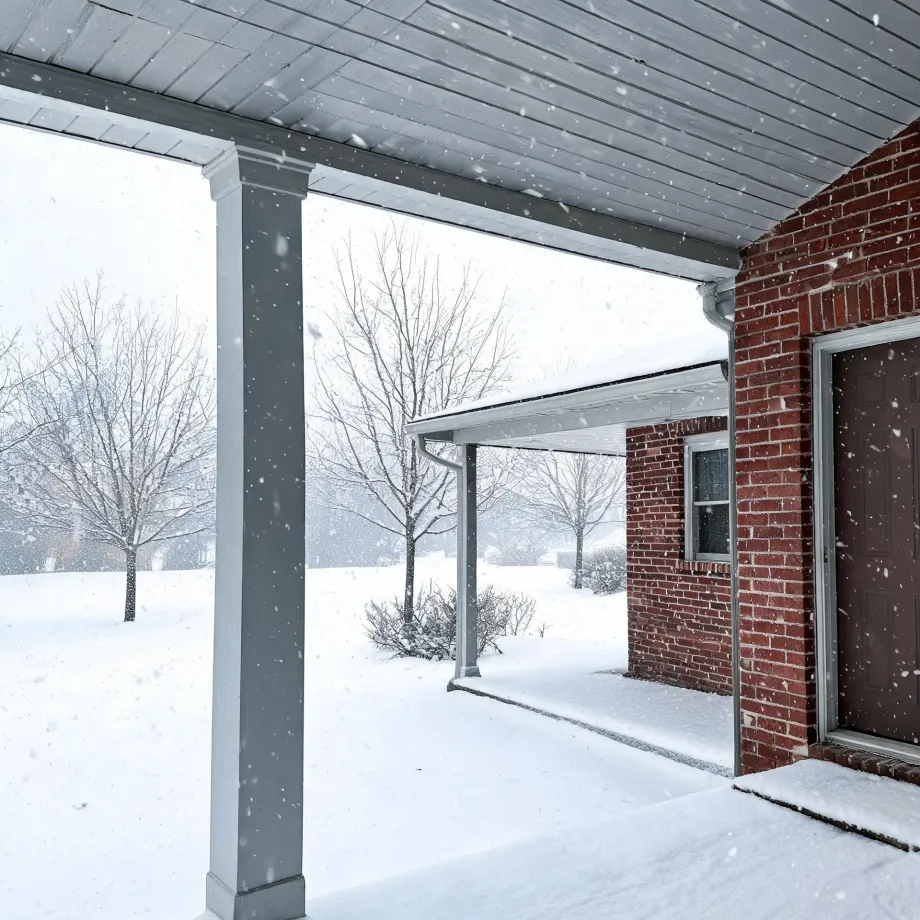
A contractor called out to repair a boiler in Sussex County starts with the parts that cycle most: the burner, the ignition assembly, and the heat exchanger. Homes in Sussex County, NJ run heat about eight months a year, from October through May. Across a season that long, those components fire and rest hundreds of times, and the ignition system in particular fails from cumulative fatigue rather than from a single event. When a boiler comes in for repair, a contractor checks the igniter and the burner before moving to anything downstream.
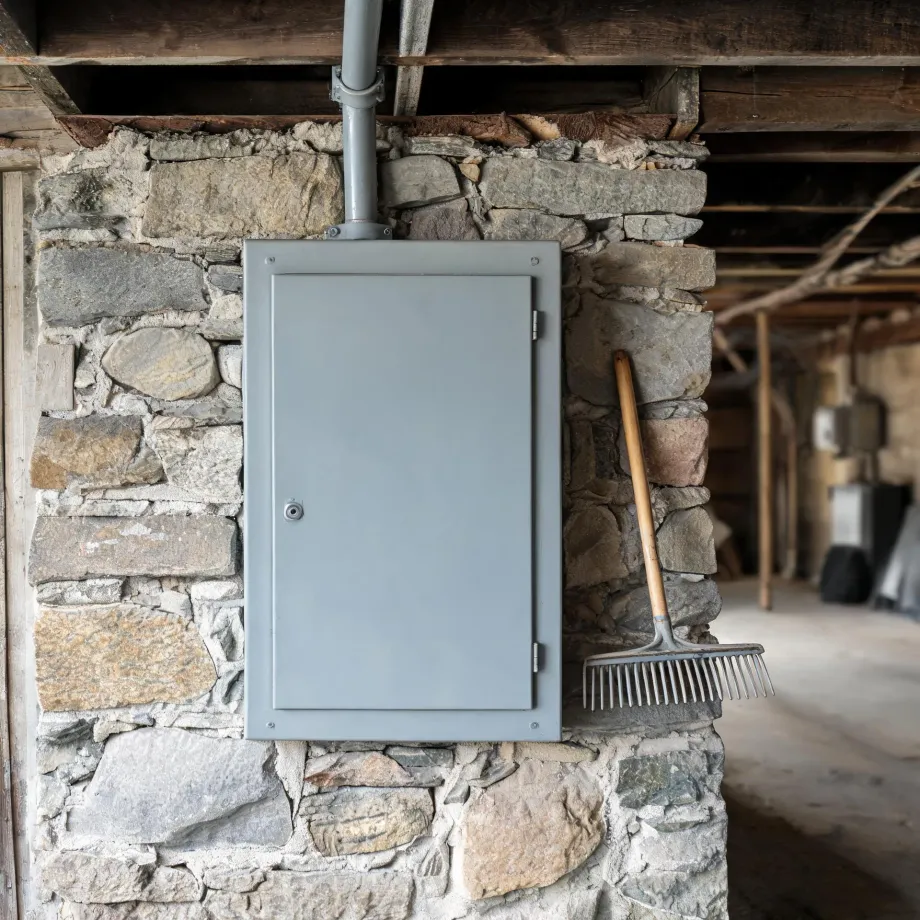
Boilers in the oldest layer of Sussex County's housing stock were sized and plumbed for equipment that has since been replaced, sometimes more than once, leaving a mix of original piping runs and later modifications that a contractor has to read before any repair scope is clear. Half the homes in Sussex County, New Jersey were built in 1973 or earlier (2020-2024 ACS 5-year). When a unit is opened, what matters is whether the replacement parts the system requires are still in production or have to be sourced as obsolete stock, and that question is answered by what the contractor physically finds, not by anything visible from the outside.
The Parts of a Boiler a Contractor Checks First
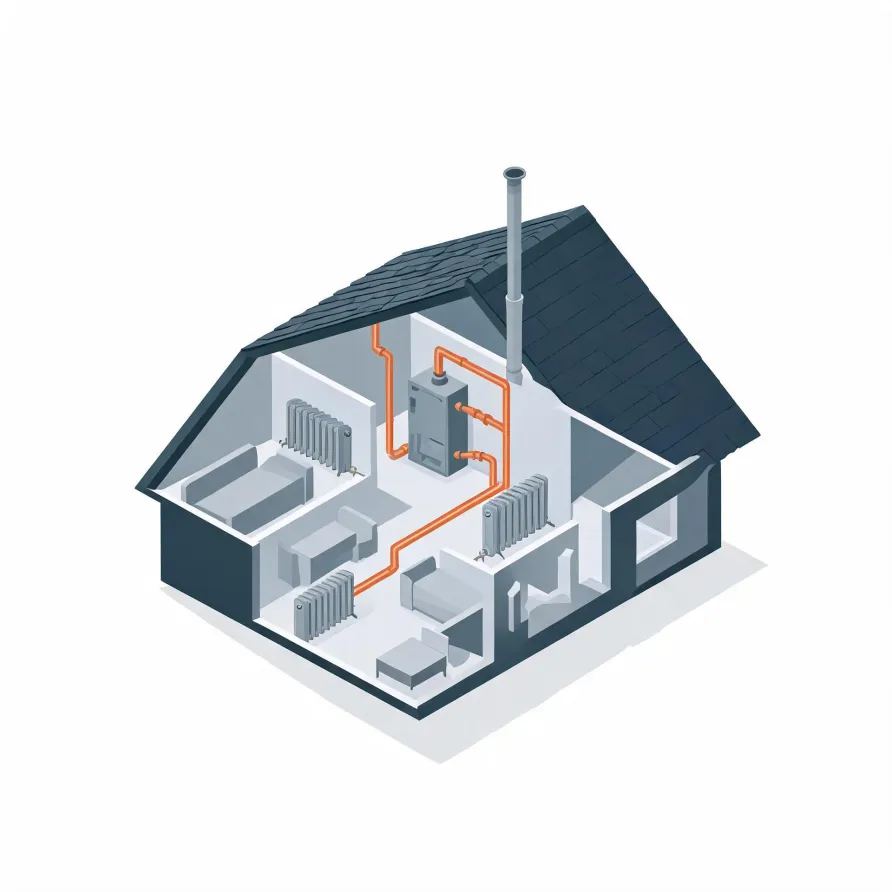
The boiler itself sits in the basement or a utility room and is the piece a contractor goes to first. It heats water and pushes it through the system. When it fails, the signs range from no heat at all to uneven warmth across rooms. The heat exchanger inside it and the burner assembly are common points of failure.
The circulator pump moves heated water from the boiler out to the radiators or baseboard units throughout the house, and the expansion tank sits nearby to absorb pressure changes in the system. The thermostat, mounted on a wall in the living space, is where the contractor checks whether a complaint traces back to the controls rather than the boiler itself.
The drawing shows a typical boiler layout, and a licensed contractor determines which components apply to your specific setup.
Get matched in Sussex CountySussex County, by the numbers
197 severe weather events were recorded in Sussex County, New Jersey between 2015 and 2024.
NOAA National Centers for Environmental Information, Storm Events Database, bulk CSV export, events 2015-01-01 through 2024-12-31.Half the homes in Sussex County, New Jersey were built in 1973 or earlier (2020-2024 ACS 5-year).
U.S. Census Bureau, 2020-2024 American Community Survey 5-Year EstimatesSussex County, New Jersey holds 62,865 housing units (2020-2024 ACS 5-year).
U.S. Census Bureau, 2020-2024 American Community Survey 5-Year EstimatesOwners occupy 83.7% of the occupied homes in Sussex County, New Jersey (2020-2024 ACS 5-year).
U.S. Census Bureau, 2020-2024 American Community Survey 5-Year EstimatesBoiler Repair Rules & Codes for Sussex County, New Jersey2 sourced standards and regulations
Licensing and Legal Requirements in Sussex County, New Jersey
In New Jersey the HVACR licence is the State's alone: a municipality, local board of health or any other agency may not issue or renew a Master HVACR contractor's licence.
New Jersey requires a Master HVACR contractor licence: no person or business may engage in the business of HVACR contracting, or advertise as a Master HVACR contractor, without being authorised under the State HVACR Contracting License Law.
Severe Weather Events in Sussex County
Weather puts direct stress on boiler systems: pressure fluctuations, sudden temperature swings, and power disruptions all push equipment harder and accelerate wear. How often that happens in Sussex County shapes how much repair work boilers here actually face.
197 severe weather events, 2015–2024. Source: NOAA National Centers for Environmental Information, Storm Events Database.