Tell us about the job
Takes about a minute. No obligation.
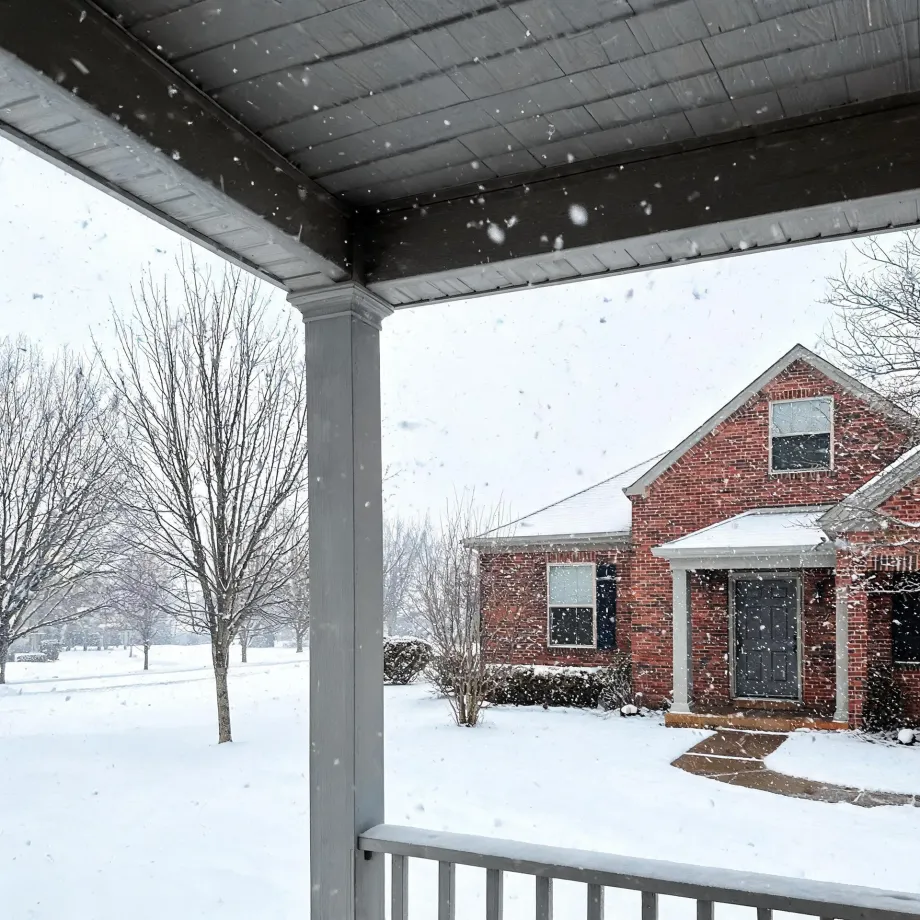
A contractor quoting a boiler installation in Sussex County has to size the unit for sustained cold-weather demand, not peak demand alone. Homes in Sussex County, NJ run heat about eight months a year, from October through May. The burner, heat exchanger, and ignition components cycle through that full stretch, and a unit that runs at or near its ceiling for months accumulates wear on those parts faster than one with adequate headroom. An undersized or loosely installed boiler has nowhere to hide here. Proper sizing and tight installation work are what keep a boiler running through repeated long seasons without the early failures that poor installs produce.
Ductwork sized and routed for an earlier generation of heating does not automatically carry what a modern boiler needs, and that gap is where a Sussex County installation gets complicated or stays simple. Half the homes in Sussex County, New Jersey were built in 1973 or earlier (2020-2024 ACS 5-year). Houses in that range were built around systems whose distribution requirements differ from what contractors spec today, so the existing duct layout is the first thing a contractor has to assess, not the last. What those runs can handle determines the scope before any equipment is priced.
What Gets Installed With a New Boiler
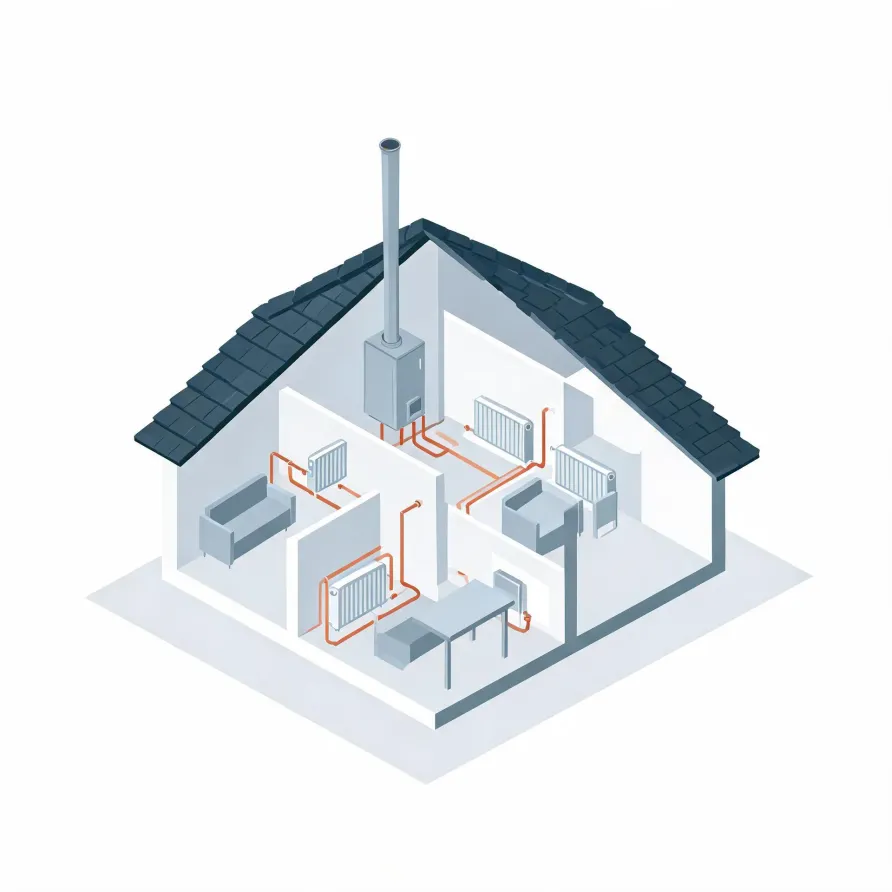
The boiler itself sits in the basement or mechanical room and is the unit that heats water and sends it out through the system. Alongside it, the expansion tank absorbs pressure changes in the water as it heats and cools. The circulator pump moves heated water out of the boiler and through the pipes.
The thermostat goes on a main living-area wall and tells the boiler when to fire. Baseboard units or radiators sit in each room and give off heat as hot water passes through them. Shutoff valves, a pressure relief valve, and supply and return piping tie the whole system together.
The drawing shows a general boiler layout, and a licensed contractor determines which components and configurations apply to your specific home.
Get matched in Sussex CountySussex County, by the numbers
197 severe weather events were recorded in Sussex County, New Jersey between 2015 and 2024.
NOAA National Centers for Environmental Information, Storm Events Database, bulk CSV export, events 2015-01-01 through 2024-12-31.Half the homes in Sussex County, New Jersey were built in 1973 or earlier (2020-2024 ACS 5-year).
U.S. Census Bureau, 2020-2024 American Community Survey 5-Year EstimatesSussex County, New Jersey holds 62,865 housing units (2020-2024 ACS 5-year).
U.S. Census Bureau, 2020-2024 American Community Survey 5-Year EstimatesOwners occupy 83.7% of the occupied homes in Sussex County, New Jersey (2020-2024 ACS 5-year).
U.S. Census Bureau, 2020-2024 American Community Survey 5-Year EstimatesCodes & Standards Governing Boiler Installation in Sussex County, New Jersey2 sourced rules and standards
Licensing and Legal Requirements in Sussex County, New Jersey
In New Jersey the HVACR licence is the State's alone: a municipality, local board of health or any other agency may not issue or renew a Master HVACR contractor's licence.
New Jersey requires a Master HVACR contractor licence: no person or business may engage in the business of HVACR contracting, or advertise as a Master HVACR contractor, without being authorised under the State HVACR Contracting License Law.
Severe Weather in Sussex County, NJ
Boiler systems carry the full weight of heating demand through whatever the local climate delivers. How hard that equipment has to work over its lifetime is shaped by the weather record here, which is why that record belongs on a page about installation.
197 severe weather events, 2015–2024. Source: NOAA National Centers for Environmental Information, Storm Events Database.