Tell us about the job
Takes about a minute. No obligation.
Sizing a boiler correctly for the house matters here more than it does in counties where the system sits idle through most of the calendar. Homes in Essex County, NJ run heat about eight months a year, from October through May. A burner and heat exchanger cycling through that stretch accumulate wear at a rate a marginal installation cannot hide. Contractors quoting a replacement have to work from a proper load calculation, not from the rating plate on the old unit, because an undersized system will run itself harder and fail sooner on that schedule than a correctly matched one would.
Older piping layouts and distribution systems in Essex County houses reflect the heating approach the house was built around, and a new boiler has to work with what is already there. Half the homes in Essex County, New Jersey were built in 1958 or earlier (2020-2024 ACS 5-year). That means a contractor sizing and running a boiler installation is working out whether the existing distribution network suits what the new unit needs to push through it, and where it does not, that work gets priced and planned before the equipment is ever ordered.
What Gets Installed With a New Boiler
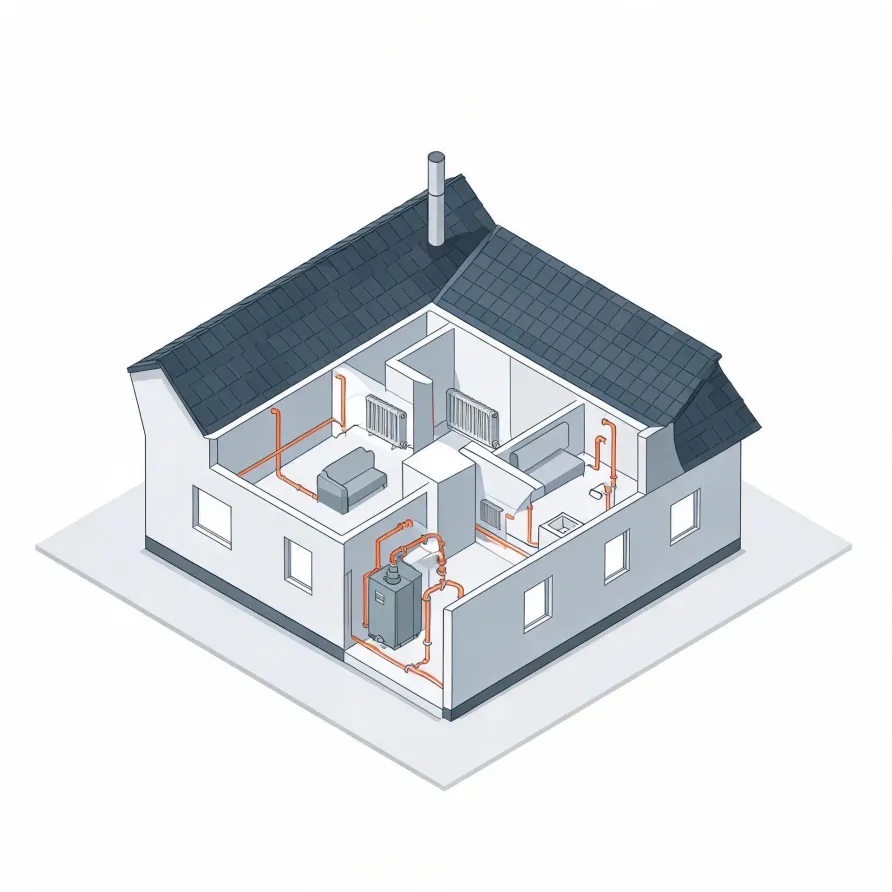
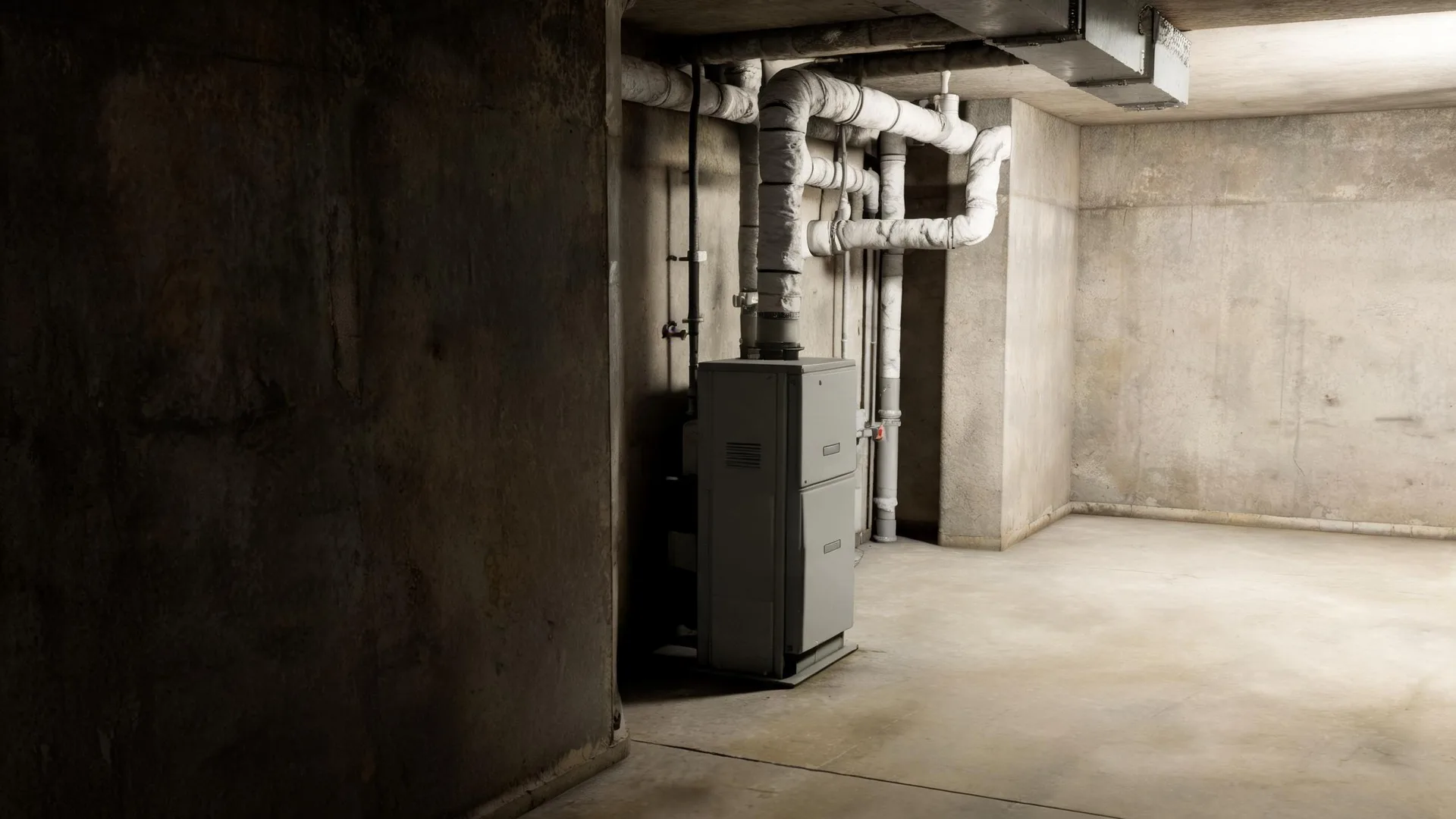
The boiler itself sits in the basement or mechanical room and is the heart of the system. A contractor mounts the unit against a wall, connects it to the home's existing water supply, and ties it into the flue or venting path that carries combustion gases out of the house.
Running out from the boiler, the supply and return pipes loop through the home to baseboard radiators, radiant floor tubing, or cast-iron radiators depending on what the house already has or what is being put in. The expansion tank, pressure relief valve, and circulator pump attach close to the boiler itself, each one positioned so a contractor can reach it.
The drawing beside this text shows a typical boiler layout, and a licensed contractor will confirm which components and configurations apply to your home.
Get matched in Essex CountyEssex County, by the numbers
102 severe weather events were recorded in Essex County, New Jersey between 2015 and 2024.
NOAA National Centers for Environmental Information, Storm Events Database, bulk CSV export, events 2015-01-01 through 2024-12-31.Half the homes in Essex County, New Jersey were built in 1958 or earlier (2020-2024 ACS 5-year).
U.S. Census Bureau, 2020-2024 American Community Survey 5-Year EstimatesEssex County, New Jersey holds 336,962 housing units (2020-2024 ACS 5-year).
U.S. Census Bureau, 2020-2024 American Community Survey 5-Year EstimatesOwners occupy 44.9% of the occupied homes in Essex County, New Jersey (2020-2024 ACS 5-year).
U.S. Census Bureau, 2020-2024 American Community Survey 5-Year EstimatesBoiler Installation Rules & Standards for Essex County, New Jersey2 sourced rules and standards
What Essex County and New Jersey Require for HVAC Installation
In New Jersey the HVACR licence is the State's alone: a municipality, local board of health or any other agency may not issue or renew a Master HVACR contractor's licence.
New Jersey requires a Master HVACR contractor licence: no person or business may engage in the business of HVACR contracting, or advertise as a Master HVACR contractor, without being authorised under the State HVACR Contracting License Law.
Weather Stress on Heating Systems in Essex County
Boilers work harder when outdoor conditions swing wide, and New Jersey winters ask a lot of any heating system. How much stress a boiler takes on over the years depends heavily on what the local climate throws at it, which makes this county's weather record a real factor in sizing and installation decisions.
102 severe weather events, 2015–2024. Source: NOAA National Centers for Environmental Information, Storm Events Database.