Fill out one short form instead of calling around.
Cold radiators with a boiler that's running usually mean the system can't move heat where it needs to go, not that the boiler itself has quit. Trapped air in the lines, a stuck zone valve, a failed circulator pump, sludge sitting in the radiator itself. Some of these you can check. Most need someone who works on boilers for a living.
That's the part that eats a weekend. Calling around to find a contractor who still services boilers, since plenty of outfits now only touch furnaces and heat pumps. Explaining the same thing to three different companies: which radiators are cold, whether the boiler short cycles, what the pressure gauge reads. Waiting on quotes that come back with different diagnoses because each one only heard your description secondhand.
Here, you tell it once. A licensed contractor local to New Jersey, someone who's been inside boilers like yours all winter and knows the difference between a radiator that needs bleeding and one that needs a new valve, gets your situation directly. Not four companies calling back over two days. One contractor who actually works on this equipment, with the details you gave already in hand.
With gas heat common in homes here and electricity costing what it does in New Jersey, a boiler running without actually heating the house is money going nowhere while you wait. The radiators stay cold, the burner keeps firing, and the only thing that changes is the bill.
Below is what usually causes this and what you can look at yourself before anyone comes out. When it's past what a homeowner can fix with a bleed key, the button on this page is where the search ends instead of where it starts.
A radiator that stays cold while the boiler runs is almost never the boiler's fault. Heat is being made, it just isn't reaching that radiator. Air trapped in the line sits above the water and blocks it, which is why bleeding a radiator often fixes one that's cold at the top but warm at the bottom. A stuck zone valve keeps hot water from ever reaching that loop, so every radiator on it stays cold while others in the house heat fine. A circulator pump that's failed stops the water moving system-wide, and sludge built up inside an old radiator can block it from the inside no matter what the pump does. Each of these points to a different fix, and a boiler that fires but can't deliver heat usually means one specific part in that chain needs attention, not the whole system.
Pressure holds steady, pumps run quiet, and every radiator on the loop gets hot within a few minutes of the burner firing.
A pressure gauge creeping down or a circulator pump that's gone silent explains why heat stops at the basement and never reaches the radiators.
A boiler running fine can still leave one radiator cold, and the reason usually sits somewhere between the basement and that room. The circulator pump moves the hot water around the loop, and if its bearing wears out, water stops moving even though the burner keeps firing. Each radiator has its own little air vent, and once that vent rusts shut, trapped air has nowhere to go, so water can't push in to fill it. The valve on the radiator itself can seize from old paint or corrosion and stay shut no matter what the thermostat says. Zone valves fail the same way, a small motor inside stops working and the valve never opens for that part of the house. Lower down, years of sludge and rust can pile up inside a radiator until they block the top, where the actual heat comes from. And if pressure in the system has dropped, water may never make it up to the second floor at all.
What's actually stopping the heat
Hot water boilers push heat through a loop using a circulator pump, and that pump can seize or lose its bearing without tripping anything else in the system.
Each radiator has its own air vent, and a vent that's rusted shut or clogged with mineral deposits won't let trapped air escape, so water can't fill that radiator.
A thermostatic radiator valve can stick closed from years of paint or corrosion, cutting off flow to that one radiator while every other one heats fine.
Zone valves use a small motor to open and close, and when that motor fails the valve can stay shut even though the thermostat is calling for heat.
Sludge and rust settle at the bottom of a radiator over years, and once it builds up high enough it blocks water from reaching the top where the heat radiates out.
Boiler pressure that's dropped below what the system needs won't push water up to radiators on the second floor, even with the burner firing normally downstairs.
Your request goes to one pro, not a list of companies.
You only hire the pro if you want to.
One-pipe versus two-pipe systems
Older homes around New Jersey often run a one-pipe steam or hot water setup, where a single line feeds and drains each radiator. A two-pipe system sends water out one line and returns it through another. One-pipe setups are more prone to trapping air, since supply and return share the same path. If your radiators are old cast iron with a single pipe connection underneath, that design is part of why one room goes cold before the rest.
Why the far radiator suffers first
Water and steam follow the path of least resistance through the loop. The radiator farthest from the boiler, or the one on the top floor, is usually the last to get hot water and the first to go cold when something's wrong. A partly closed valve, a kink in old piping, or sediment settled in the lowest point of the loop all show up there first, long before a radiator closer to the boiler shows any problem at all.
What's actually happening in your living room right now
You've probably gone radiator to radiator, hand on each one. Some are hot top to bottom, others are cold, maybe one is warm at the bottom and cold at the top. You might hear gurgling or a faint knock in the pipes when the burner kicks on. The room with the cold radiator just doesn't come up to temperature no matter how long the boiler runs, so whoever's in that room is cold while the rest of the house is fine. Left alone, that pump or valve doing the work to keep the other radiators hot can wear out faster, and the gas you're paying for is heating water that never reaches where it's needed.
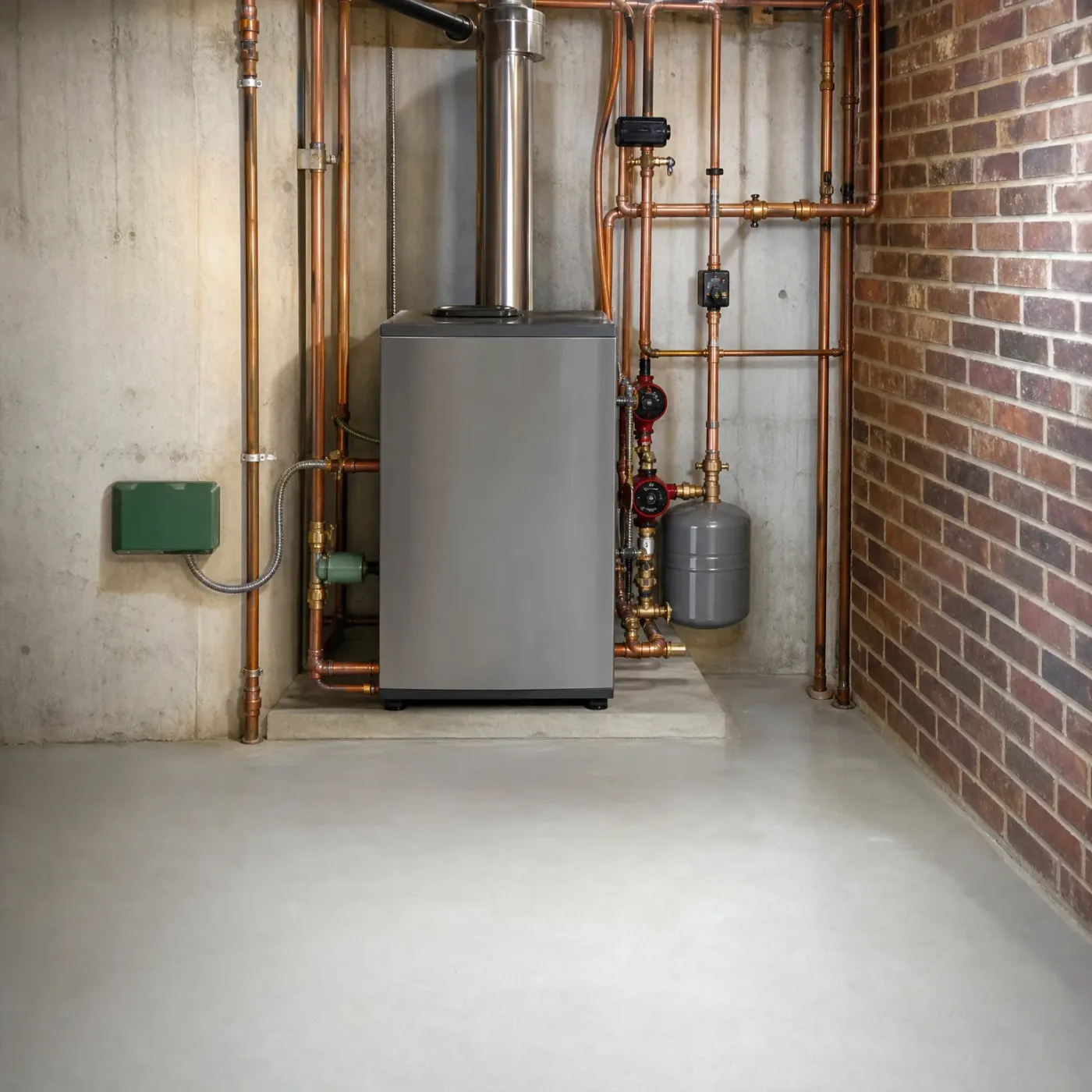
System working right
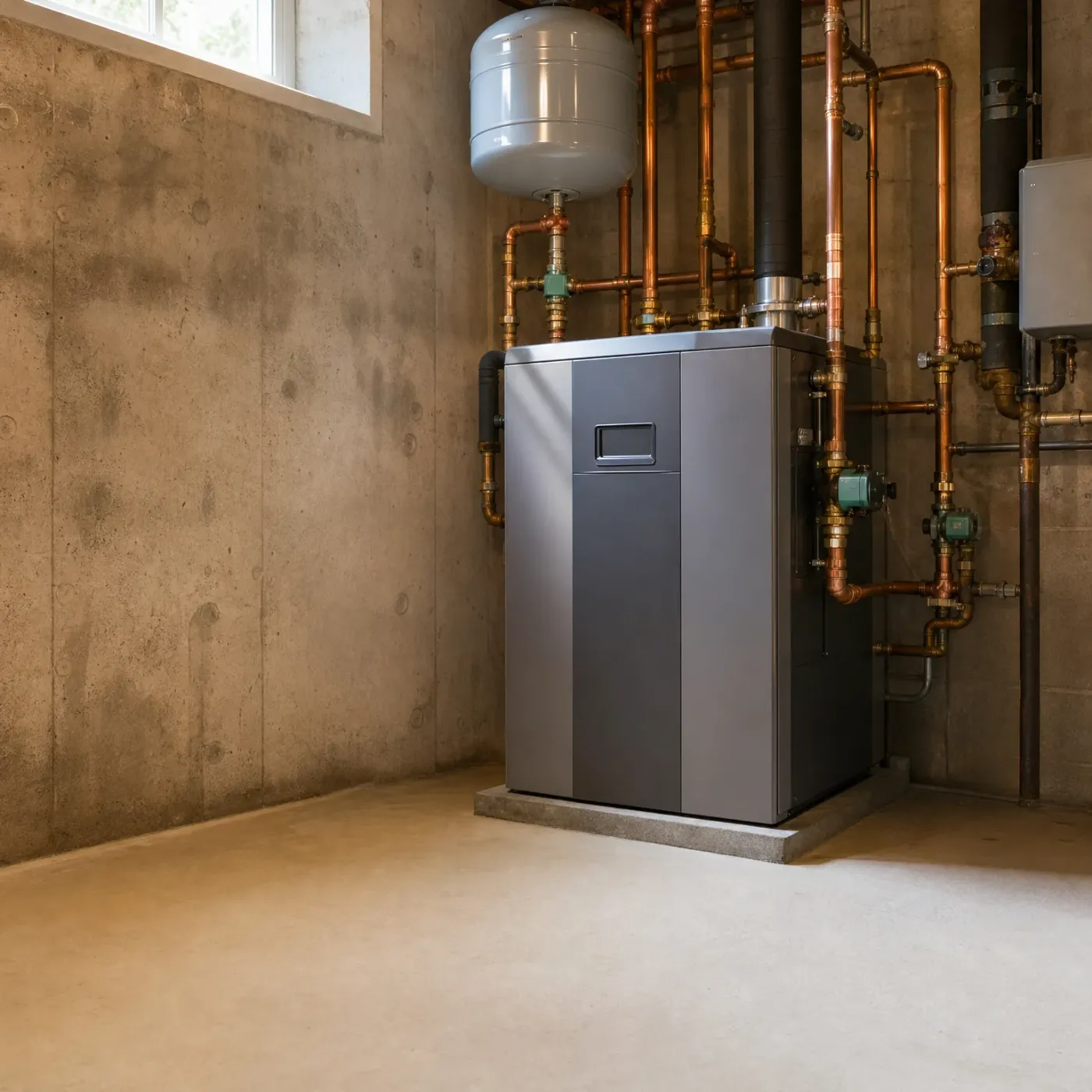
This is a boiler loop doing its job. Pumps push hot water out through the copper lines, pressure holds where it should, and the expansion tank does nothing but sit there in reserve. Every radiator fed by this loop gets warm because nothing is blocking the path between the burner and the room.
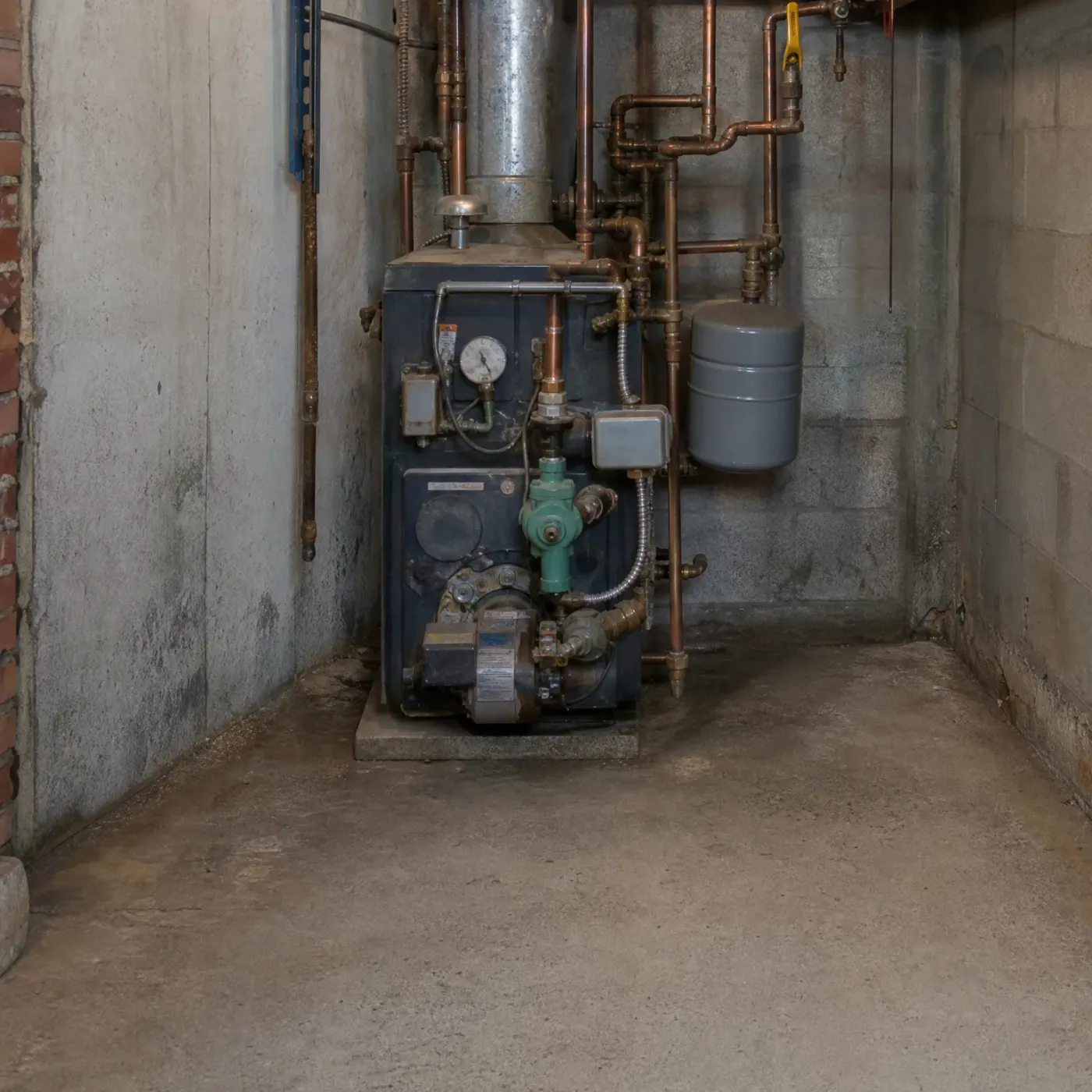
System losing the fight
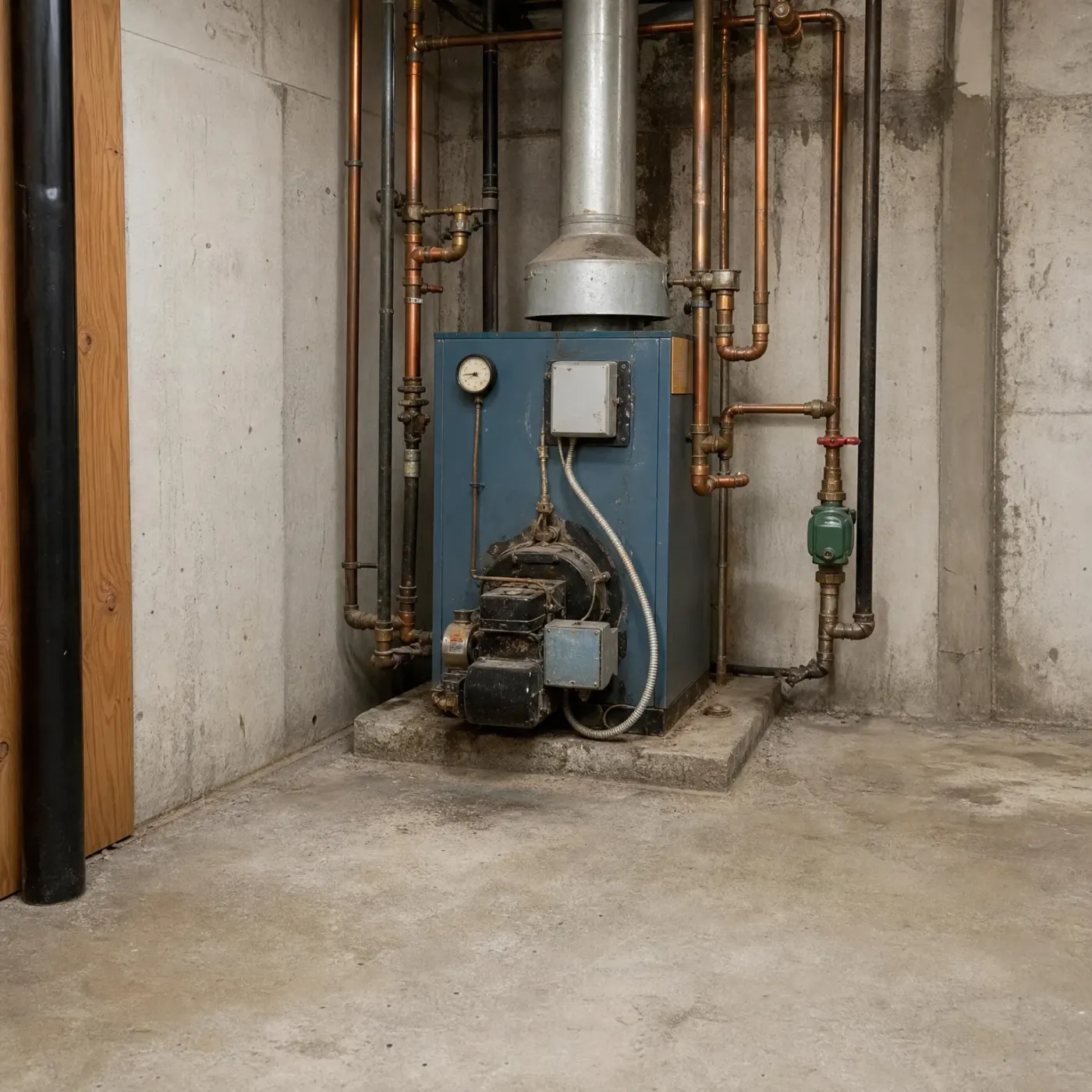
This older oil-fired boiler can fire all day and still leave radiators cold upstairs. The gauge, the circulator, the flue up top, each one is a place where the loop can fail quietly while the burner keeps running. A contractor who services these in New Jersey basements every winter knows which of these usually gives out first.
You bleed a cold radiator, it fills back up and holds heat through the night, and the fix was five minutes with a key. That's air in the line, nothing more.
You bleed it, it's cold again by the next evening, or water keeps dribbling out instead of just air. That's a pinhole, a bad vent, or a pump losing its bearing, and it calls for someone who works on these loops.
Winter nights average 26°F statewide
Winter nights here average 26°F, which means your boiler is firing most of the night to hold the house, not just taking the edge off. A cold radiator on a night that cold means a room losing heat it needs, not a minor annoyance to deal with later.
NOAA nClimDiv 1991-2020 county normals weighted by homes
1
Burner fires and heats water inside the boiler's heat exchanger
2
Circulator pump pushes that hot water out through the supply lines
3
Water travels through branch lines toward each radiator in turn
4
Radiator's air vent lets trapped air escape so water can fill it
Before you get your boiler repairAfter you get your boiler repair
New Jersey winter nights average 26°F, by National Weather Service data, and a boiler answers that by running long stretches instead of short bursts. The longer it runs, the more water is moving through the loop, and the more a trapped air pocket or a stuck zone valve shows up as a cold radiator while everything around it stays warm. On a mild night a dead radiator might just mean one chilly room. At 26 degrees it means that room is losing heat faster than the boiler can replace it, and the people in it notice within the hour, not the next morning.
NOAA nClimDiv 1991-2020 county normals weighted by homes
A cold radiator has a reason, and it's findable
A boiler that runs while one radiator stays cold is telling you something specific. Air in the line, a stuck zone valve, a pump that's lost its bearing, sludge sitting low in the radiator itself. The fix depends on which one it is, and that's a job for someone standing in your basement with a gauge in hand, not a guess made over the phone.
You don't have to spend a cold evening calling boiler companies around New Jersey, explaining the same problem to each one, then sitting on quotes trying to tell them apart. One licensed local contractor who works on these systems all winter gets the call, looks at your pressure, your pump, your vents, and tells you what's actually wrong. You're left knowing what it is and what it takes to fix it.
Boiler Repair
Describe it once
Step 1 of 3: Equipment
Tell a local repair pro what your boiler is doing.
Describe your boiler job, and a local pro who handles it gets in touch.
Send the request today and stop worrying about who to call.
Send the request and finding a pro stops being your problem.
One form replaces the calls you'd make to find a boiler pro.
Describe what your boiler is doing once, in one form.
Only one pro gets your request, so you hear from one company.