Why your boiler makes a banging noise in New Jersey

Step 1 of 3: Equipment

That banging usually means kettling. Water in the heat exchanger boils fast at the spot where scale and sediment have built up, and the steam bubbles collapse with a bang you can hear through the house. It happens more in older boilers that haven't been flushed in a while, and it gets worse the longer the sediment sits, because the layer insulates the metal and makes the water right there boil even when the rest of the loop is far cooler. Banging can also come from a loose or failing pump, or from pipes that expand against a strap as they heat up. None of these fix themselves. Kettling stresses the heat exchanger every time it happens, and a heat exchanger is one of the more expensive parts of a boiler to replace. A boiler making this noise in New Jersey, where most homes run on gas heat through the winter, is worth having looked at before the banging turns into a leak or a system that won't fire at all.

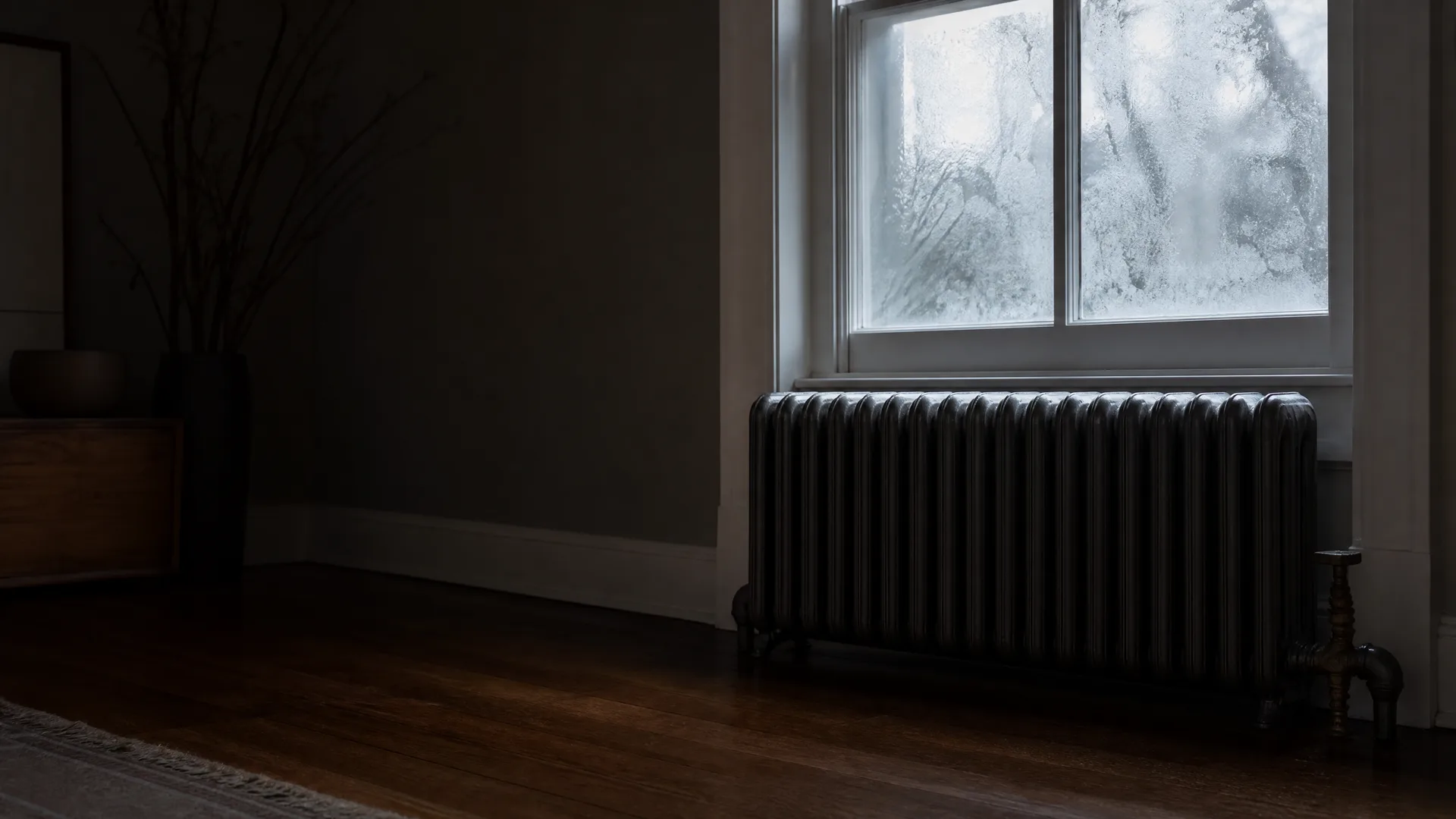
A cast-iron column radiator stands beneath a frosted window in a dim room with dark walls, a wood floor, and a vase of bare branches on a low cabinet at left.

You're up before the thermostat kicks the boiler off for the morning. Six thirty, maybe, and the living room still holds the night's cold. Ice has formed a thin film on the inside of the window glass above the radiator, and the cast iron under it is ticking away, trying to catch up. Then the bang comes, loud enough that you look over like something fell. It's just the boiler working through whatever's built up in there. Outside, the sky is still dark, the kind of January morning that makes you reach for a sweater before coffee. You stand there a second, waiting to see if it happens again.

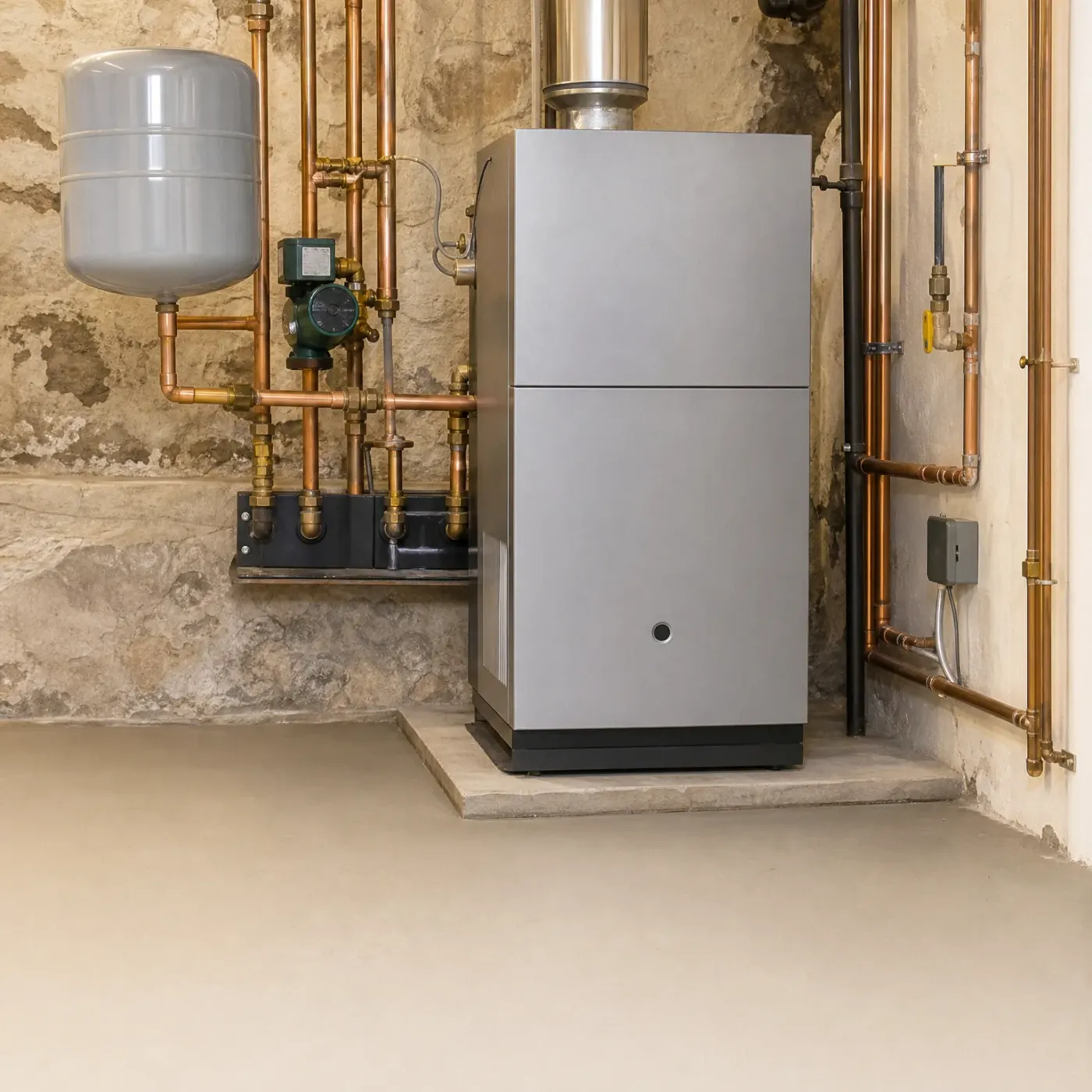
A gray boiler unit with a flue pipe stands on a concrete pad in a basement, surrounded by copper piping, a circulator pump, an expansion tank mounted on a stone wall, and an electrical outlet.
Clean copper lines, a full expansion tank, and no scale built up in the exchanger. This boiler heats quietly because sediment never got the chance to settle.
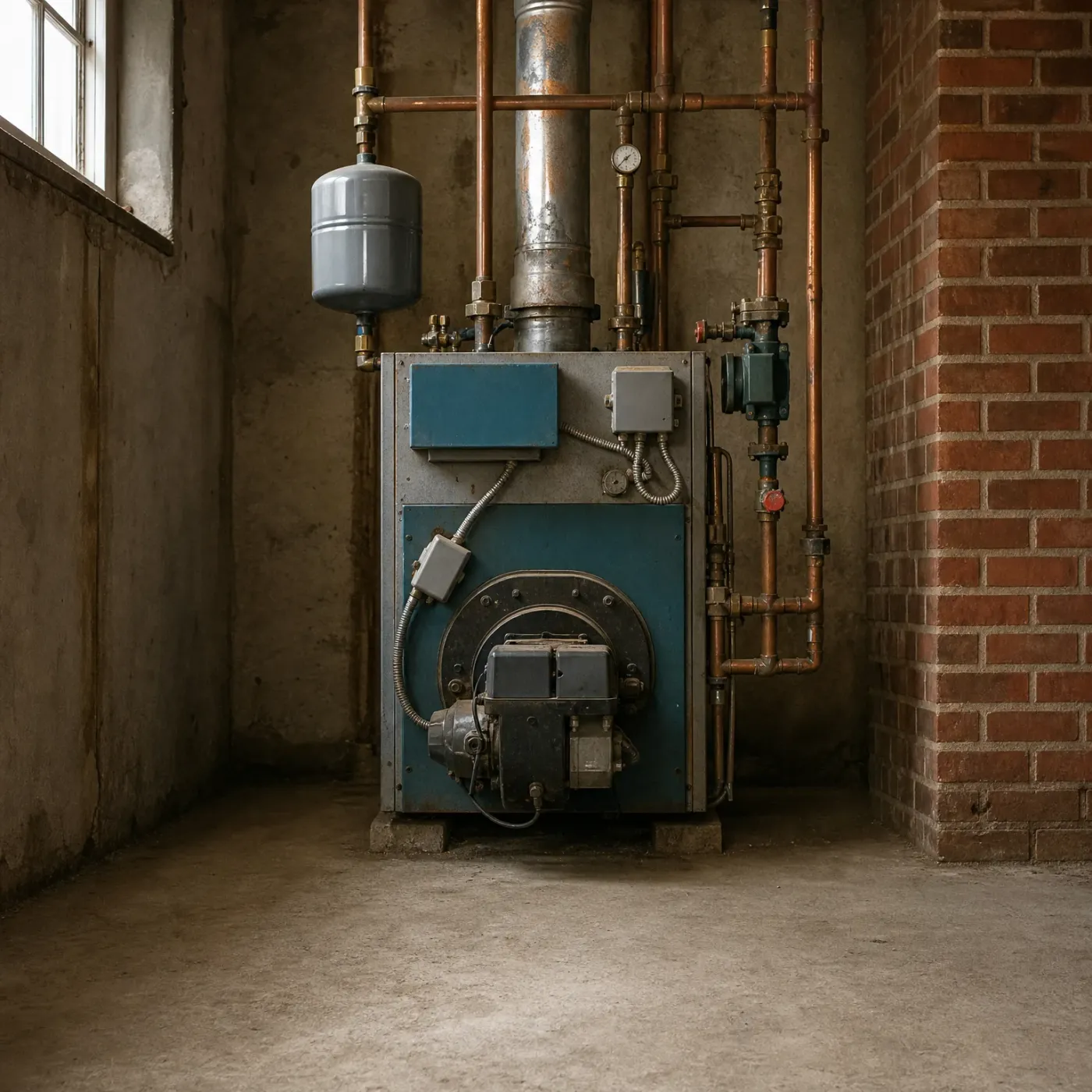
A blue cast-iron boiler with a burner unit, gauges and copper piping stands in a concrete-floored basement room beside a red brick pillar and a window.
Bare pipes and an old jacket hide a tank that's been boiling the same mineral-heavy water for years. That bang is steam punching through scale on its way out.

How kettling actually happens

  • Kettling starts at the bottom of the heat exchanger, where scale traps a thin layer of water against the hot metal.
  • That trapped water flashes to steam before the rest of the water around it heats up, and the bubbles collapse fast.
  • Each collapse sends a shock through the water in the exchanger, which is the bang or knock you hear at the boiler.
  • Softer water areas see less of this because there's less mineral left behind to build the scale layer in the first place.
  • A boiler that's gone years without flushing sediment out of the bottom of the tank is the one most likely to kettle.
  • The noise usually shows up first when the boiler's working hardest, on the coldest mornings of the year.

Scale builds up slowly, mostly on the bottom of the heat exchanger where the flame sits closest to the metal. That layer doesn't conduct heat the way clean metal does, so a thin film of water sitting right against it gets much hotter than the water moving past above it. That trapped film boils before the rest of the tank is anywhere close to boiling. The steam bubbles it throws off travel up into cooler water and collapse almost instantly, and each collapse is a small, fast pressure wave hitting the inside of the exchanger. One bang is one bubble. A boiler that's kettling badly is producing dozens of these a minute, which is why the noise can sound like gravel or marbles moving through the pipes rather than one clean knock. Water here runs harder in some parts of New Jersey than others, and harder water leaves more mineral behind every time the boiler cycles, so homes on well water or older municipal lines tend to see scale build up faster than homes with softer supply. None of this depends on the boiler's age by itself. It depends on how long it's gone since the bottom of the tank was last flushed out. A boiler installed ten years ago that's never had sediment drained can kettle sooner than a thirty-year-old one that has.

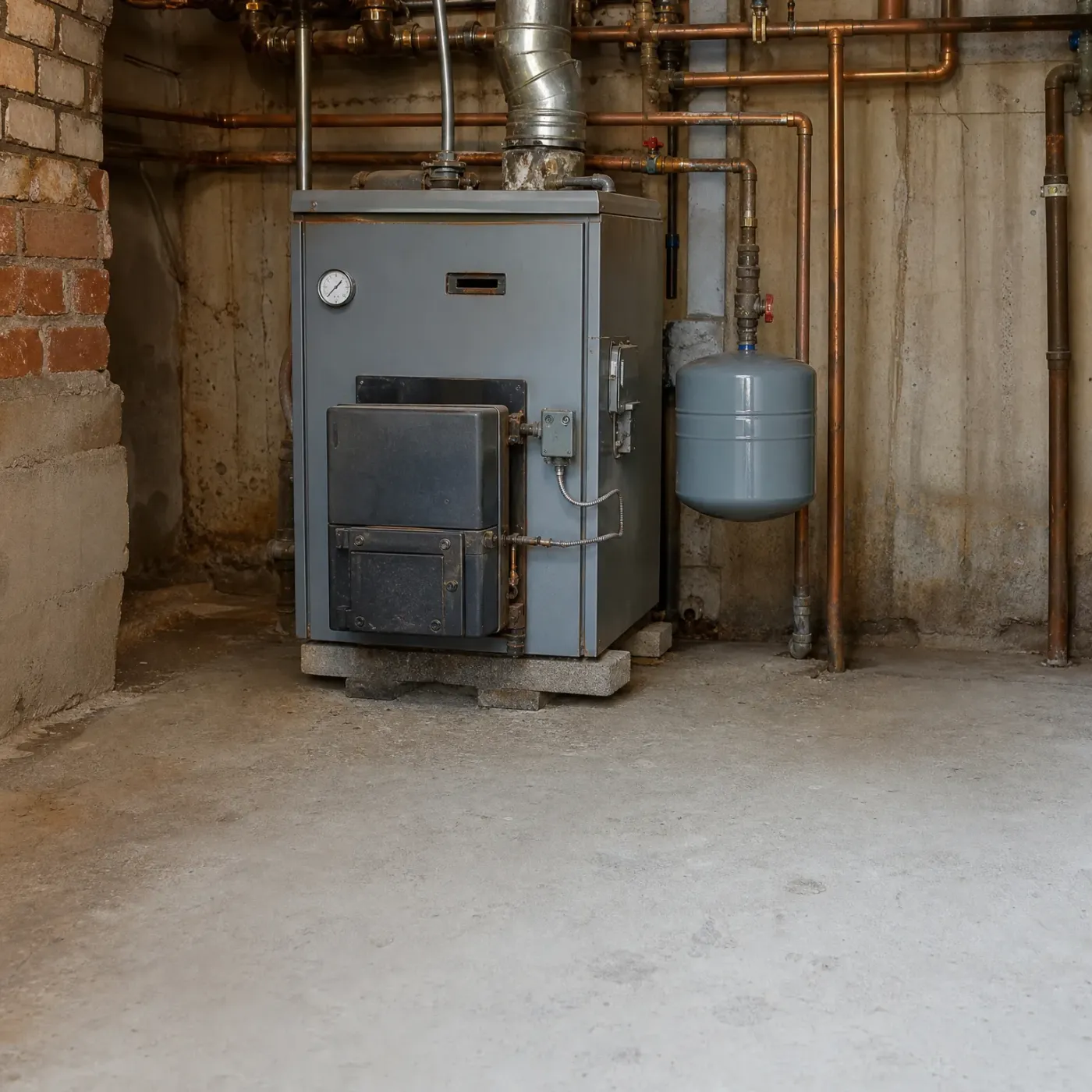
A gray boiler on a concrete block base in a basement, with copper piping, a metal flue, and a gray expansion tank mounted beside it against a concrete wall.
Before you get your boiler repair
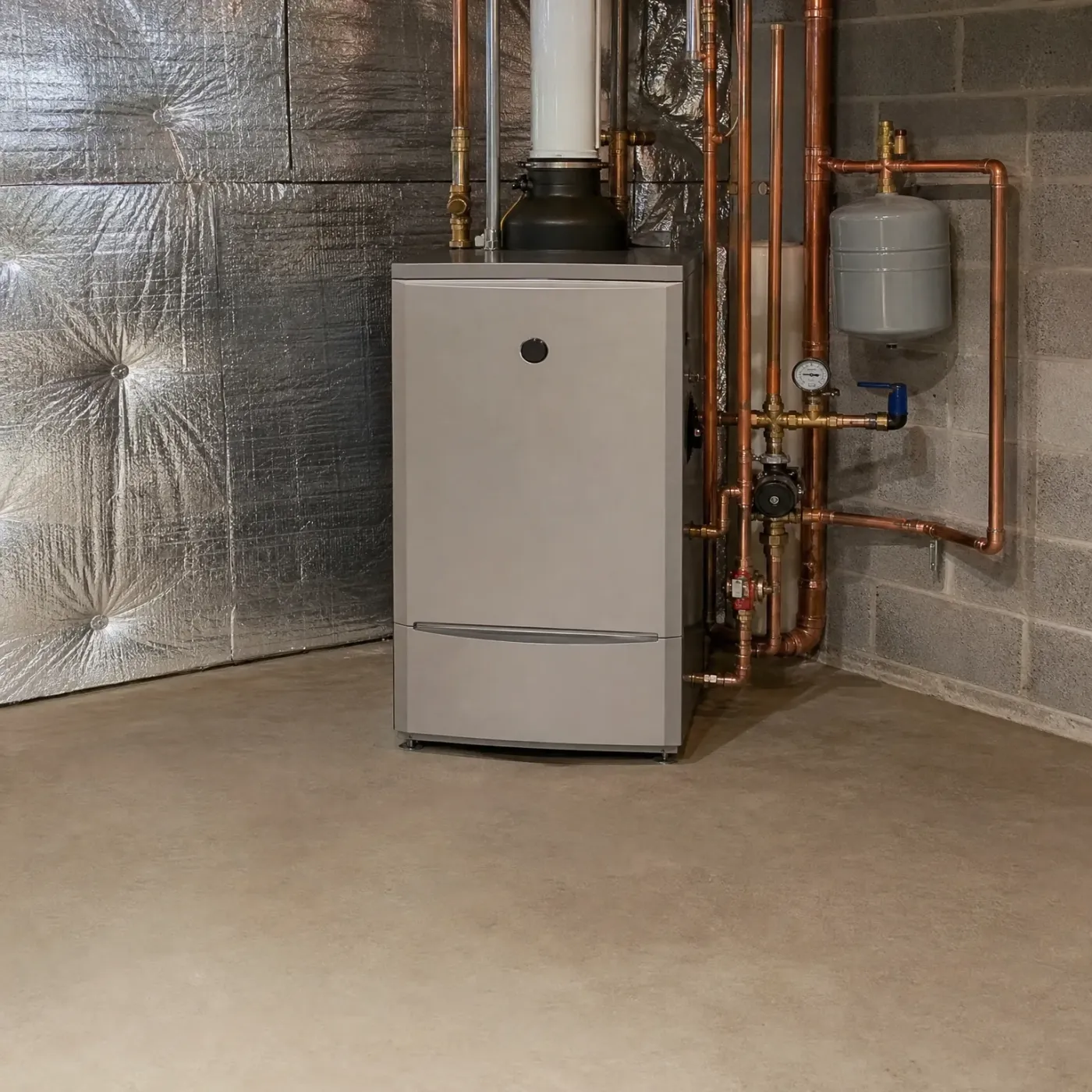
A gray residential boiler in a basement corner with copper piping, a circulator pump, pressure gauge, blue-handled valve and gray expansion tank against a concrete block wall, next to a foil-insulated wall.
After you get your boiler repair

Scale builds up a little more every heating season in New Jersey, wherever the water running through the boiler is hard. It doesn't flush itself out.

Once that layer is thick enough, the bang comes back on the next cold night, and it keeps coming back until someone removes the scale or replaces the exchanger.

A smiling man with dark curly hair in a dark green henley shirt sits on a light sofa in a living room with large windows, a lamp, shelving, a stone fireplace, and a bowl of popcorn in the foreground.
A smiling man in a dark long-sleeved henley shirt sits on a beige sofa in a living room, with a bowl of popcorn and a remote on the table in the foreground and shelves, a lamp, and a doorway behind him.
A smiling man with graying hair and stubble in a blue henley shirt sits on a gray sofa with cushions in a living room, with a bowl of popcorn on a wooden table in the foreground.
A smiling man in a dark green long-sleeve shirt reclines on a sofa in a dimly lit living room, with a bowl of popcorn on a side table in the foreground and a bookshelf, lamp, and houseplant behind him.

Hand off the boiler problem

A banging boiler doesn't go quiet on its own, and tracking down someone licensed to open up the heat exchanger and deal with the scale inside it takes real time. You'd be calling around New Jersey, explaining the noise and when it started to one contractor after another, waiting on callbacks, then weighing quotes against each other while the banging keeps you up at night. With gas heat running most of the winter here and power costing what it does in this state, a boiler that's straining against sediment isn't a small thing to leave alone. Send the request once and that search stops being something you have to manage. No more repeating the same description of the noise to a third or fourth contractor, no more sorting through estimates on your own. Someone qualified gets the details and takes it from there, so the only thing left for you to do is wait for the knock on the door.

Flush it now, or wait it out

A contractor can drain the system, flush the scale out of the heat exchanger, and check the circulator while the boiler's apart. That's the direct route. The banging stops because the sediment that was causing it is gone, and whatever's left in the water has somewhere to go besides the bottom of the exchanger. It takes the boiler offline for part of a day, which matters if it's the middle of January and that boiler is the only heat in the house.

What waiting actually costs you

Leave it alone and the boiler keeps running, noise and all, until something downstream of the scale gives out. Heat exchangers crack under that kind of uneven heating eventually. A cracked exchanger isn't a flush anymore, it's a replacement, and replacements cost a lot more than the repair that would have prevented them. The noise itself isn't dangerous on its own, but it's telling you the exchanger is working harder than it should every night it happens, and that wear doesn't reverse itself once the weather turns cold again.

Winter nights average 26°F statewide

At 26°F, your boiler is running most of the night to keep the house warm, and that's more hours for scale-trapped water at the bottom of the exchanger to heat up and flash into steam. Colder nights mean more banging, not less.

NOAA nClimDiv 1991-2020 county normals weighted by homes

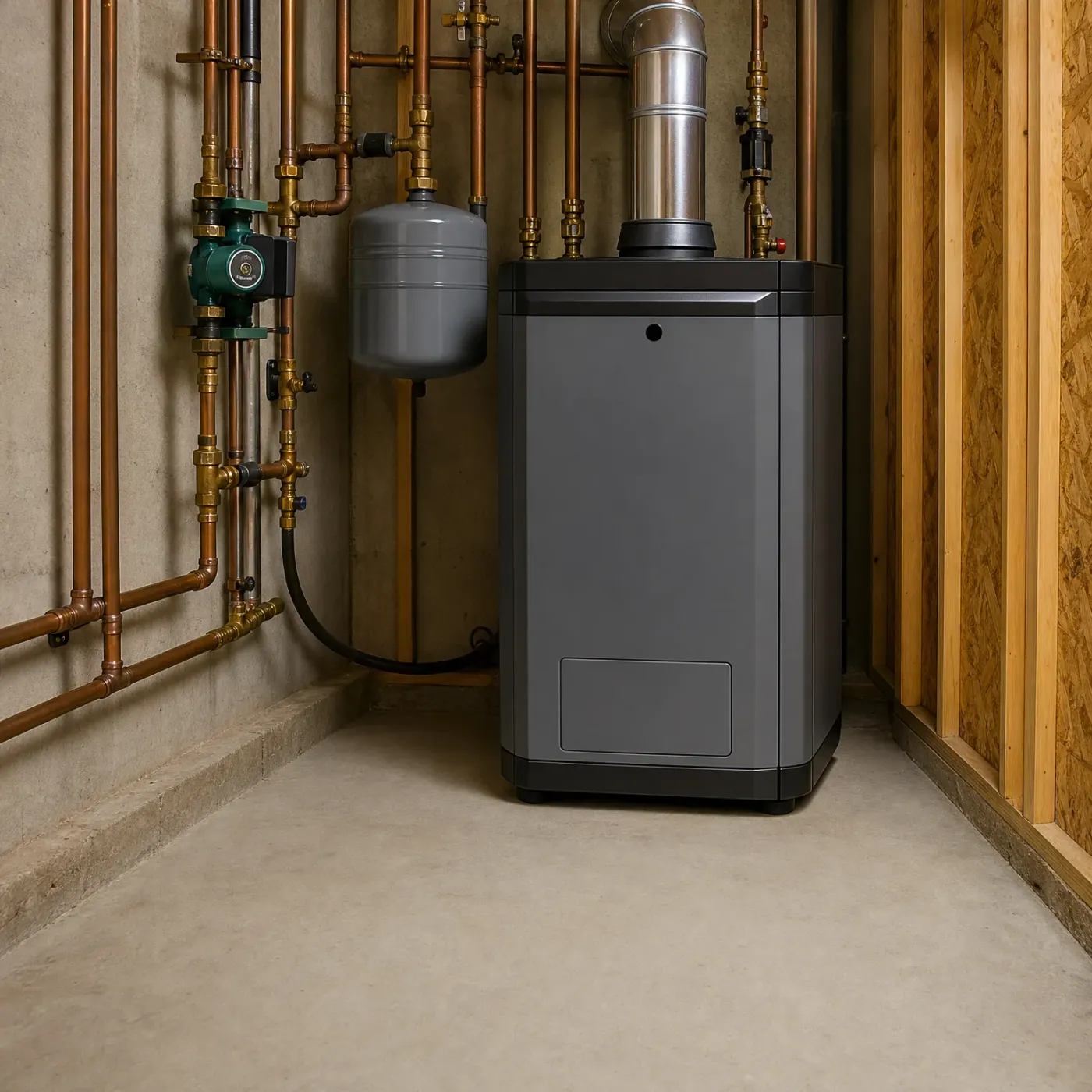
A gray floor-standing boiler with a metal flue pipe stands in a basement corner beside copper piping, brass valves, a green circulator pump, and a gray expansion tank on a concrete wall, with exposed wood framing and sheathing at right.

Running clean

Copper lines, brass fittings, and a full expansion tank, all feeding a boiler that heats without a sound. Scale hasn't had the chance to build up in the exchanger, so there's no trapped water to flash into steam and no bang to hear from upstairs.

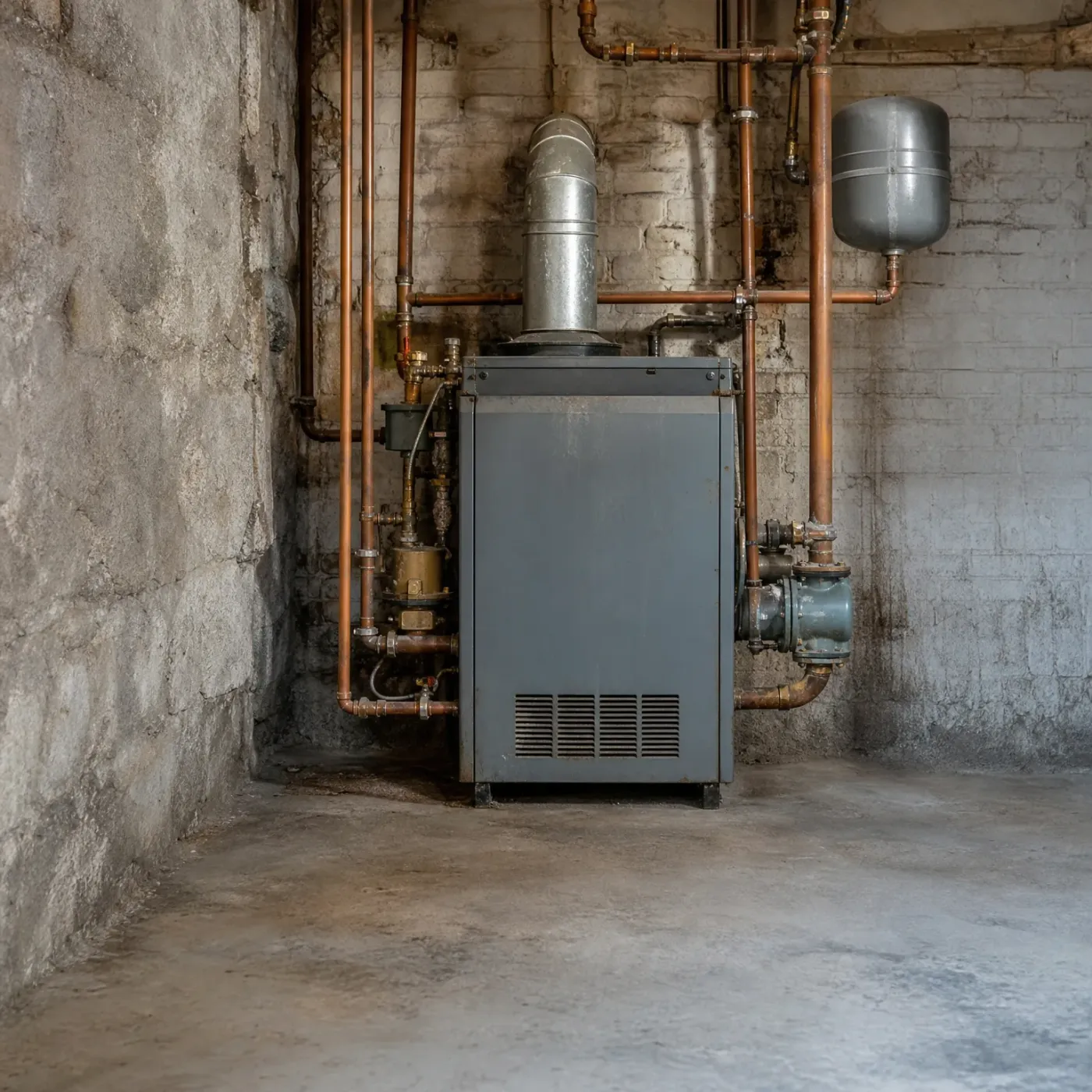
A gray boiler with a metal flue pipe and copper piping stands against a weathered painted brick basement wall, with an expansion tank mounted overhead and a bare concrete floor in front.

Running on scale

The galvanized vent and old cast iron on this one have been moving the same hard water for years. Sediment has settled at the bottom of the exchanger, and that's where the banging starts, worse on the coldest nights.

A closed dark laptop and a ceramic mug of coffee on a wooden dining table, with wooden chairs, a dark kitchen cabinet with cutting boards and a potted plant, and a leafy plant by a window in the background.

The bang is scale, not a boiler giving out

The noise is sediment trapped at the bottom of the heat exchanger, boiling before the rest of the water gets hot. It isn't the boiler failing, and it isn't going to fix itself. The only way it stops is a flush that clears the scale out, done by someone who can get the heat exchanger open safely.

Once you send the form, you're done hunting for who can actually do this. No scrolling through listings for a boiler contractor in New Jersey, no calling three of them to ask if they handle kettling, no repeating the story about the banging and the cold morning to each one. That part of it is off your plate. What's left is a contractor showing up to drain the system and flush what's built up inside it, which is the part that was never going to be quick or free in the first place.

A living room corner with a beige sofa and cushion, a round wooden coffee table holding a pale ceramic vase of eucalyptus stems and a wooden bowl, and a curtained window with a potted plant above a latticed radiator cover in the background.
A beige upholstered armchair with a dark green pillow sits beside a woven basket holding a cream fringed throw, with a potted leafy plant in a second basket near a window.
Sunlit living room corner with a beige upholstered sofa and striped linen cushion, a potted small-leaved tree in a woven basket beside sheer curtains, a framed artwork on the wall, and a jute rug on a wood floor.
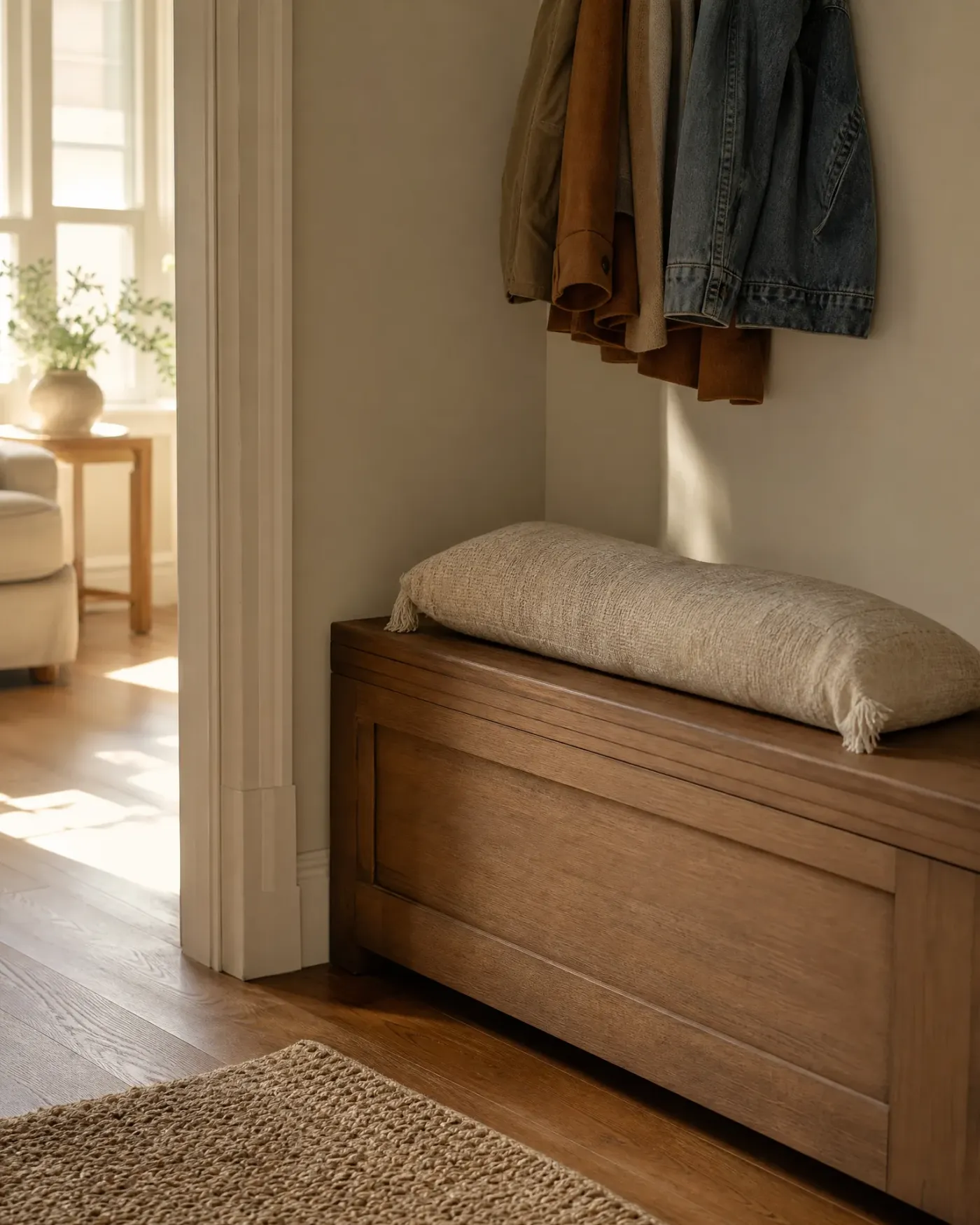
A wooden storage bench with a long linen bolster cushion sits against a pale wall beneath hanging jackets, beside a doorway showing a plant and chair in sunlight, with a woven rug on the wood floor.
A dark wood sideboard holding a shallow wooden bowl and a pale ceramic vase with leafy branches, against a beige wall with a framed artwork and a window showing a sunset sky and trees.
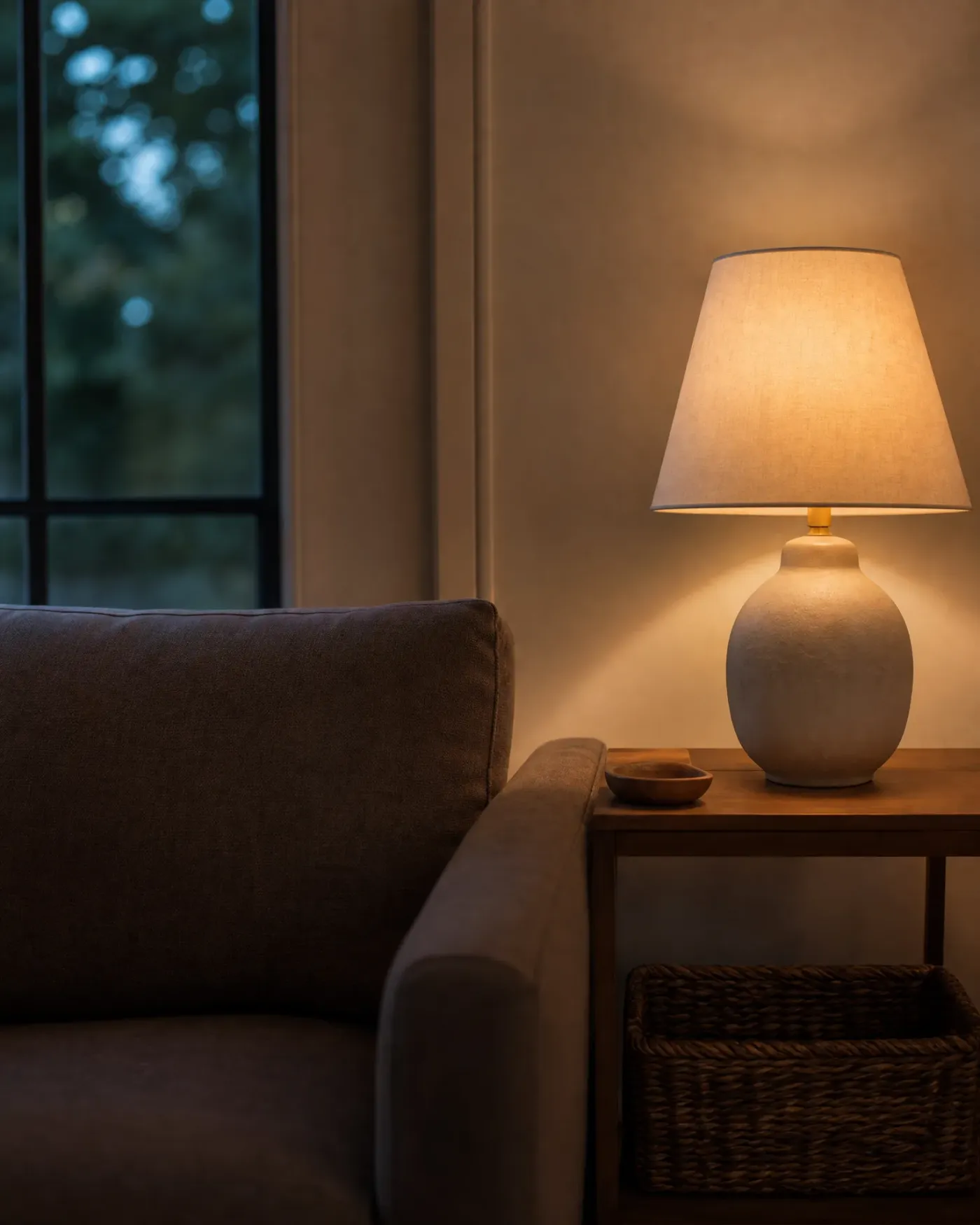
A lit ceramic table lamp with a tapered fabric shade sits on a wooden side table beside a small wooden bowl, with a woven basket on the shelf below, next to a gray upholstered sofa and a dark-framed window at dusk.

Hand off the search today

Describe what your boiler is doing once, in one form.

Send my request

Sending the form costs nothing.