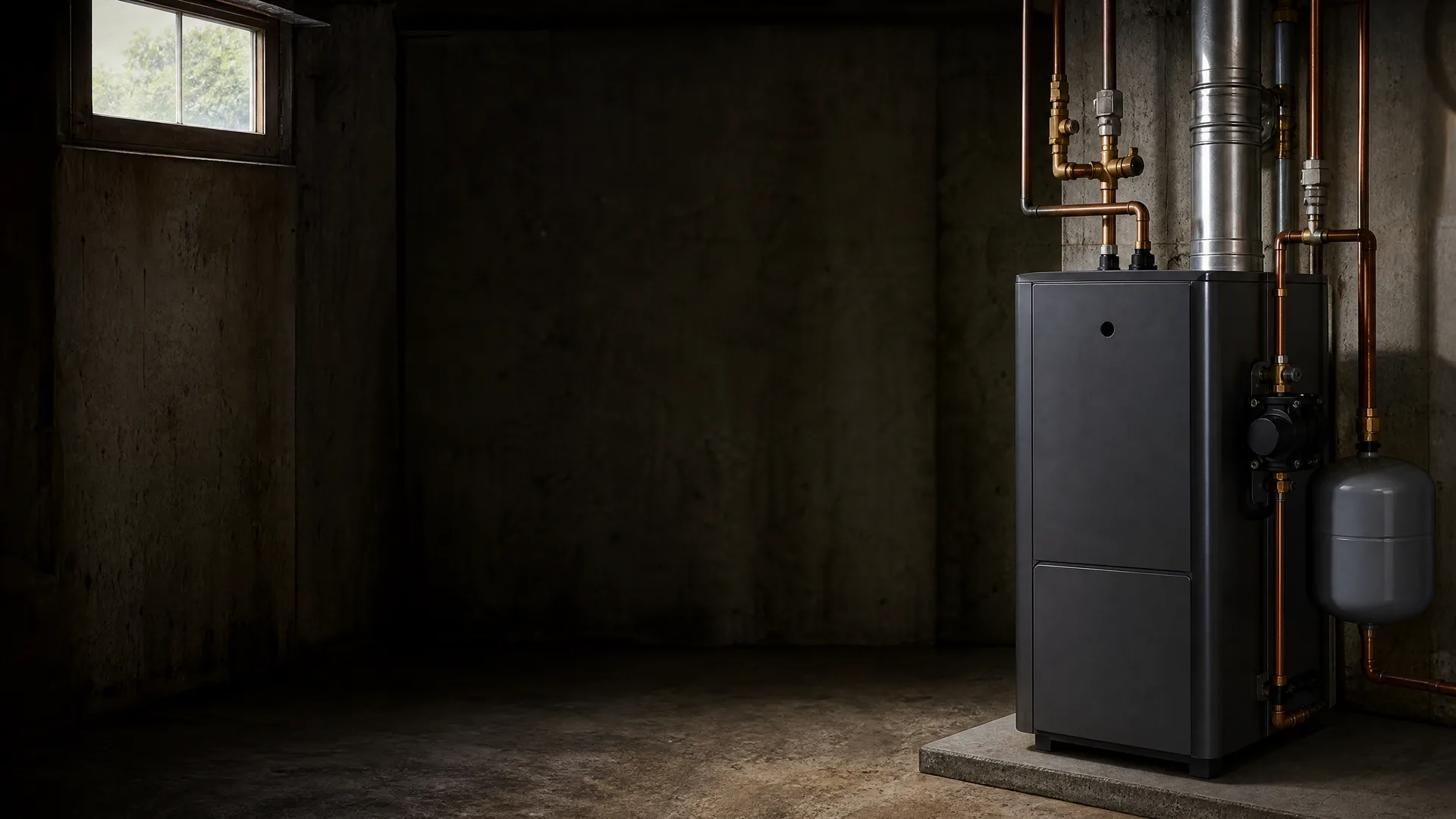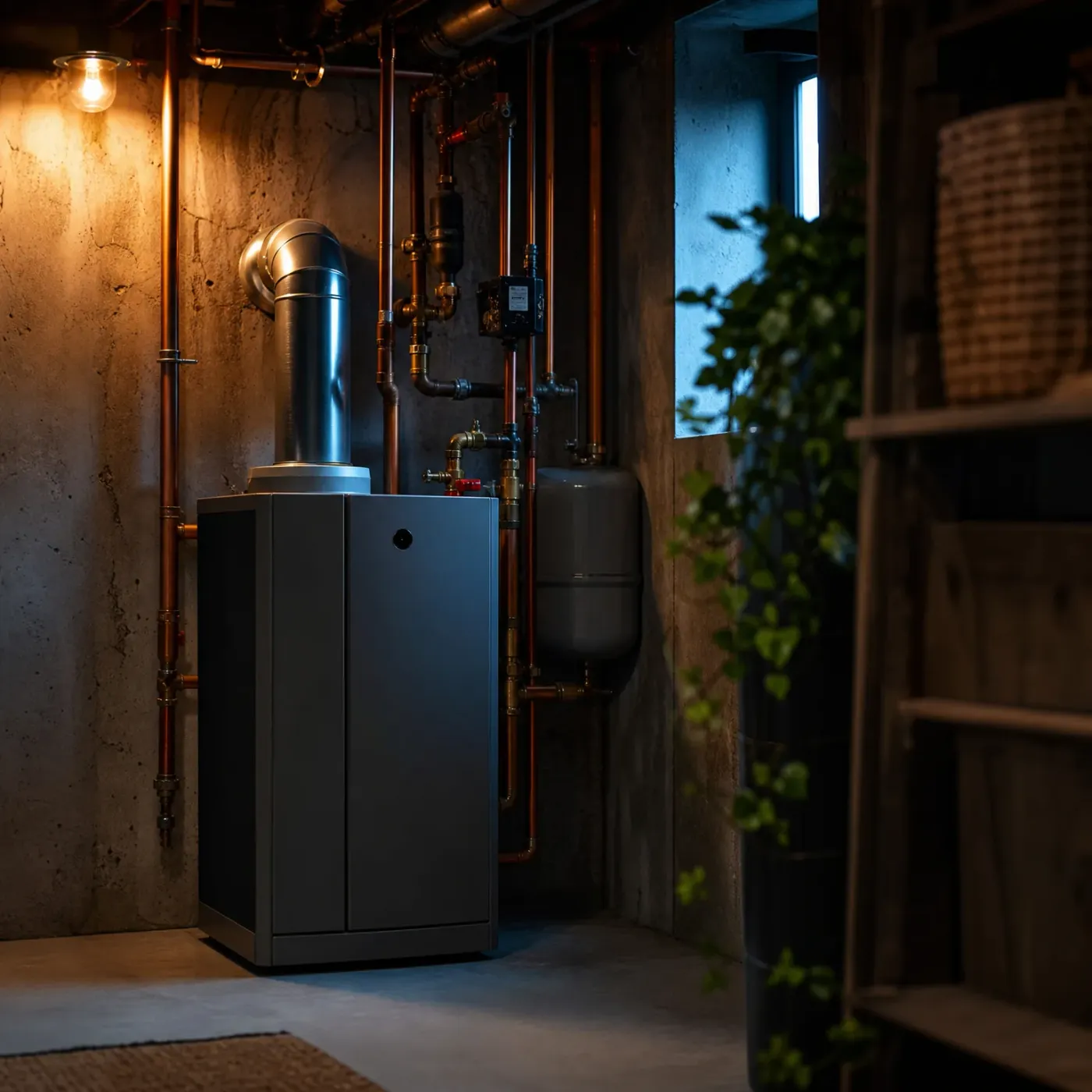







A dark grey floor-standing boiler with a metal flue stands against a concrete basement wall, surrounded by copper pipework, valves and a wall-mounted expansion tank, with ivy and a shelving unit at right.

Matched to your boiler job

Why your boiler is losing pressure in New Jersey

A boiler that keeps losing pressure usually has a leak somewhere, a faulty valve, or air trapped in the system. This page walks through what causes it and what to check first. If it turns out you need a hand, you can get matched with a local contractor who works on boilers like yours all winter.

Find my pro

A boiler loses pressure for one of a few reasons. Water is escaping somewhere, through a pinhole leak in a pipe, a worn valve, or a fitting that's loosened over time, and you may never see a puddle because the leak can be slow enough to just evaporate. Or the pressure relief valve is letting water out because something upstream is making the system run too hot. Sometimes there's no leak at all, just air trapped in the radiators or the pipes, and bleeding it lets the gauge drop even though nothing is wrong with the water side. A boiler needs to sit around 1 to 1.5 bar cold, and if yours keeps dropping below that every few days or weeks, something is pushing water or pressure out faster than it should. Left alone, low pressure can trip the boiler out entirely and leave you without heat on a cold night, so it's worth finding where the water is going rather than just topping it off each time.

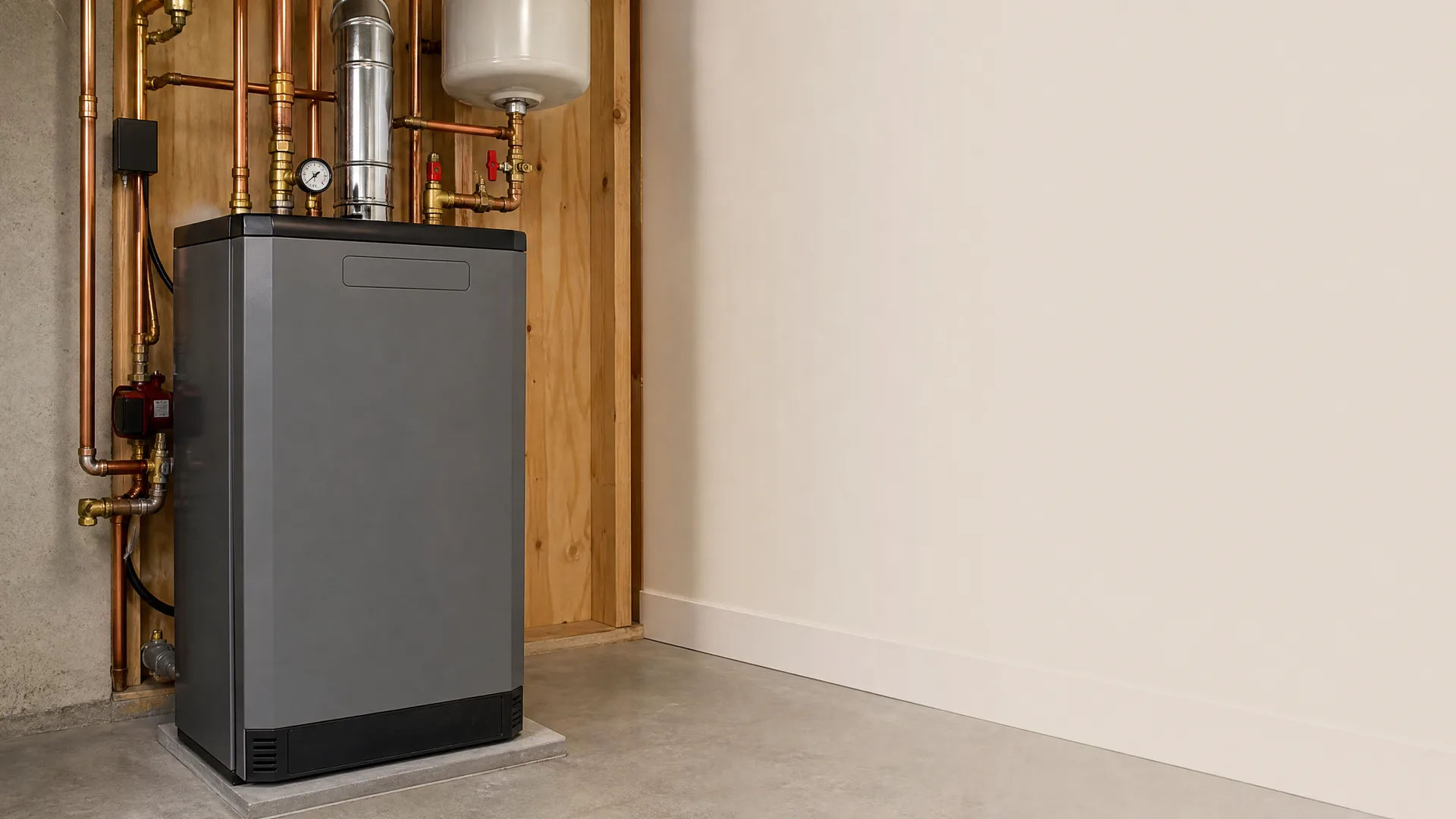
A dark grey floor-standing boiler on a concrete floor in front of a plywood wall, with copper pipes, valves, a pressure gauge, a flue pipe and a white expansion tank above it, beside a plain light-coloured wall.

Where the water actually goes

A pinhole leak can be small enough that the water turns to vapor before it ever reaches the floor. Check around the pressure relief valve and the pipe joints near the boiler itself. A damp patch, a rust stain, or mineral crust on a fitting tells you where it's been losing water even if the spot is dry when you look. The expansion tank matters too. If the bladder inside has failed, the system has nowhere to absorb pressure changes, and it bleeds off through the relief valve instead.

A gray boiler unit with a metal flue pipe stands in a basement corner, surrounded by copper piping and an expansion tank against a plain light wall and concrete floor.

What the gauge is telling you

Most residential boilers are built to hold between 12 and 15 psi when the system is cold. If the gauge reads below 12, the system is low and needs water added back. If it climbs past 30, the relief valve is doing its job by releasing pressure before something fails. A gauge that keeps creeping down over days or weeks, rather than dropping once, points to a slow leak somewhere in the system rather than a one-time event.

How does the pressure in my boiler actually get lost?

You already know the water has to go somewhere, or air has gotten in, but you want the mechanics of it. Why does a sealed, closed-loop system drop from 12-15 psi down to nothing over a few weeks or months without you ever seeing a flood or hearing a hiss.

It drops out gradually through the weakest point under pressure

A boiler system is sealed and pressurized on purpose, so any path out, a loose fitting, a worn valve seat, a hairline crack in a pipe, lets water escape a little at a time rather than all at once. The system doesn't need a big opening to lose pressure. A fitting that's only slightly loose will weep slowly, and that's often enough to drop the gauge by a few psi a week. Air works the same way in reverse. A system with a failing air separator or a bleed valve that doesn't seat right will let air in, and air takes up space water should be filling, so the gauge reads low even though nothing leaked out at all.

A man with grey hair and stubble in a dark sweater sits on a grey sofa indoors, looking off to the side, with a potted plant and a sunlit window behind him.
A man with gray hair, a beard and glasses, wearing a dark green sweater, sits on a gray sofa in a sunlit living room with a potted plant, table lamp and wooden sideboard behind him.
A middle-aged man with graying hair and a short beard sits on a blue sofa in a living room, looking toward a window, with a bookshelf, lamp and framed picture in the background.
A man with graying curly hair and a dark green sweater sits on a gray sofa in a sunlit living room, looking off to the side, with a framed picture, shelving, an armchair and a window with sheer curtains behind him.

A boiler pro near you

Your request goes to one pro, not a list of companies.

No fee to send it, and nothing to sign.

Bleeding a radiator yourself

If one or two radiators are cold at the top while the bottom stays warm, that's trapped air, and bleeding it is something you can do without calling anyone. Shut the system off, let it cool, then use a radiator key on the valve at the top until water comes out steady instead of hissing air. Check the boiler gauge after. If it dropped below 12 psi, you'll need to top it off through the filling loop. This fixes the noise and the cold spots, but it doesn't explain why air got in there in the first place, especially if you're doing this every month or two.

When it's a sign of something else

Air that keeps coming back usually means it's getting pulled in somewhere, through a fitting, a pump seal, or a valve that doesn't hold once pressure drops. That's a different problem than a radiator that needed bleeding once after the system was drained for other work. A contractor working on boilers around New Jersey all winter can pressure test the system and find where the air or water is actually getting in, rather than you topping it off every few weeks without knowing why. If the pressure keeps falling after bleeding fixes the noise for a week or two, that's the question worth having someone answer.

A woman with shoulder-length brown hair wearing a beige knit cardigan sits in a gray upholstered armchair near a window, looking off to the side with a slight smile, with bookshelves blurred in the background.
A woman with her hair in a bun holds a sleeping young child against her chest, both wrapped in a textured beige knit blanket on a sofa in a dimly lit room with a lamp, framed picture, and bookshelf behind them.
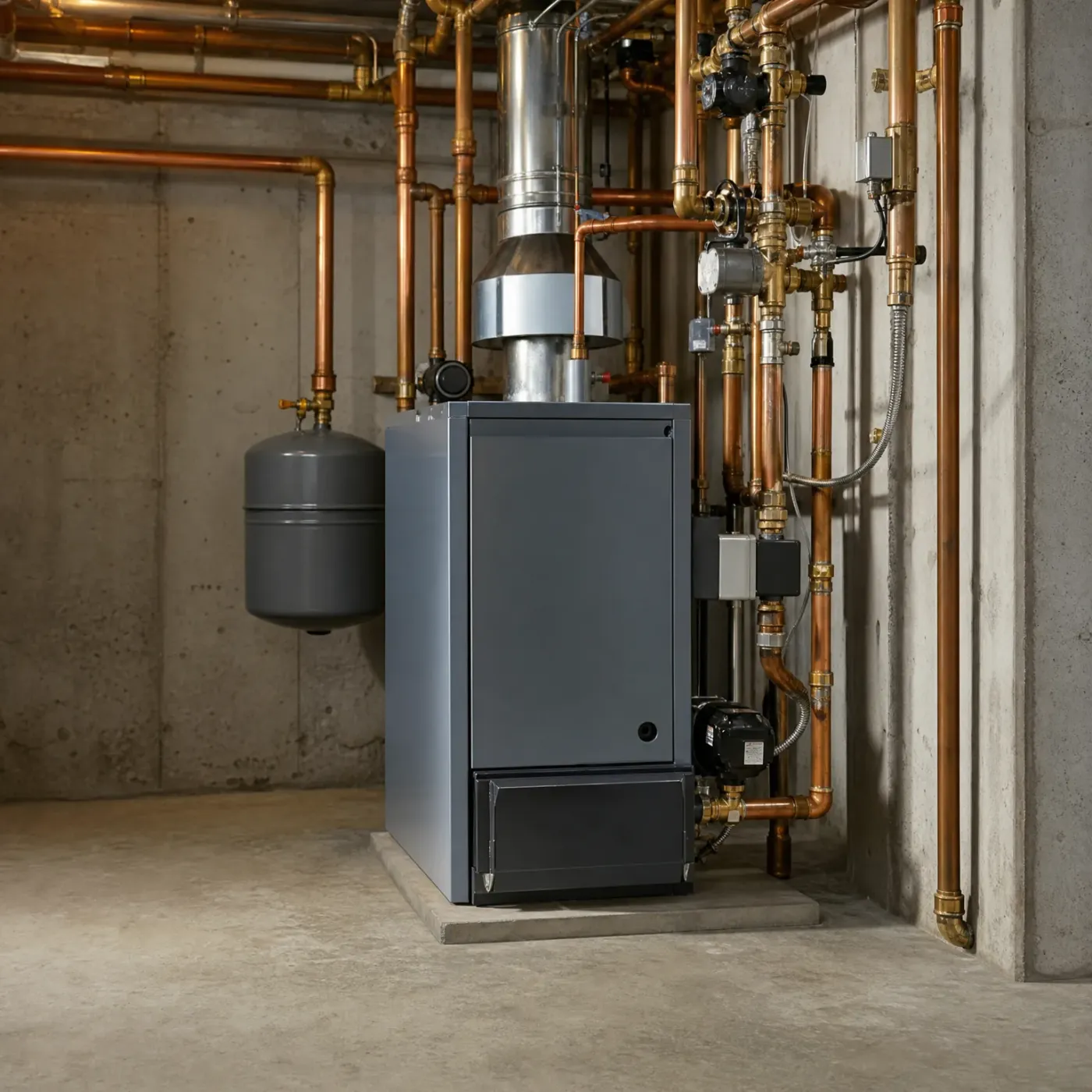
A gray boiler on a concrete pad in a basement, connected to copper piping, valves, circulator pumps, a metal flue, and a wall-mounted expansion tank.

Holding steady

This is what a boiler looks like when pressure stays where it should. The copper lines run tight to every fitting, the expansion tank mounted on the wall is doing its job absorbing changes in volume, and nothing is weeping from a joint or valve.
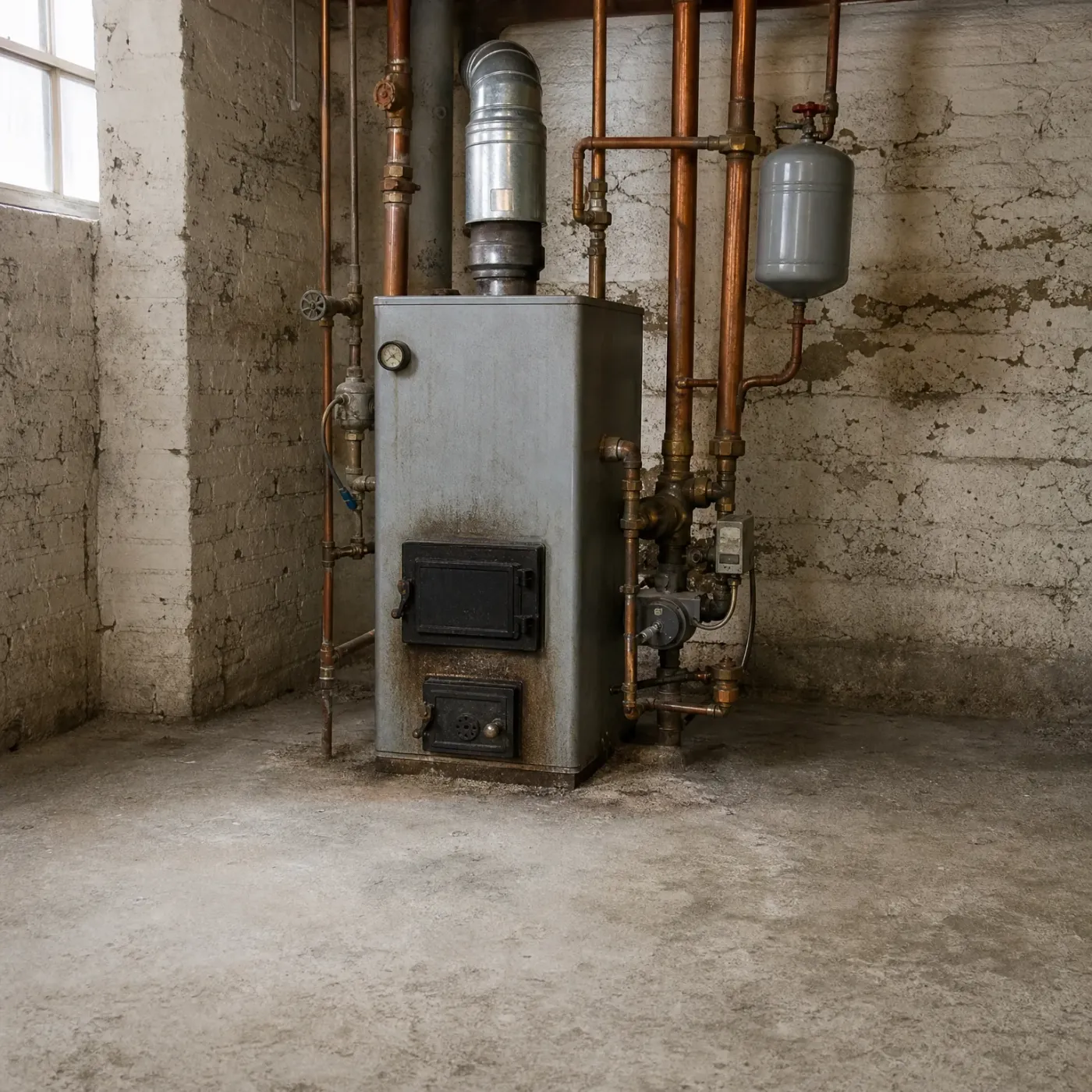

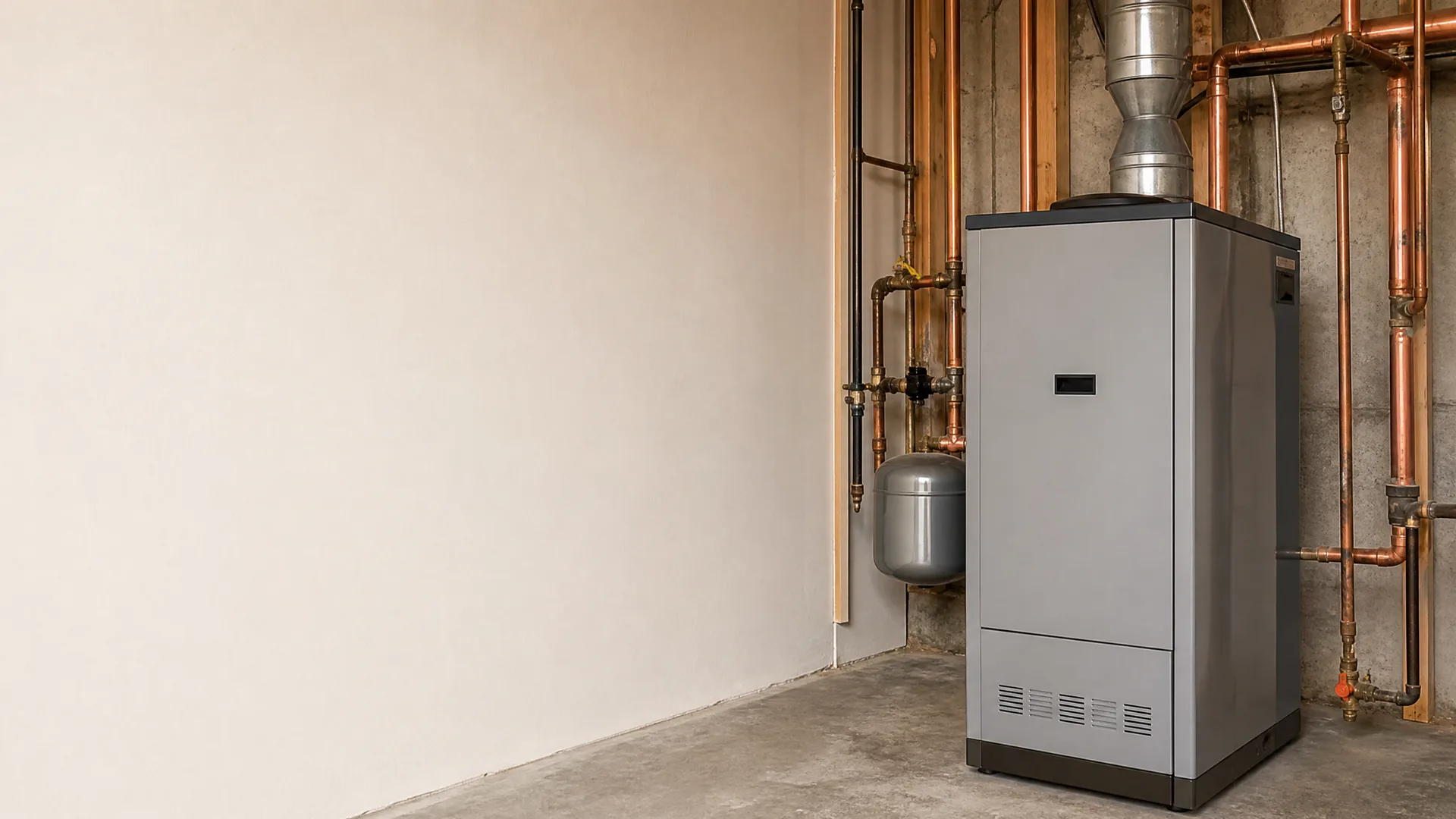
An old gray boiler with copper piping, a flue duct, pressure gauge and an expansion tank stands in the corner of a basement with painted masonry walls and a bare concrete floor.

Losing ground

This older cast-iron boiler sits alone against bare concrete, and that age matters. Decades of heating cycles work on valves and fittings, and a unit built before modern sealing standards has more places for water or air to find a way out.

What are you noticing around your own boiler

You check the gauge and it's dropped again, maybe down near zero, a few weeks after you last topped it off. Maybe the boiler's shut itself down and won't fire until you reset it. You might notice the pilot light or display acting strange, or a radiator that used to heat the whole room now only warms halfway up. Some basements show it first: a damp spot near the floor, a faint mineral crust on a pipe joint, a smell like wet metal. Left alone, a boiler that keeps losing pressure will eventually stop heating altogether, and with gas heat the main system in most New Jersey homes, that's not something to let ride into winter.

  1. Water or air slips out at a leak, valve, or fitting

  2. Pressure on the gauge drops below the normal range

  3. The low water cutoff senses pressure below its set point

  4. The boiler shuts off before it runs dry and overheats

Winter nights average 26°F statewide

Winter nights here average 26°F, cold enough that your boiler is running long hours to keep up. That steady demand puts more strain on every joint and valve in the system, and a weak spot that held fine in October can start seeping once the cold settles in for good.

NOAA nClimDiv 1991-2020 county normals weighted by homes

Where Your Boiler Stands Now

  • A dropping gauge almost always means water or air is leaving the system somewhere, not just a quirk of the boiler.
  • Pinhole leaks, worn valves, and trapped air each leave different clues, from rust stains to cold spots on a radiator.
  • Repressurizing without finding the cause just buys time until the gauge drops again.
  • A contractor who works on boilers all winter in New Jersey has likely already seen whatever is causing yours to lose pressure.
  • You'll be matched with one licensed local contractor, so you're dealing with a single call back instead of several.
  • Once the leak or valve is found and fixed, the gauge should hold steady through the rest of the season.

A boiler that holds pressure one week and loses it the next isn't being temperamental. Something is letting water or air out, and the gauge is just telling you about it. A pinhole leak at a fitting, a valve that's worn past sealing properly, or air that's worked its way into the loop all show up the same way on the dial, but they leave different clues elsewhere, a rust stain near a joint, a radiator that's cold at the top, a relief valve that's damp to the touch. Topping off the pressure gets you through a cold night, but it doesn't answer why it dropped, and most systems that lose pressure once will lose it again until the actual cause gets found.

That's where a contractor who's spent the winter on boilers in New Jersey has an edge over someone guessing. They've likely already seen the same leak, the same worn valve, the same air pocket in a system like yours, because the cold snaps here put the same strain on every boiler's weak points. When you get matched, it's with one licensed, local contractor, not a handful of companies competing for your callback. That means someone who already knows what tends to fail on these systems once the heat's been running hard, looking at your boiler instead of a stranger starting from zero.

Once the actual cause is fixed, whether that's a resealed fitting, a replaced valve, or air properly bled from the lines, the gauge should hold where it's supposed to for the rest of the season.

A dark grey boiler unit on a concrete pad in a dim basement, with copper pipes, a metal flue, and a grey expansion tank on the wall, and a small window with daylight on the left.

A local pro for your boiler repair

The pro who reaches out is licensed in New Jersey.

Step 1 of 3: Equipment