

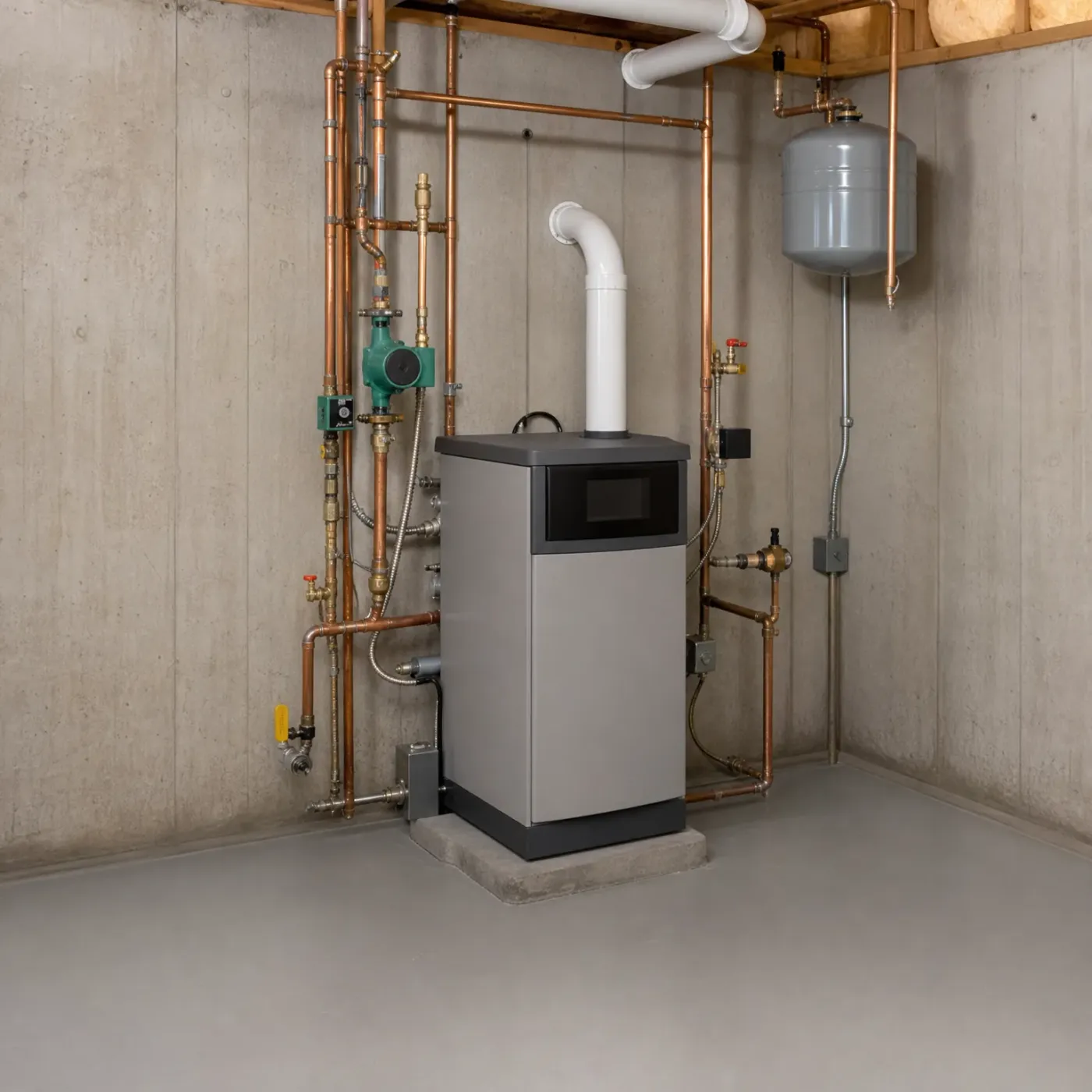
Normal operation
A boiler running right holds steady pressure through the copper lines, the pump, and the expansion tank. The gauge sits where it should. No drips at the fittings, no rust trailing down from a valve. The floor around it stays dry.
Tell a local repair pro what your boiler is doing.
Find a boiler proA puddle under the boiler or water running down the side is never nothing. Most boilers here run on gas, and a leak can mean pressure built up and let go through a valve, or a seal or fitting somewhere in the system finally gave out. Before it turns into a bigger repair or shuts the system down on a cold night, it helps to know what's actually causing the water.
Most leaks trace back to one of three things. The pressure relief valve lets water out when pressure inside the boiler climbs too high, which is the valve working as it should, not failing. A seal or gasket around a pump or fitting can wear out over years of heating and cooling and start weeping at the joint. Corrosion inside an older tank or pipe can also open a small leak that gets worse over time. With gas boilers running most homes through a New Jersey winter, a leak often shows up right when the system is working hardest, which is also when losing it causes the most trouble. Either way, the water is a symptom. Finding which part let go is what decides whether it's a quick fix or something bigger.
A boiler running right holds steady pressure through the copper lines, the pump, and the expansion tank. The gauge sits where it should. No drips at the fittings, no rust trailing down from a valve. The floor around it stays dry.
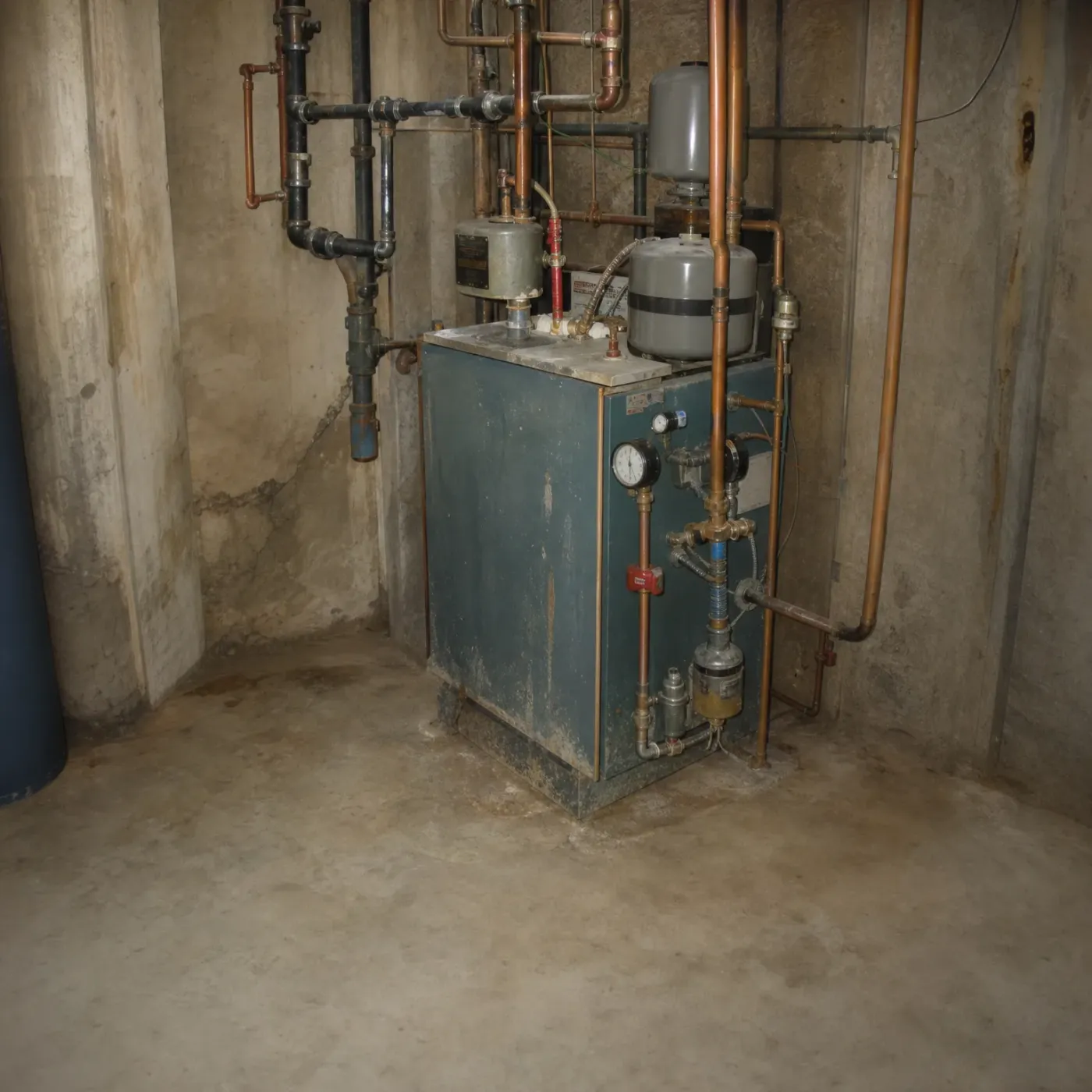
Water shows up where it shouldn't, at a valve, a fitting, or the base of the tank. The gauge may read low or jump around. Left alone, a small drip can mean a cracked part or a valve that's failing, and the pressure problem behind it doesn't fix itself.
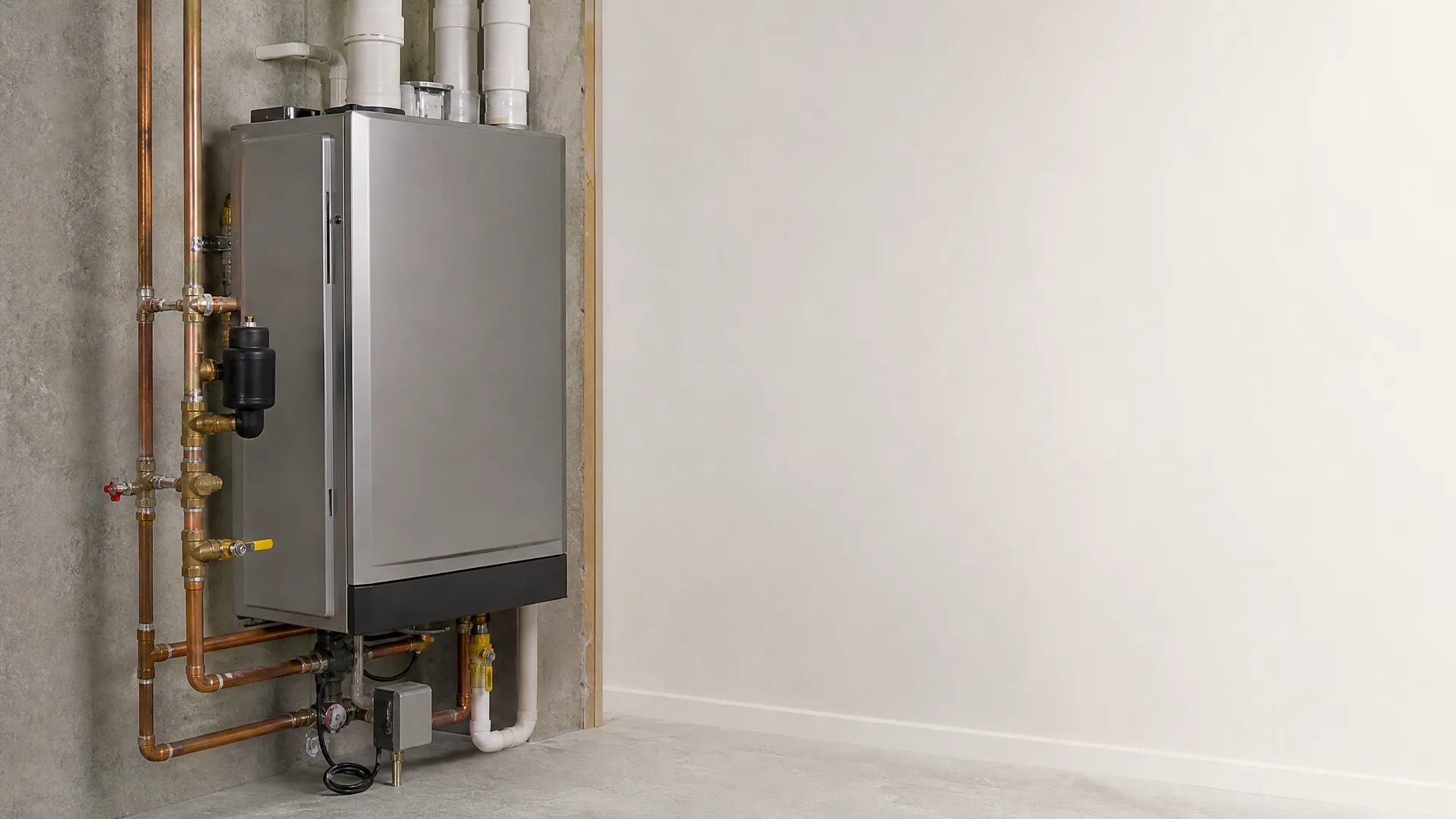
Most residential boilers are set to run between 12 and 15 psi when cold. If the needle sits above that range, the relief valve is doing its job by letting water out through the overflow pipe. That valve isn't broken. It's reacting to pressure the system built up, often from a bad expansion tank or an autofill valve stuck open. Check the gauge before you call anyone. A reading over 20 psi points to a pressure problem upstream of the valve, not a bad valve itself.
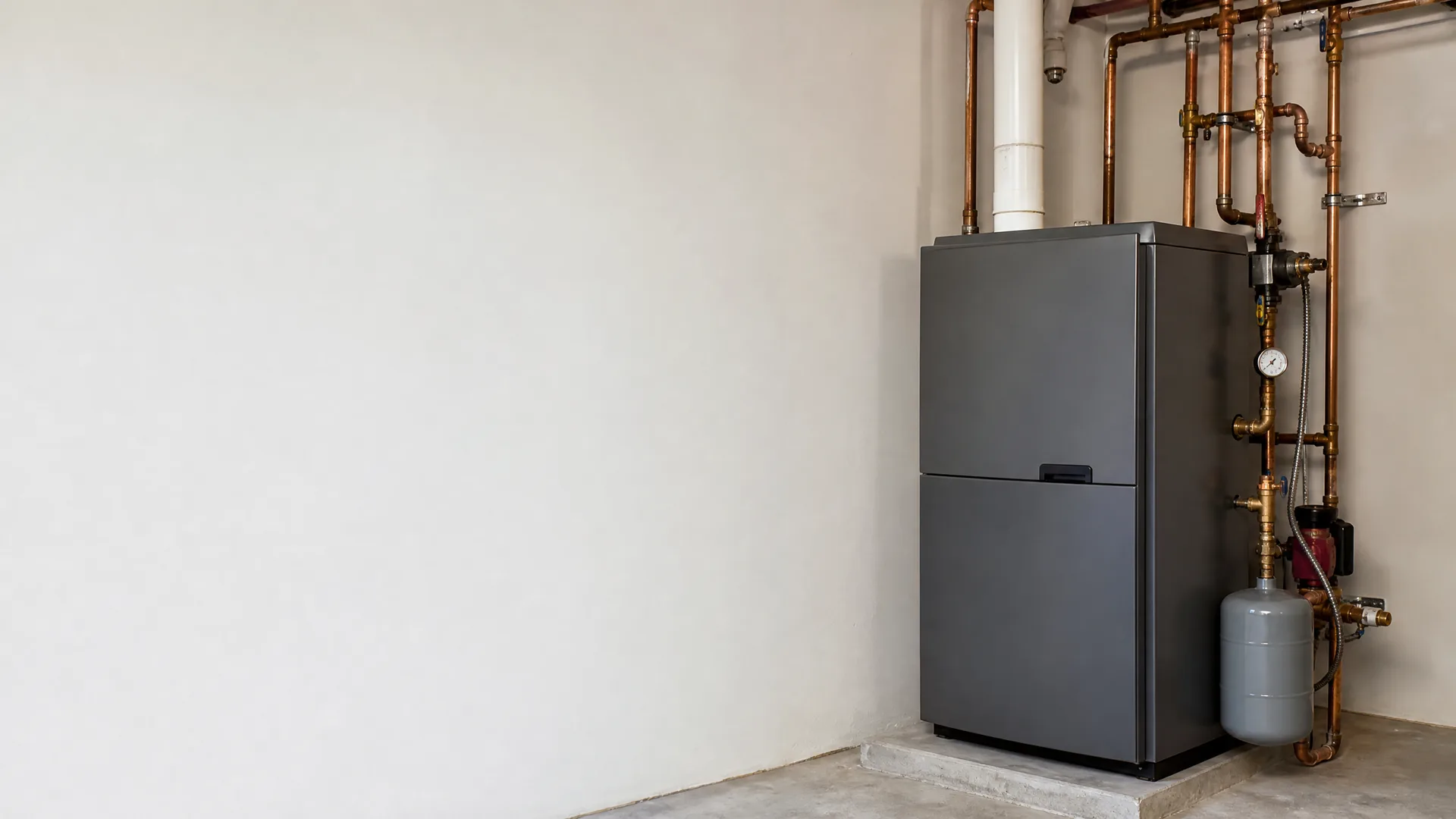
Water rarely leaks from the boiler's main body. It tracks down from a fitting, a circulator pump seal, or a valve above where you see it pooling. A trail of rust or mineral crust on a pipe shows you where a slow drip has been going on for a while, even if the floor looks dry that day. Follow any rust line up before deciding where the leak is. The spot on the floor is the last stop, not the source.
At 26°F overnight, your boiler is firing most of the night to keep the house warm. That's more hours under pressure and more cycles on the valves and seals, which is when a weak spot finally lets go.
NOAA nClimDiv 1991-2020 county normals weighted by homes




A boiler that's leaking doesn't fix itself by waiting, and in a New Jersey winter you don't have a lot of room to wait anyway. Gas boilers keep running because the house needs the heat, and every hour it fires with water escaping somewhere is more water on the floor and more strain on whatever part let go first. Finding out which part that is means someone has to look at the pressure, the valves, the fittings, in person. That's the part you can hand off. Instead of searching through contractors, calling a few, explaining the puddle and the gauge reading to each one, then sitting with quotes that are hard to compare because nobody looked at the same thing, you describe it once. A contractor who works on boilers in your area gets the details and follows up with you directly. With power costs here among the highest in the country and a boiler that may be running most of the night to keep up, a small leak left alone doesn't stay small for long.
A boiler leaking water in New Jersey almost always comes down to one of two things: a relief valve doing exactly what it's supposed to do under pressure, or a seal, fitting, or valve that's given out and needs a hand. The gauge tells you where the pressure sits. The drip pattern tells you where the water's coming from. The timing, whether it shows up after a radiator gets bled or shows up on its own in the middle of the night, tells you whether it's something to watch or something to fix now. Gas runs the boiler, and gas isn't cheap here, so a slow leak that keeps the system topping itself off quietly adds hours to every burn cycle while the pressure it's chasing never quite holds. None of that gets better by waiting through another cold snap to see if it stops on its own.
Tracing a leak back to its source is a job for someone who can see the whole system at once, not a guess made from the kitchen. Once you're matched with a licensed contractor, you're done calling around New Jersey HVAC companies, done explaining the same puddle and the same gauge reading three separate times, and done lining up quotes side by side to figure out who's worth the call. That part of it is off your plate. What's left is a boiler that's either releasing pressure the way it should, or getting the repair it needs before the next cold night asks more of it.

A boiler pro near you



