Profile view of a bearded man wearing a dark green baseball cap and a dark gray T-shirt against a plain light background.

What your boiler pressure should be in New Jersey

Step 1 of 3: Equipment

What should my boiler pressure be?

You check the gauge on the front of your boiler and the needle sits somewhere you're not sure about. Maybe it's low, maybe it's climbing past where you remember it last winter. With gas prices what they are in New Jersey, you don't want the system short cycling or losing heat to a leak you haven't noticed yet, and you'd rather know the number than guess.

It should read between 12 and 15 psi when the system is cold

Most residential boilers are built to run between 12 and 15 psi when the heat hasn't kicked on. That's the pressure needed to push water up through the pipes in a typical house without air getting trapped at the top. Once the burner fires and the water heats up, the needle will climb, often to 20 psi or a bit higher, and that's normal. If it's sitting below 12 when cold, you're likely losing water somewhere, through a valve, a fitting, or the expansion tank. If it climbs well past 30, the relief valve may open on its own to bring it back down.

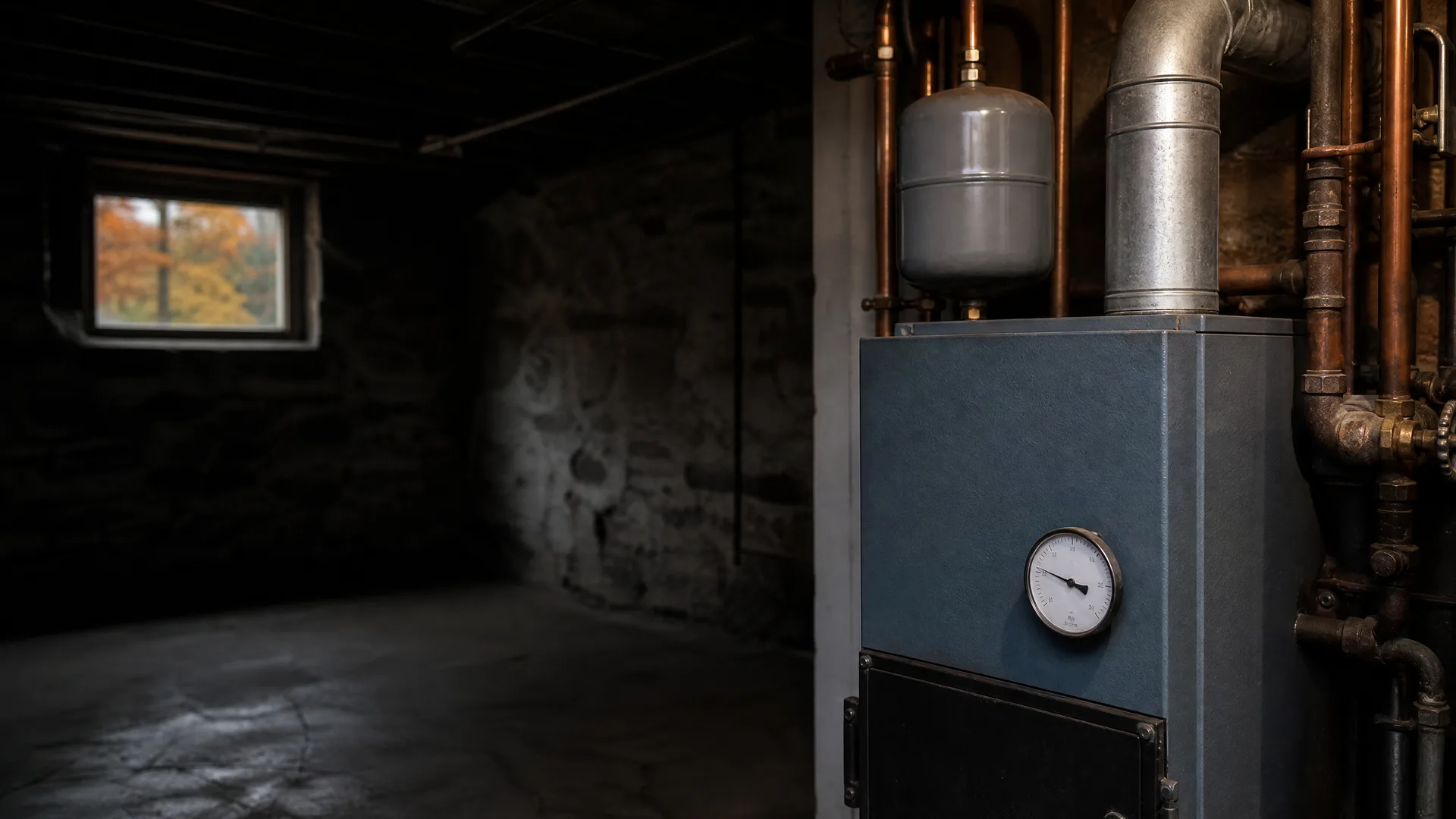
A dark basement with stone walls and a concrete floor, showing a blue-gray boiler with a round pressure gauge, an expansion tank, and copper and metal pipes on the right, and a small window with orange autumn foliage outside on the left.

You're down in the basement on a Saturday, boxing up the last of the porch furniture before the cold sets in. The boiler sits in the corner, and out of habit you glance at the gauge on your way past. The needle rests low, below the 12 o'clock mark, closer to where it dips in than where it should sit. You stop and look again, waiting for it to move. It doesn't. Upstairs your kid asks if the heat's getting turned on soon, since the mornings have started coming in cold. You look back at the gauge one more time before you head up, telling yourself you'll deal with it before you need the heat running every day.

Boiler Pressure: Cold vs Running

Cold Boiler Check

  • Wait until the boiler has sat off for a few hours before reading the gauge, since heat expands water and pushes the needle up while it's running.
  • A cold reading between 12 and 15 psi is normal for most residential boilers, so check the manual that came with yours if it's still around.
  • If the needle sits near zero cold, air likely got into the system or water leaked out somewhere, and it needs water added before you run it again.
  • Write the cold number down somewhere you'll see it, like taped to the boiler itself, so you have something to compare against later.
  • A cold reading under 12 psi isn't an emergency by itself, but it tells you the system has less cushion before it drops too low while running.

Running Boiler Check

  • Once the burner fires and the water heats up, expect the needle to climb, often into the 20s on the gauge.
  • If the pressure relief valve starts dripping while the boiler runs, the pressure has gone past what the valve is rated to hold, usually around 30 psi.
  • A gauge that climbs fast and keeps climbing instead of leveling off points to the expansion tank, not the water you added.
  • Pressure that barely moves off the cold reading when the boiler is clearly running warm can mean a gauge that's stuck or failing.
  • Watching the running pressure over a few heating cycles tells you more than one glance, since a single high reading might just be mid-cycle.
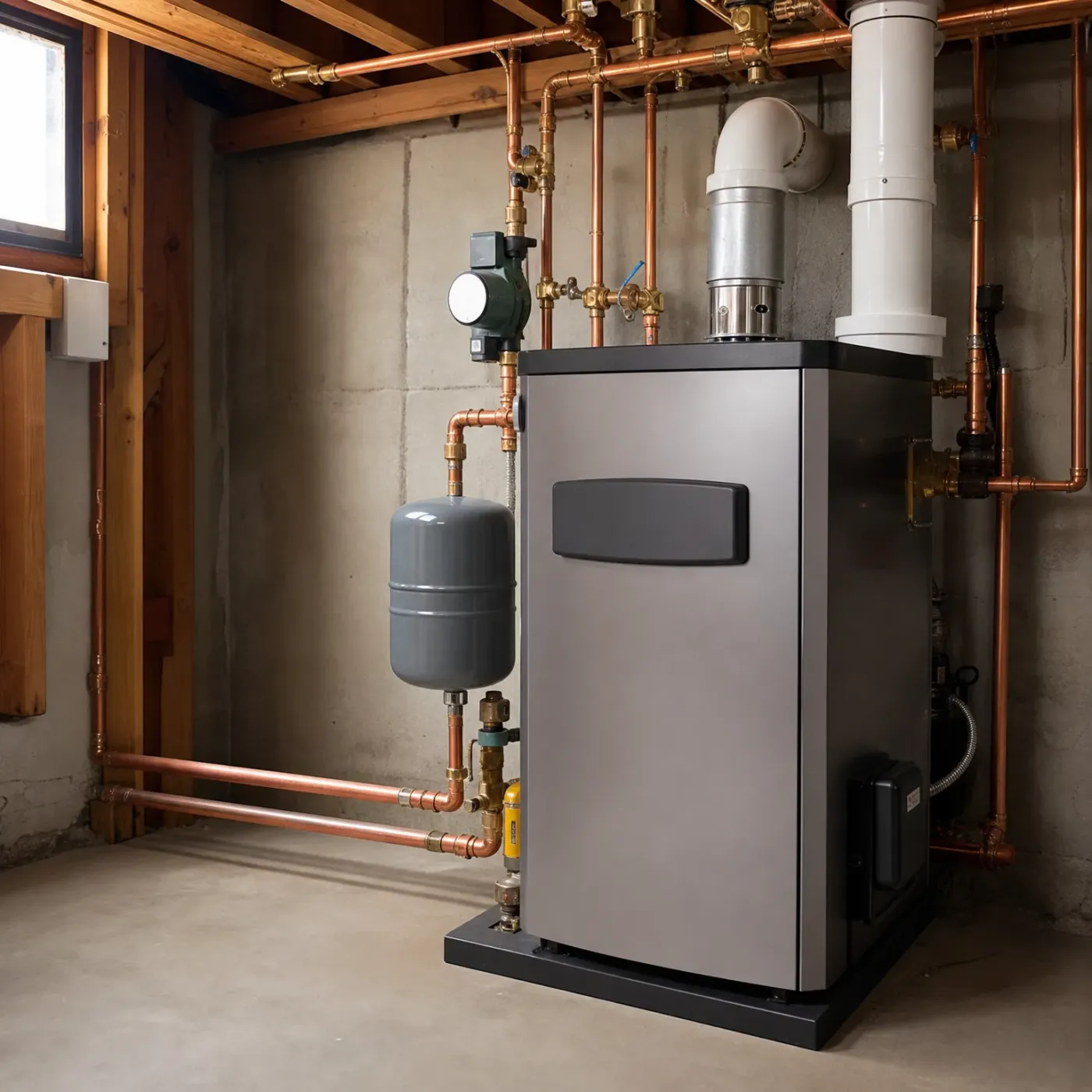
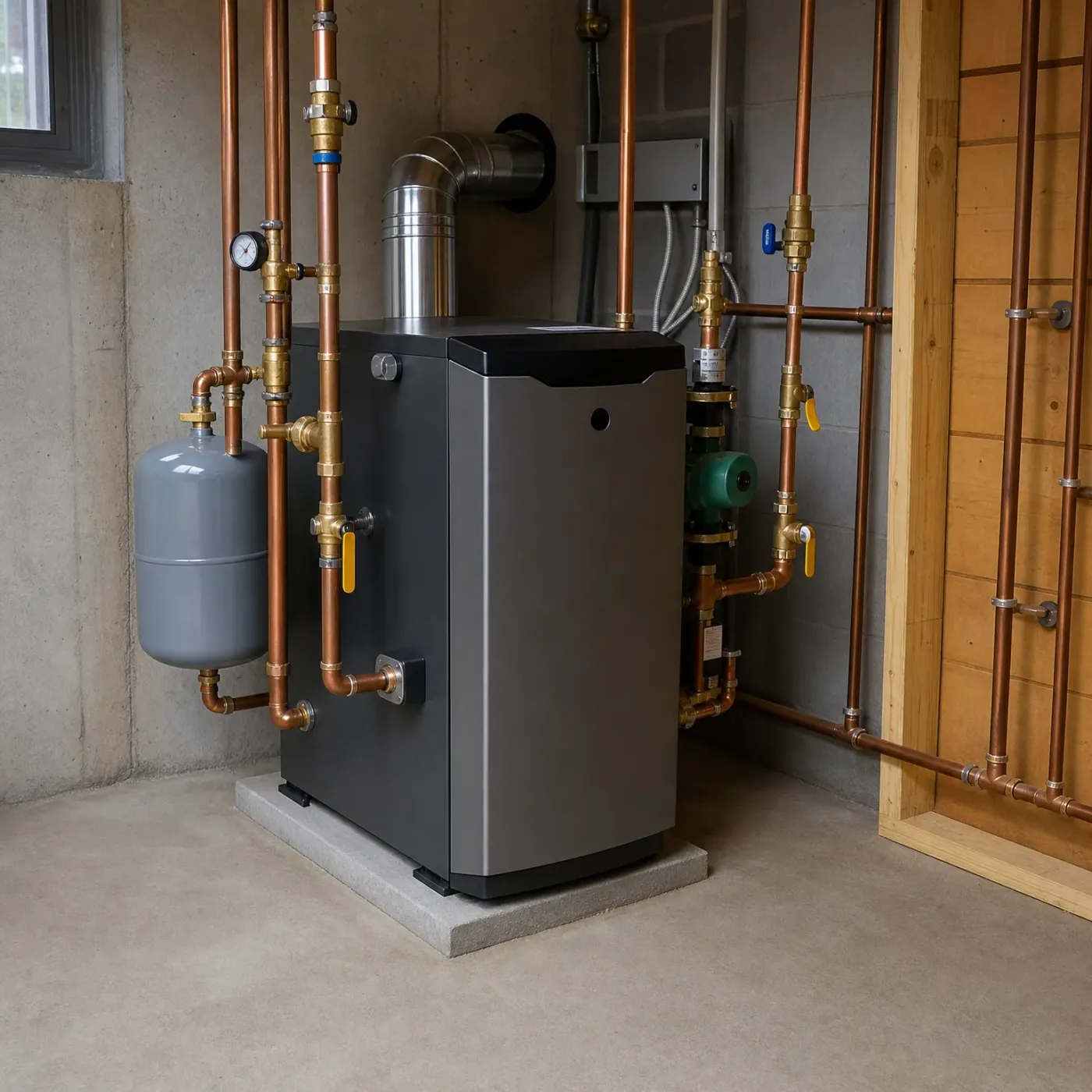
A dark gray floor-standing boiler on a concrete pad in a basement, surrounded by copper piping, brass valves, a gray expansion tank, a circulator pump, and a metal flue pipe against concrete block walls.

Gauge in the normal range

This is what you want to see: the needle steady between 12 and 15 psi, the pressure gauge easy to read against clean copper lines, the expansion tank doing its job of absorbing the swings as the water heats. A boiler holding steady like this just needs its yearly look to stay that way.
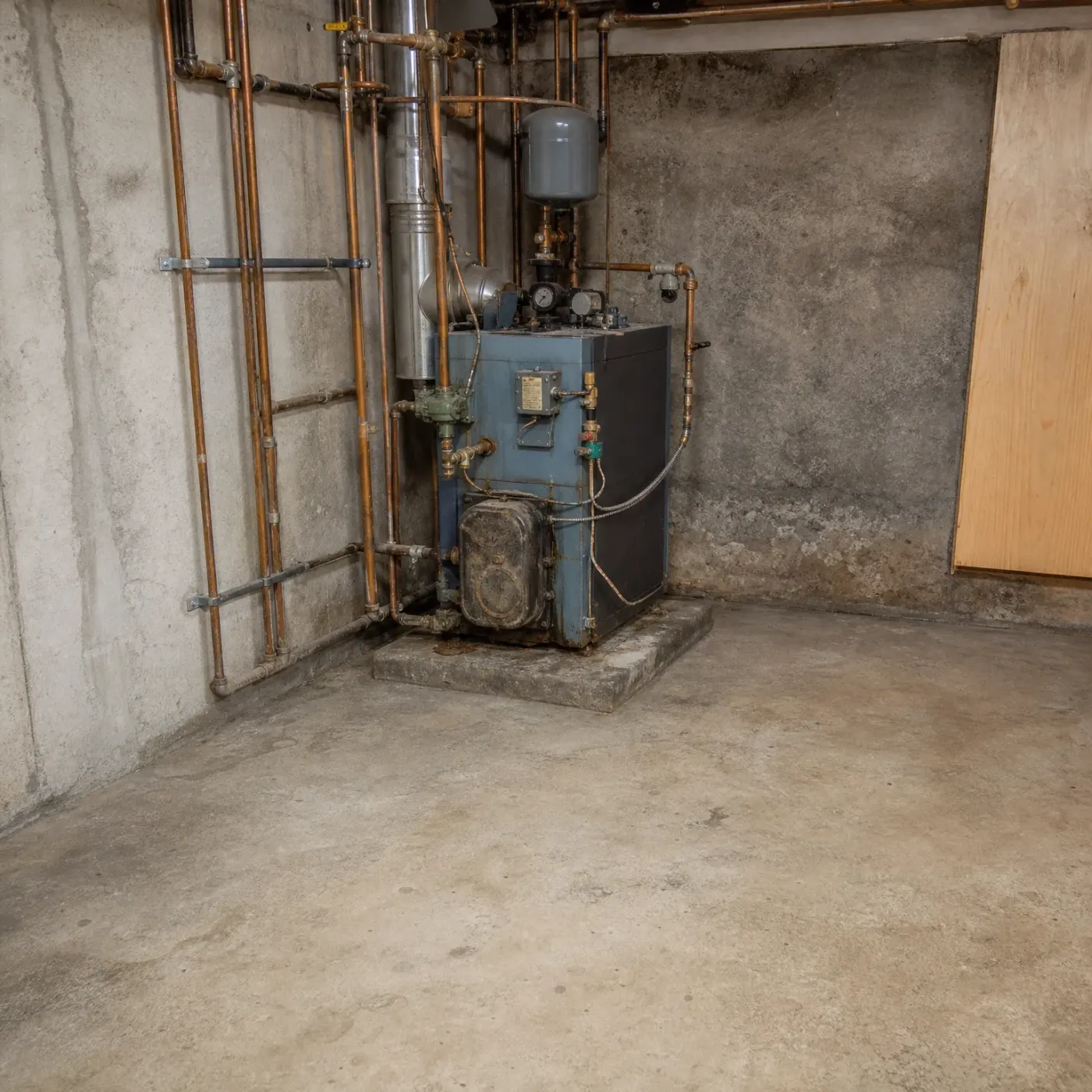

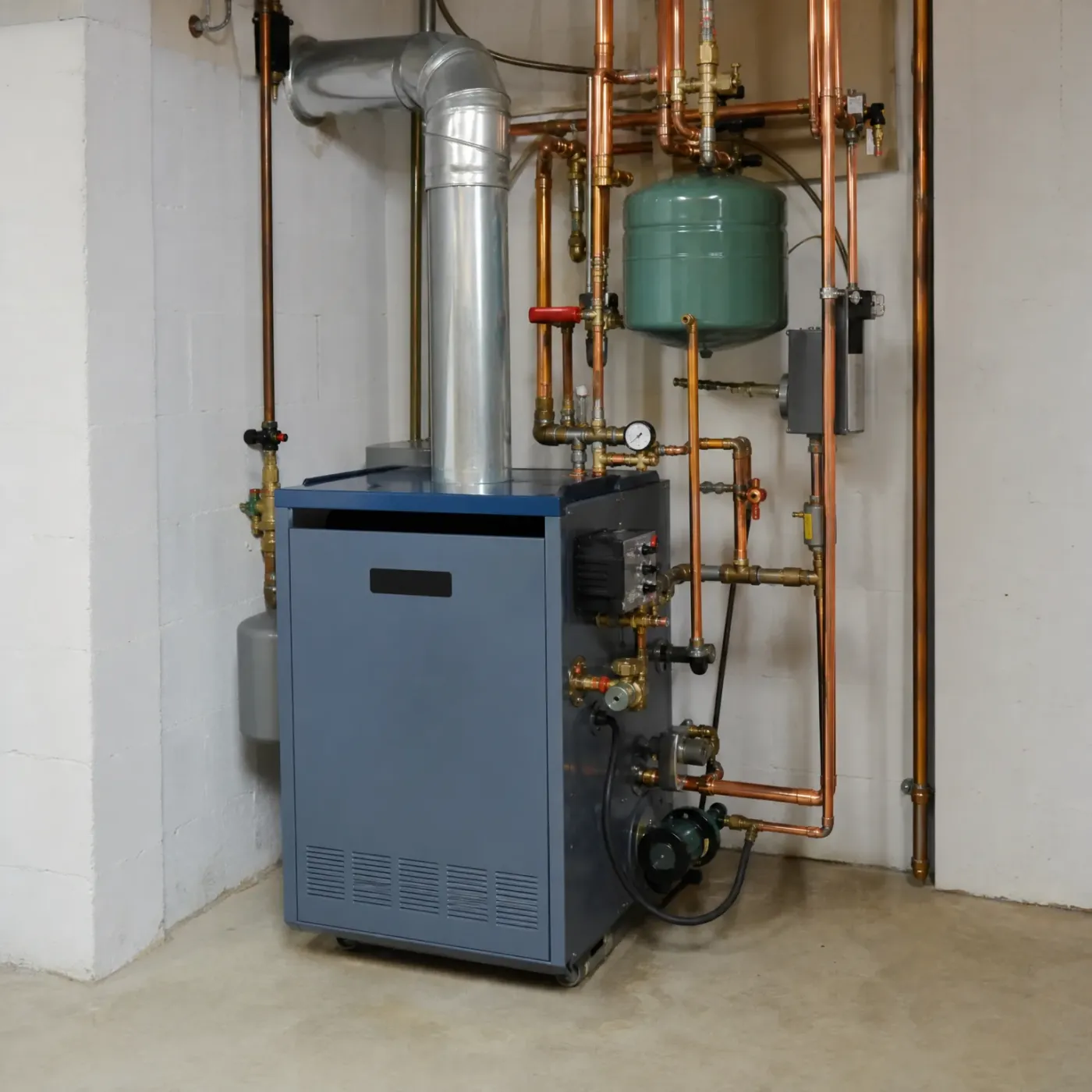
A blue boiler on a raised concrete pad in a basement corner, with copper and steel pipes, a gauge cluster, an expansion tank, and a metal flue running up the bare concrete walls.

Gauge reading wrong

An older boiler like this one is more likely to show you a problem on the gauge first. Low pressure often means a slow leak somewhere in that pipe network. High pressure that keeps creeping up can point to a failing expansion tank, one that's stopped absorbing pressure the way it should.

A smiling bearded man in a dark green hooded jacket and blue t-shirt sits on a couch in a living room with shelves, a potted plant, and a bowl of popcorn on a wooden table.
A smiling man in a green long-sleeved shirt sits on a beige sofa in a living room, with a bowl of popcorn in the foreground, a large potted plant and shelving behind him.
A smiling man in a dark blue T-shirt sits on a couch in a dimly lit living room with a bowl of popcorn and a remote on a wooden table, a lit floor lamp and bookshelves behind him, and windows showing greenery.
A smiling bearded man in a dark green long-sleeved shirt sits on a leather couch in a living room, with a bowl of popcorn and a remote control on a wooden table in the foreground.
A gray boiler on a black base in a basement with concrete walls, connected to copper piping, a circulator pump, a gray expansion tank, and white and metal flue vent pipes.

It's off your list after this

A licensed local pro takes the request for your boiler tune-up.

After you send the request, you're done searching.

Reach a local pro

Asking costs nothing, and the choice to hire stays yours.

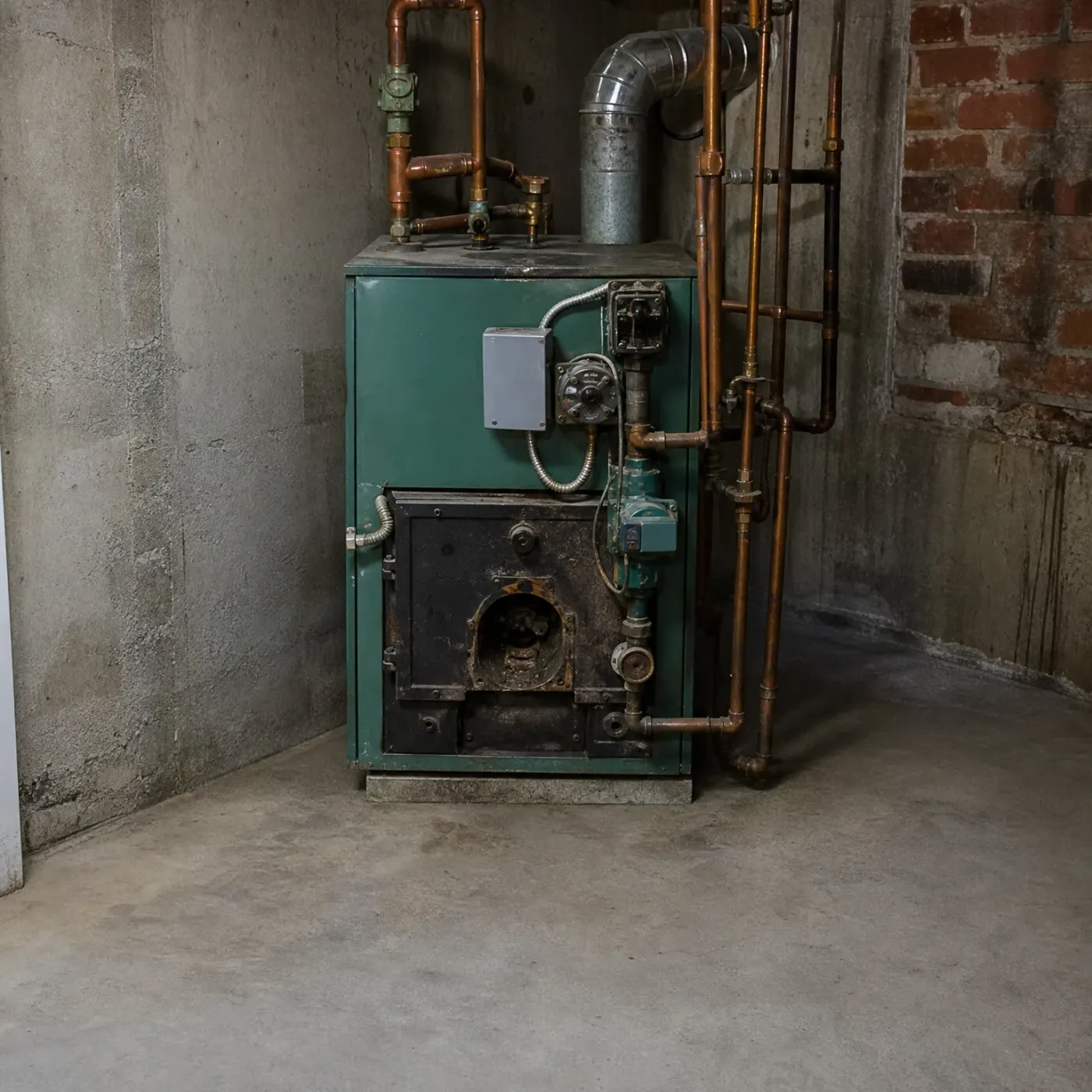
A green cast-iron boiler with a soot-stained front door, copper piping and a metal flue, standing on a concrete floor in a basement corner with concrete and brick walls.
Before you get your boiler maintenance
A blue-gray residential boiler in a basement corner, connected to copper piping, a green expansion tank, a circulator pump, gauges, and a metal flue pipe against painted block walls.
After you get your boiler maintenance

0.4 psi per foot

That's roughly how much pressure your system needs for every foot between the boiler and the highest radiator. A tall house needs more psi than a ranch.

Find a licensed boiler pro

15 psi relief valve

Most residential boilers are built with a safety valve set to open at 15 psi. A gauge that keeps creeping toward it points to a problem worth checking.

Find a licensed boiler pro

Winter nights average 26°F statewide

On a 26°F night, your boiler is cycling on and off for hours to keep the house warm. All that cycling puts the pressure through its paces, climbing as the water heats, dropping back as it cools. A system that can't hold a steady psi through that swing will struggle on the coldest nights, right when you need it most.

NOAA nClimDiv 1991-2020 county normals weighted by homes

How Your Boiler Holds Pressure

  • The expansion tank holds a cushion of air that gives heated water somewhere to go, which is why pressure rises when the burner fires.
  • A fill valve, sometimes called an automatic feed, lets in more water from your house supply whenever system pressure drops below its set point.
  • The pressure reducing valve on the feed line is set at the factory to stop filling once the system reaches around 12 psi cold.
  • If the expansion tank's bladder fails, it can't absorb the water's expansion, so pressure spikes fast every time the boiler runs.
  • An automatic air vent near the top of the system lets trapped air escape, since air pockets throw off the pressure reading and cause banging in the pipes.
  • The relief valve only opens to dump water and protect the system, it never raises or holds pressure on its own.

Your boiler is a closed loop, and everything in it works to keep that loop at a steady pressure while the water inside heats and cools. The fill valve and the expansion tank are doing most of the work, and they're working against each other in a good way. When the system is cold and pressure drops, the fill valve opens and lets in water from your house supply until the pressure reducing valve tells it to stop, usually around 12 psi. Once the burner fires and the water heats up, that water expands and needs somewhere to go. That's the expansion tank's job. It's half filled with air, and that air cushion compresses to absorb the extra volume instead of letting pressure climb unchecked. If the rubber bladder inside the tank splits or waterlogs, it can't compress anymore, and you'll see pressure spike every time the heat kicks on instead of holding steady. Trapped air causes its own trouble. An automatic air vent, usually near the highest point of the system, bleeds that air out, because a pocket of air throws off the gauge reading and knocks around in the pipes as it moves. The relief valve is the last piece, and it has one job only: open and dump water if pressure gets dangerously high. It doesn't regulate anything day to day, it's there for the moments everything else fails.

A woman in a dark gray sweater reclines on a light sofa with eyes closed and a slight smile, under a textured gray blanket with an open book resting on her lap, with a lit table lamp and plant in the background.
A smiling bearded man in a navy crewneck sweater sits at a dinner table with a glass of red wine, plates and glasses in the foreground, in a dimly lit room with a lamp and framed picture behind him.

Why does my boiler pressure keep changing

You might notice the needle in a different spot every time you check it. Low in the morning, a little higher once the heat has run a while. Maybe you've heard a gurgle in the radiators upstairs, or a room that used to get warm fast now takes longer to catch up. Sometimes there's a drip near the boiler's base where water has found its way out through the relief valve. None of that is in your head. A system that keeps losing pressure is losing water somewhere, and running it that way wears on the pump and the heat exchanger. Left alone through a full New Jersey winter, that's a repair bill instead of a simple fix, and a cold house on the night you need it least.

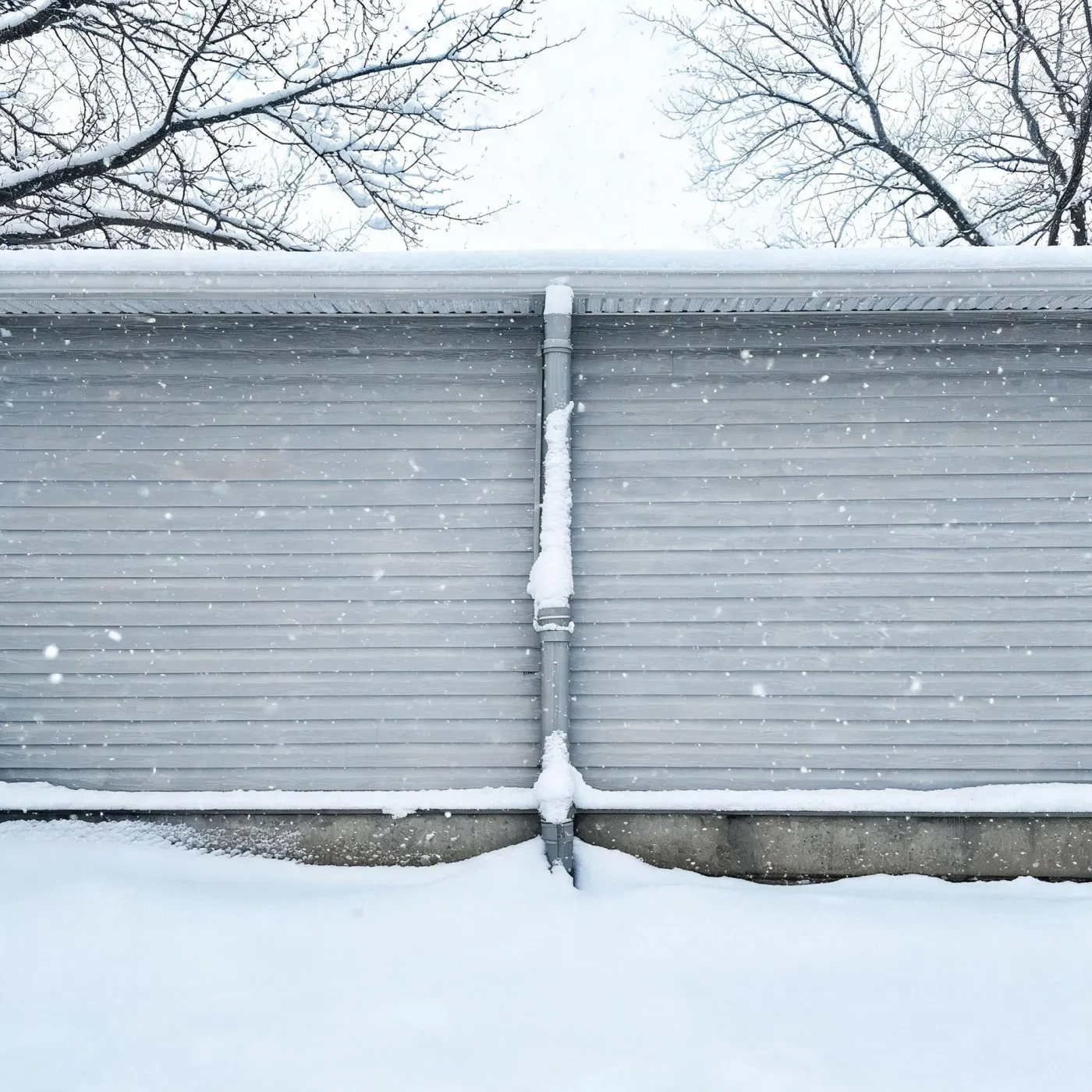
Exterior of a gray horizontal-lap-sided building with a snow-covered roof edge and a central downspout, seen during falling snow with deep snow on the ground and bare tree branches above.

Winter nights average 26°F statewide, according to NOAA climate data. That's well below freezing, and it's the kind of cold that keeps your burner firing on and off most of the night rather than running once and shutting down. Each time it fires, the water heats, expands, and pushes your pressure gauge up, then drops back as the house cools between cycles. A boiler that holds steady through that swing is doing fine. One that keeps losing pressure overnight, so you find it low again by morning, is telling you there's water escaping somewhere, whether that's a weeping valve or a fitting that needs attention before the cold really sets in.

NOAA nClimDiv 1991-2020 county normals weighted by homes

A cold boiler should read between 12 and 15 psi, and if yours is holding somewhere in that band, it's doing what it should. If the needle sits low or climbs high and stays there, that's a fill valve, a relief valve, or an expansion tank with waterlogged air, and those are jobs for someone who knows which one is failing before touching the system. A boiler tech who works on these systems all winter in New Jersey has usually seen your exact problem already, in a house not far from yours, with the same cast iron radiators or the same baseboard loops. That's different from a call center routing you to whoever's free. You'd be matched with one licensed local contractor, not a handful of companies all calling about the same job. For now, you know where the needle should sit, and you know what it means when it doesn't.

A dark standing-seam metal roof with a stone chimney and metal cap, seen against a backdrop of autumn-colored forest and layered hills under an overcast sky.

Send one request and you're done looking

Get one local pro

Sending the form costs nothing.

A boiler that's losing pressure every week isn't going to fix itself, and by January you'll be dealing with it on the coldest night, not a Saturday afternoon. Getting someone local to look at the fill valve or expansion tank now means one less thing that can fail when you're relying on that heat the most.