Is a high-efficiency boiler worth it in New Jersey
A local installer who puts in boilers gets your project.
Most houses in New Jersey heat with gas, and that boiler probably runs hard from late fall through early spring. A high-efficiency model changes how much of that gas turns into heat in your rooms versus how much goes out the flue. Whether that difference is worth it depends on the boiler you have now, how your home is set up, and what you're paying to run it through a full winter.
An old standard boiler might be running at 80 percent efficiency or lower. A high-efficiency condensing boiler can push well past that. On paper the gap looks simple. In practice it depends on the size of your home, your gas rates, and whether the install is done right, because a high-efficiency boiler that's set up wrong won't give you the numbers it's capable of.
That's where getting someone who actually installs these in New Jersey homes matters more than the spec sheet. Venting is different on a condensing boiler. Piping and condensate drainage are different. A contractor who works on this equipment every winter in this state has seen which installs go smoothly in older homes and which ones run into trouble with existing flue setups or tight mechanical rooms.
You don't need quotes from five different companies to figure out if this makes sense for your house. You need one person who can look at your current boiler, your gas bills, and your home, and tell you straight whether the upgrade pays off for you specifically, or whether your situation doesn't line up with the kind of savings these boilers are built to deliver.
That's the next step here. Not a sales pitch, not a stack of estimates to sort through. A local contractor, licensed to do this work in New Jersey, reaching out to talk through your actual setup.
Is a high-efficiency boiler worth it in New Jersey
You're paying to heat the house through a New Jersey winter, and you've heard a new boiler could cut that gas bill. Before you spend on one, you want to know if the difference is real money or just a sales pitch. Your current boiler still runs, so the question is whether swapping it out actually pays you back, or whether you're better off waiting until it fails.
For most houses here, yes, over time
A standard boiler wastes a good chunk of the gas it burns, sending it out the flue instead of into your rooms. A high-efficiency model recovers most of that, which matters more here than in places with milder winters, since your boiler is working from late fall through early spring. Gas heat is the norm in New Jersey, and the house uses more of it the colder the stretch runs. The payoff depends on how old and how worn your current boiler is. One that's still running fine but losing a lot of heat up the flue is a different case than one near the end of its life. A contractor who services boilers in your area can tell you which one you have.
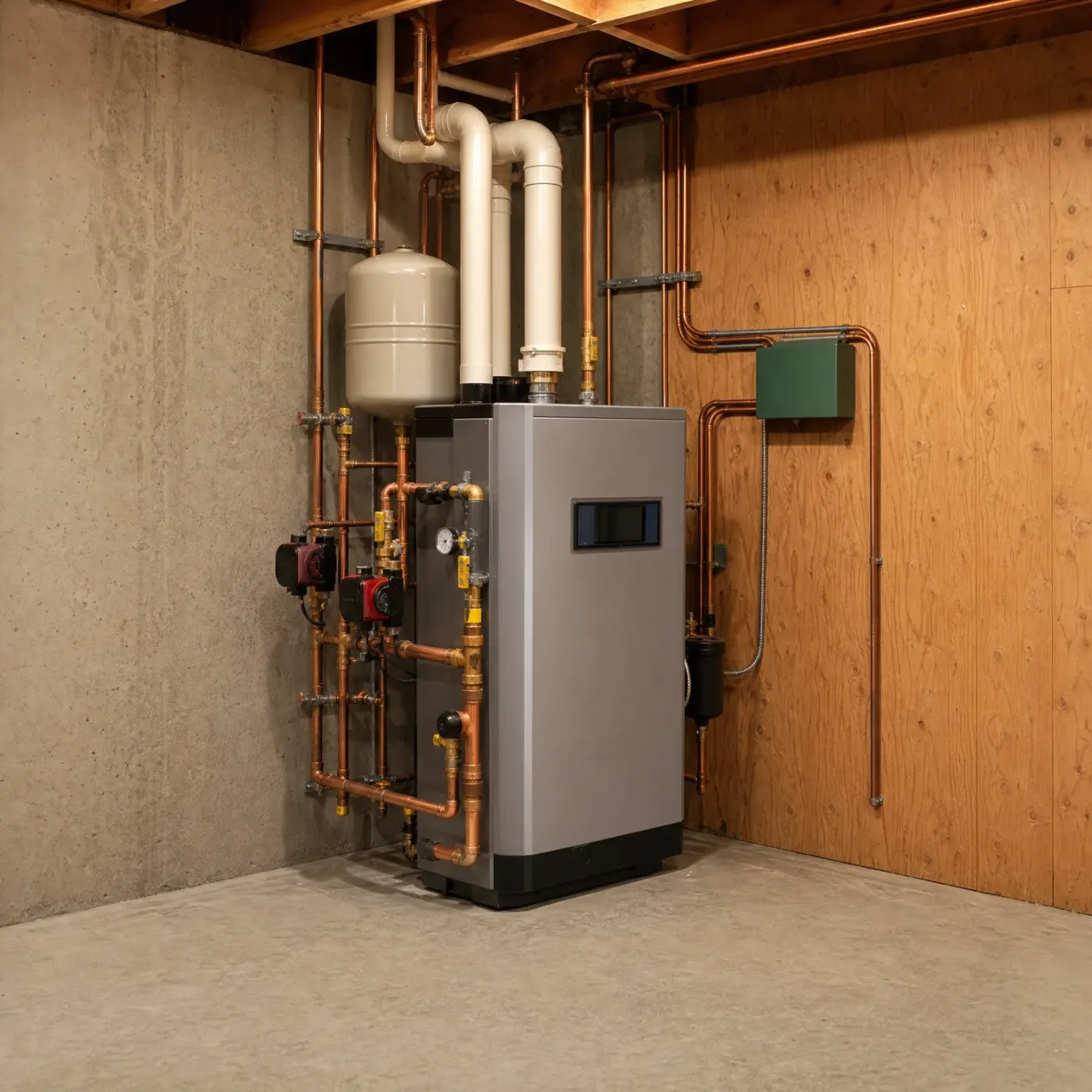
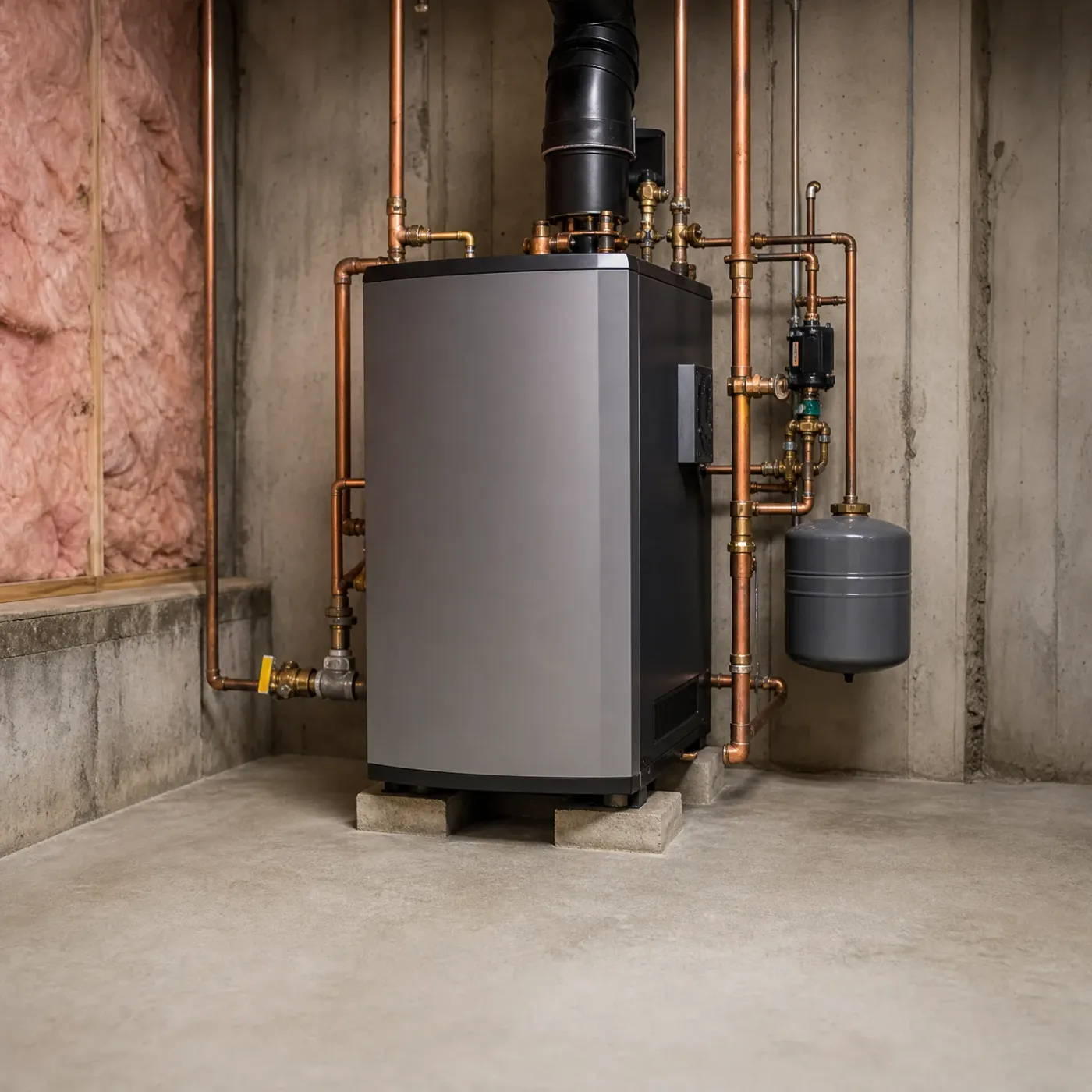
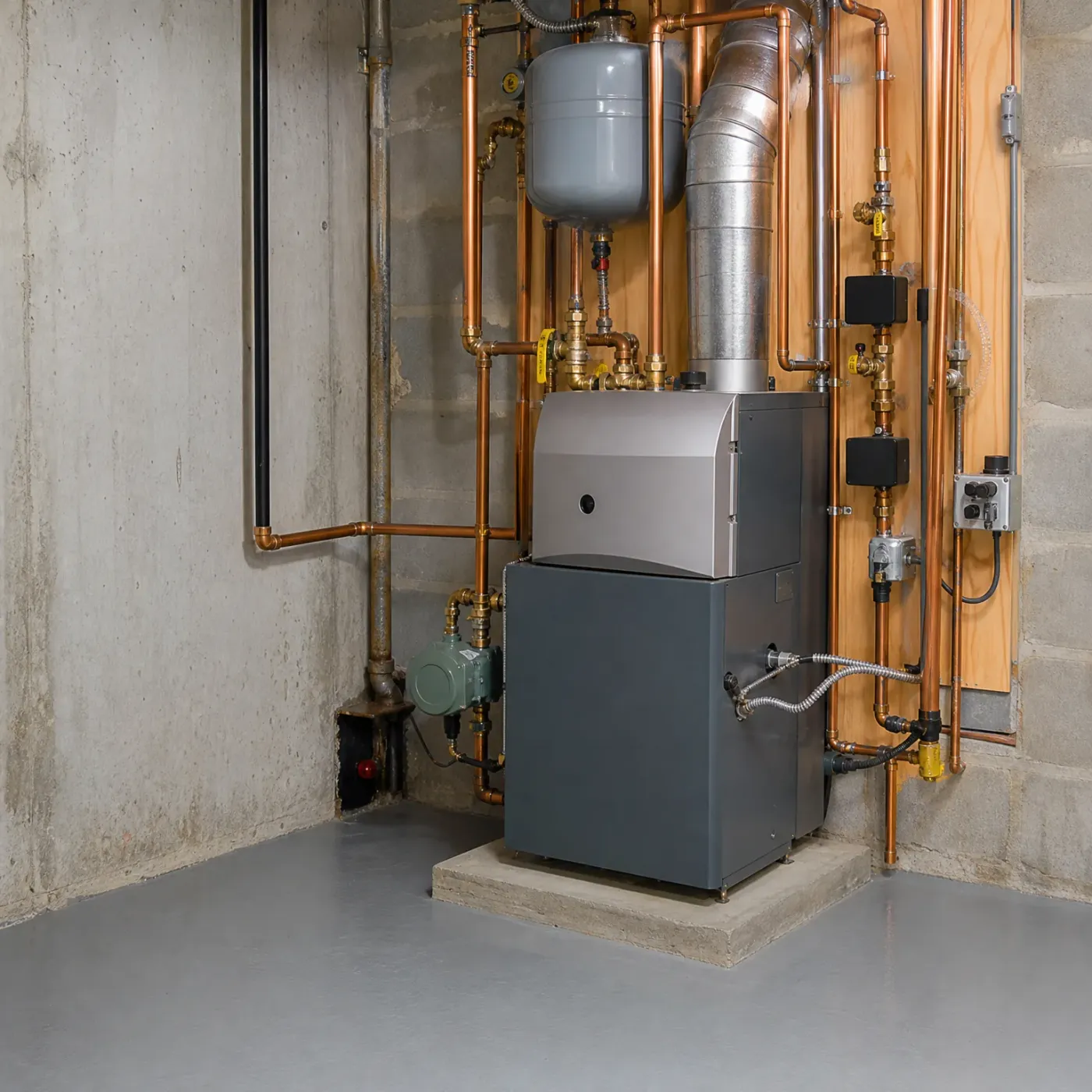
A condensing boiler running the way it should
This one vents through PVC pipe, not a metal flue, because it pulls so much heat out of the exhaust that what's left won't melt plastic. The pressure gauge and expansion tank keep the system stable, and the copper runs stay tight and dry.
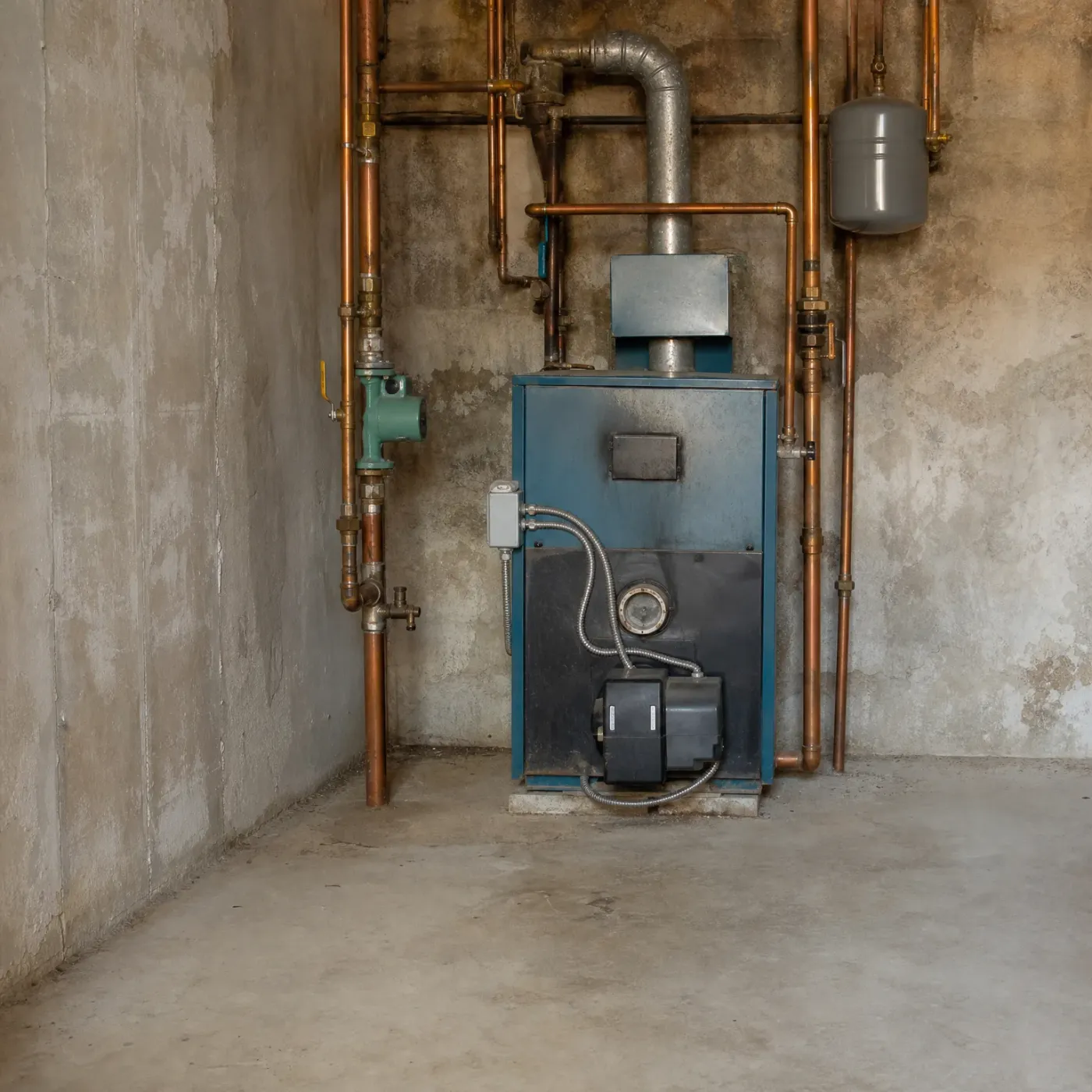
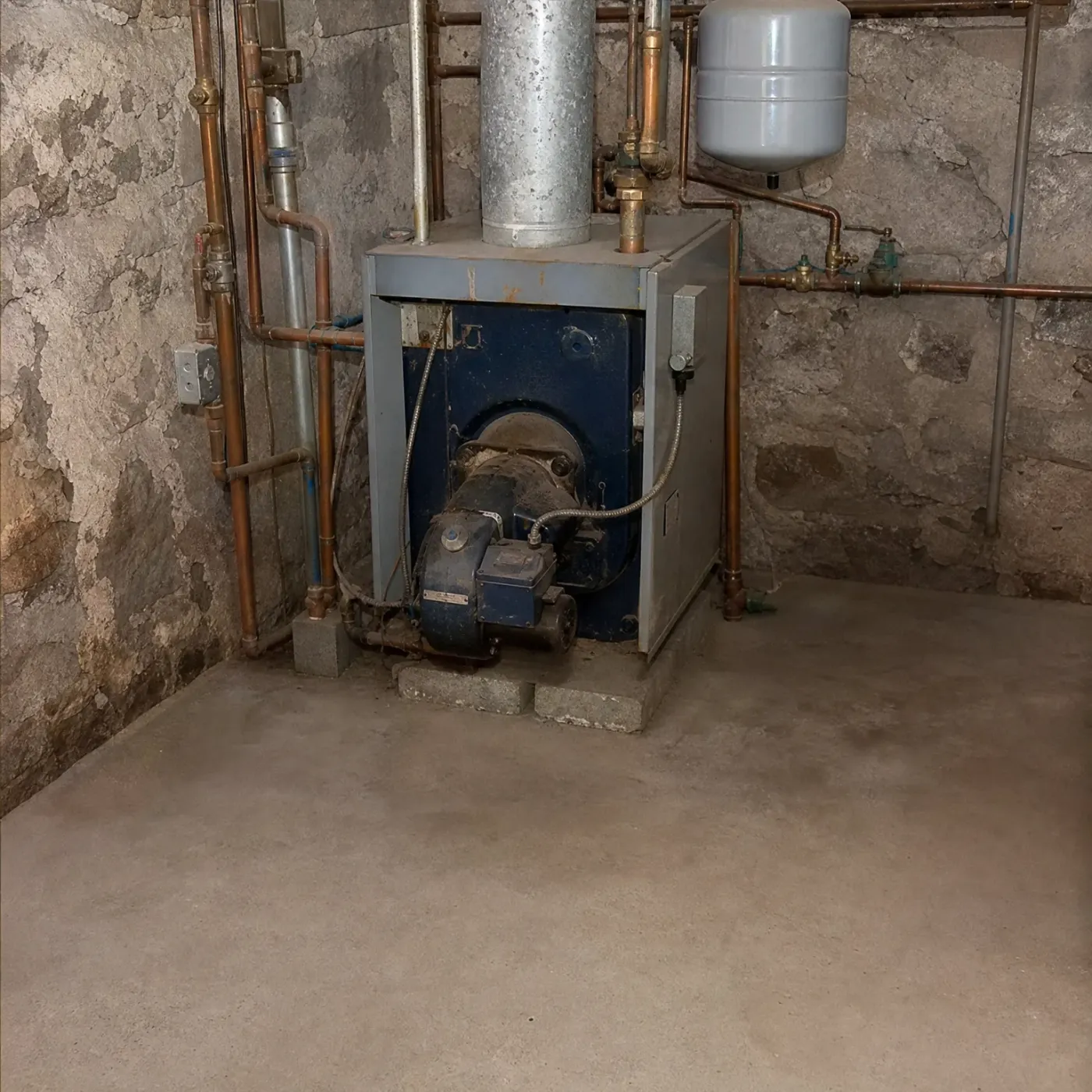
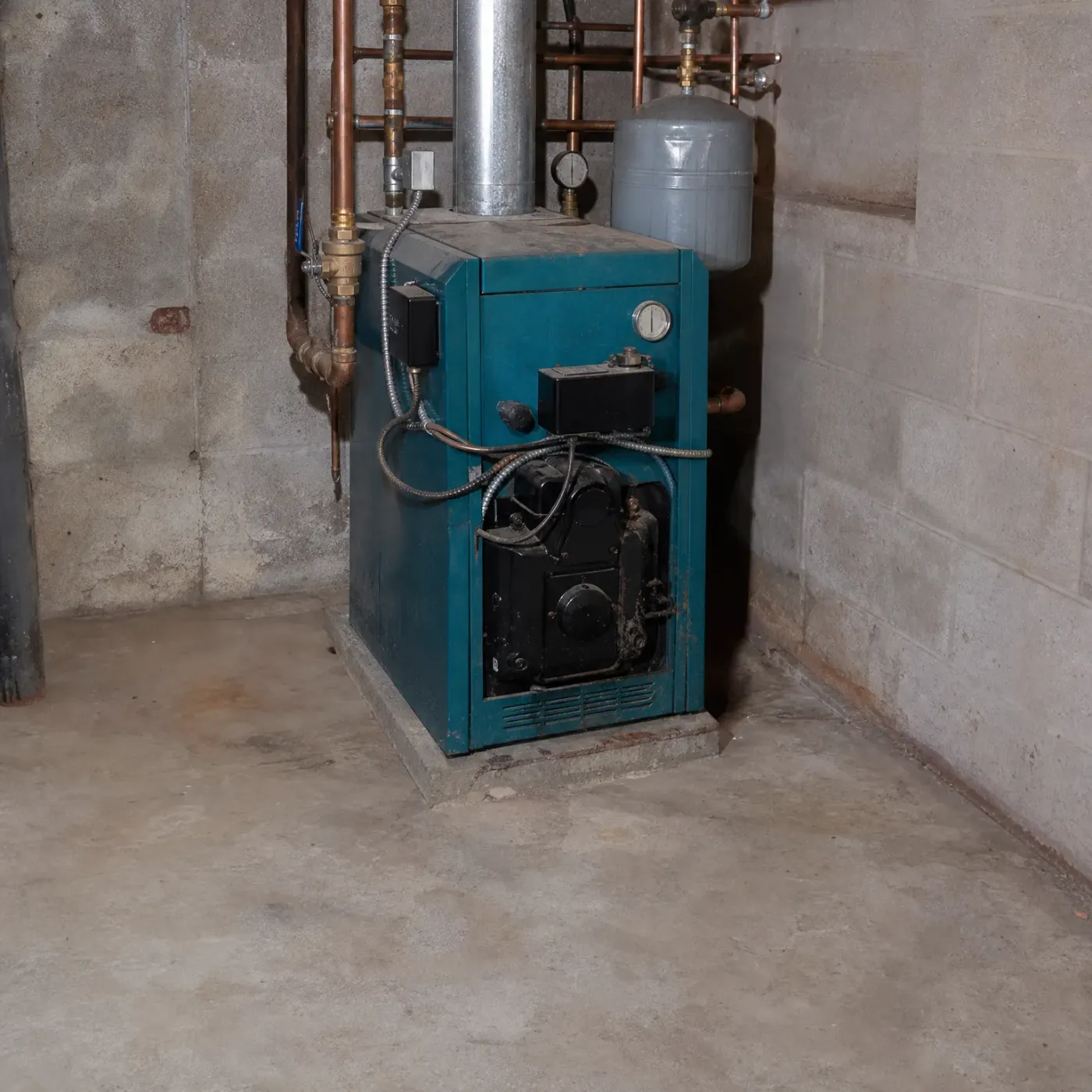
An older boiler holding on
That galvanized flue pipe means this one sends a lot of heat straight outside, unburned. The steel housing and burner assembly are from a design that hasn't changed much in decades. It still heats the house. It just costs more to do it.
A standard boiler sends exhaust up a metal flue while it's still hot enough to carry real heat with it. A condensing boiler runs that exhaust through a second heat exchanger first and pulls most of that heat back out before it leaves. The exhaust cools so much in the process that some of it turns to water, which is why these units need a condensate line and why that line runs through a small neutralizer cartridge, since the water is mildly acidic until it's treated. Inside, a modulating burner doesn't just fire at full blast and shut off. It raises and lowers the flame to match what the rooms are asking for, and some installations add an outdoor sensor that tells the boiler how cold it is outside so it can back off the water temperature on a mild day. All of this depends on the boiler running longer, steadier cycles. If it's short cycling instead, firing in quick bursts and shutting off again, it never gets the chance to work this efficiently.
What Makes It Condense
A condensing boiler has a second heat exchanger that pulls more heat from the exhaust before it leaves the house.
That second pass cools the exhaust enough to turn some of it back into water, which is why the unit drains into a condensate line.
The condensate is mildly acidic, so it runs through a neutralizer cartridge before it reaches your drain.
A modulating burner adjusts its flame up or down to match how much heat the rooms actually need, instead of firing at one fixed rate.
An outdoor sensor can tell the boiler how cold it is outside and lower the water temperature on milder days.
None of this works if the boiler short cycles, turning on and off in quick bursts instead of running a longer, steadier flame.
Before you get your boiler installationAfter you get your boiler installation
A boiler running through a New Jersey winter is doing most of its work in the months you can count on one hand, November through March, and if yours is old enough to still vent through a metal flue, a good chunk of what you're paying for is going up that flue instead of into your rooms. A condensing boiler recovers more of that heat before it leaves the house, and with gas being the fuel most homes here already use, that difference shows up on the bill every month the heat runs. Figuring out whether it's worth it for your house means someone looking at your actual system, the flue, the venting, how the place is heated now, not a general answer. A licensed contractor local to New Jersey who installs these year after year can tell you what your current setup is losing and what swapping it would change. That's a better use of your time than guessing from a chart.
Keep It Running or Replace It
Keep the old boiler
A standing pilot or an older atmospheric boiler vents through a metal flue, and that heat loss out the flue stays whatever it has always been.
You already know what it costs to run through November to March, so there's no new habit to learn or new venting to inspect.
If the heat exchanger or the gas valve fails, you're repairing a part built for a machine that was never pulling extra heat from its own exhaust.
Parts for an older cast iron boiler are usually easier to source locally than parts for a sealed combustion unit.
Nothing changes about the chimney or the gas line, so there's no added work beyond the repair itself.
Install a high-efficiency boiler
A condensing boiler vents through PVC instead of a metal flue, so if your house has no PVC run to the outside already, that's new pipe to install.
The unit needs a condensate line to drain the water it pulls out of the exhaust, which means a floor drain or a condensate pump nearby.
With power in New Jersey costing what it does, a boiler that turns more of each therm of gas into heat in the rooms matters more here than somewhere gas and electric both run cheap.
A sealed combustion system draws its combustion air from outside rather than from the room, which changes how it's piped in but not how it heats.
Because most houses here heat with gas, the install is swapping one gas boiler for another, not adding a fuel source the house didn't already have.
1
A contractor checks your home's gas line and venting before recommending a unit size.
2
The old boiler and its metal flue connection come out first.
3
The new condensing boiler ties into your gas, water and electrical lines.
4
A PVC vent pipe and a condensate drain line get run to the outside and a drain.
What an old boiler is costing your house this winter
If your boiler still vents through a metal flue, you can feel the result in how the house heats. Some rooms warm up slow, the burner cycles on and off more than it should, and the gas bill for January looks the way it always has, because an atmospheric boiler can't get any more efficient than the day it was installed. None of that is a sign you're doing anything wrong. It's just what that equipment does, year after year, through every New Jersey winter it runs.
A local contractor who works on boilers all season knows which parts of an older system tend to go first, the flue connection, the pilot assembly, the controls, and can tell you honestly whether yours still has life in it or whether you're paying to keep an inefficient machine limping along. Get matched with one who services your area and they'll look at your actual setup, not a general case, before you decide anything.
Winter nights across New Jersey average 26°F, according to NOAA. That's the temperature your boiler is working against most nights from December through February, not just when a cold snap hits. The lower the outdoor temperature, the longer the burner runs to hold your thermostat setting, and the more gas it takes to do it. On a night in the mid 20s, an old boiler venting through a metal flue is sending a lot of that gas straight outside instead of into your rooms. You'd notice it as a burner that seems to run longer than it used to, or a house that takes a while to feel warm again after the heat kicks on.
NOAA nClimDiv 1991-2020 county normals weighted by homes
What your boiler is telling you right now
Walk past it and listen. An older boiler kicks on and off more than it should, and you can hear the burner firing again sooner than seems right for a house that was just warm. Touch the metal flue pipe if yours has one. It gets hot to the touch, because that's heat leaving the house instead of staying in your rooms. Some rooms take longer to warm than others, and the thermostat setting that used to be enough last winter doesn't quite hold this year. None of that means the boiler is about to fail. It means more of what you're paying for is going out the flue instead of into the rooms where your family spends the evening, and that shows up on the January bill before it shows up anywhere else.
Copper lines, a sealed PVC vent and a condensate line draining off the second heat exchanger, all running on a concurrent pad.
A teal oil boiler on bare copper piping, venting through metal, with no second pass to pull extra heat from the exhaust.
Winter nights average 26°F statewide
26°F is the average, not the coldest it gets, so plenty of nights run colder than that. Your burner has to keep firing against that cold for three straight months, and every degree of heat lost up an old metal flue instead of your rooms is gas you paid for and didn't get.
NOAA nClimDiv 1991-2020 county normals weighted by homes
A high-efficiency boiler is worth it in New Jersey if yours is still venting through a metal flue and running hard every winter from November through March. The gas it burns over those months either ends up in your rooms or goes up that flue, and a condensing boiler keeps more of it where you want it. That's the answer. What it means for your house depends on the boiler you have now and the gas line and venting it would need to switch to, and that's worth a local look before you decide anything. A contractor who installs these in New Jersey winters sees the same metal flues and the same old boilers season after season, and knows what usually needs to change to make a condensing unit work in a house like yours. You'd be matched with one contractor, local to you, so you're dealing with one person who knows your situation instead of fielding calls from several companies trying to win the job.