How to bleed radiators before a New Jersey winter

A local pro who services boilers gets in touch about the tune-up.

Match me with a pro

Bleeding a radiator means opening the small valve at its end to let trapped air escape, until water runs out steady instead of hissing air. Air gets into the system over the summer, when the boiler sits idle for months, and it collects at the top of each radiator. A radiator with air inside heats unevenly, hot at the bottom and cold at the top, or stays cold while the rest of the house warms up. Before the boiler starts running hard for the winter is the right time to check every radiator in the house, not just the one that feels off, since air can sit in a radiator for months before it's cold enough to notice. Use a radiator key or a flathead screwdriver, hold a cloth under the valve, and turn until water flows without sputtering. Shut it the moment it does.

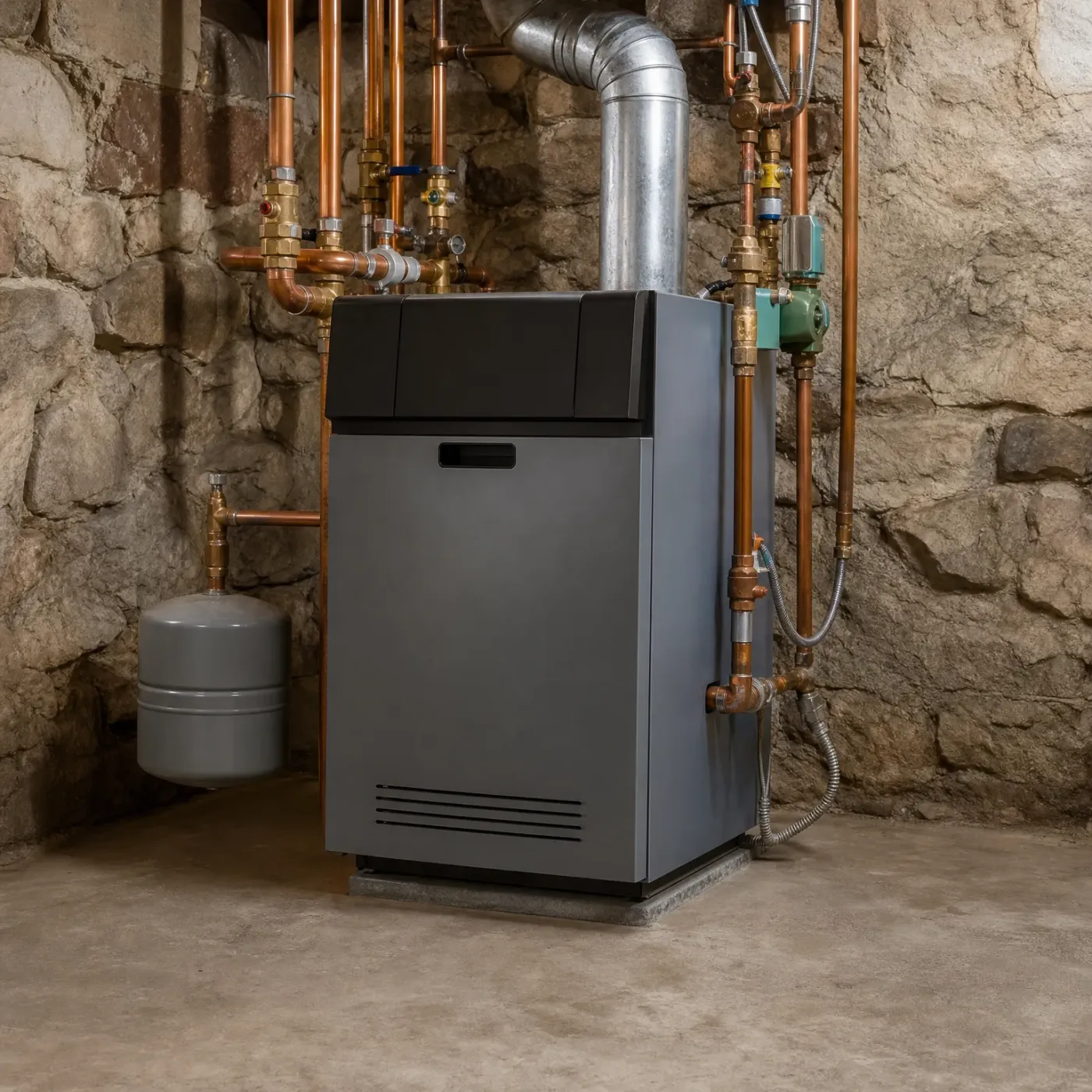
A gray residential boiler on a concrete pad in a basement with stone walls, connected to copper piping, brass valves, a circulator pump, an expansion tank, and a metal flue duct.

Water flows, heat comes up fast

When a radiator is bled right, water fills the whole unit and it heats evenly from end to end. The pump pushes hot water through without fighting trapped air, and the boiler doesn't run longer than it needs to just to warm one room.

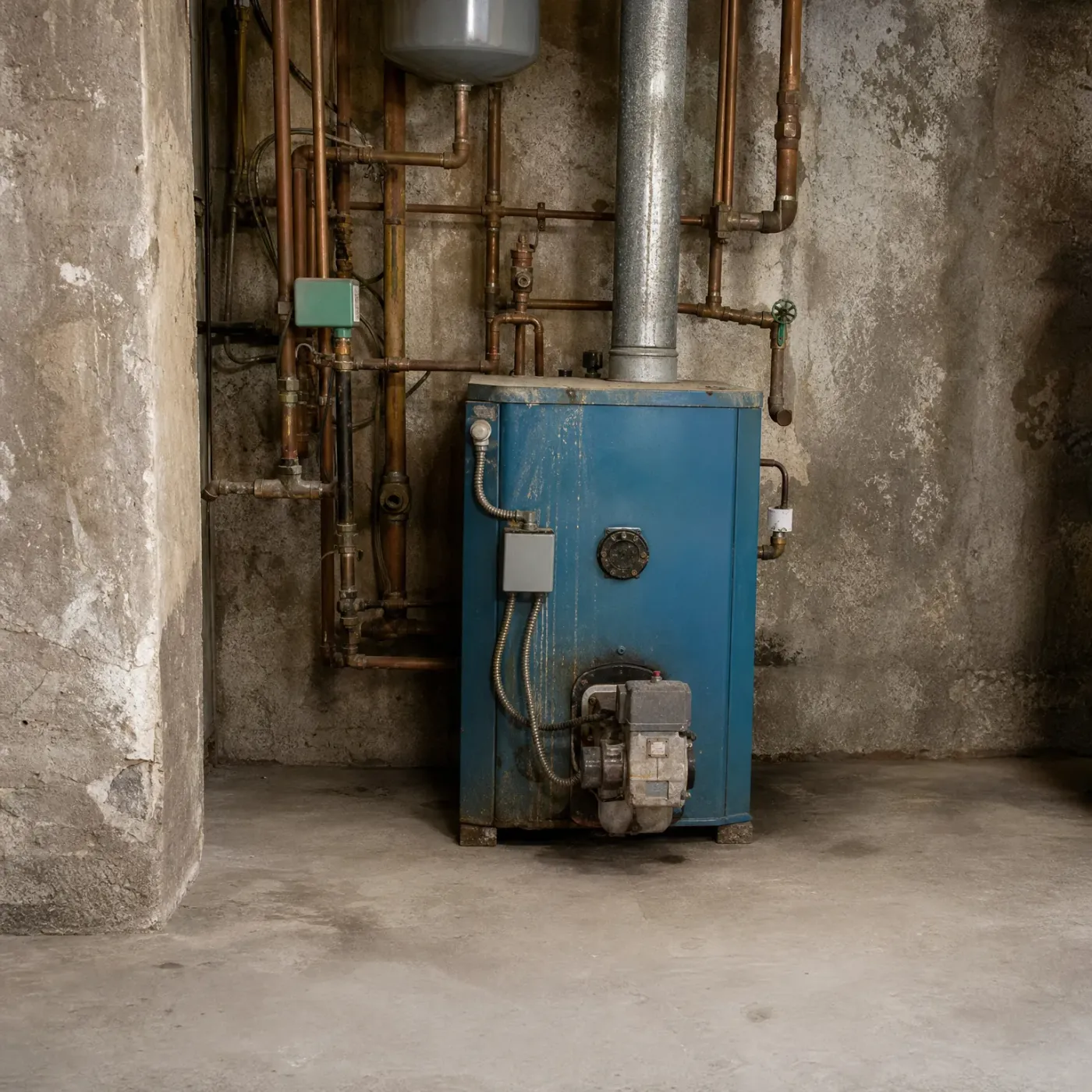
A blue cabinet boiler with a metal flue pipe and copper piping stands against a bare concrete wall in a basement with a concrete floor.

Air pockets working against you

A radiator with air trapped inside stays cold at the top or cold in spots while the bottom runs hot. The boiler keeps firing to make up for it, and on a cold January night that's extra runtime you're paying for on a system straining to keep up.

One Cold Radiator or a Cold House

One radiator, cold top

  • If just one or two radiators are cold at the top while the rest of the house heats fine, air is trapped in those units only.
  • Bleed the cold ones and leave the rest alone, since a radiator heating evenly already has no air to let out.
  • This is a five minute job with a radiator key and a rag, done room by room as you find them.
  • Check the boiler's pressure gauge after, since letting water out to bleed air can drop it low enough to need a refill.
  • A single cold radiator rarely means a bigger problem with the boiler itself, just air that worked loose in that one loop.

Whole house runs cold

  • If every radiator is lukewarm or the house won't come up to temperature at all, the problem is likely bigger than trapped air.
  • Low boiler pressure, a failing pump, or a blocked line can mimic what trapped air feels like but won't clear with a radiator key.
  • Bleeding each radiator in this case still helps, but it won't fix the house if the pressure or the pump is the real issue.
  • A boiler that's lost pressure needs water added at the filling loop, not just air let out at the radiators.
  • If radiators are bled and pressure is right but rooms still run cold, a licensed contractor can check the pump and the circulation itself.
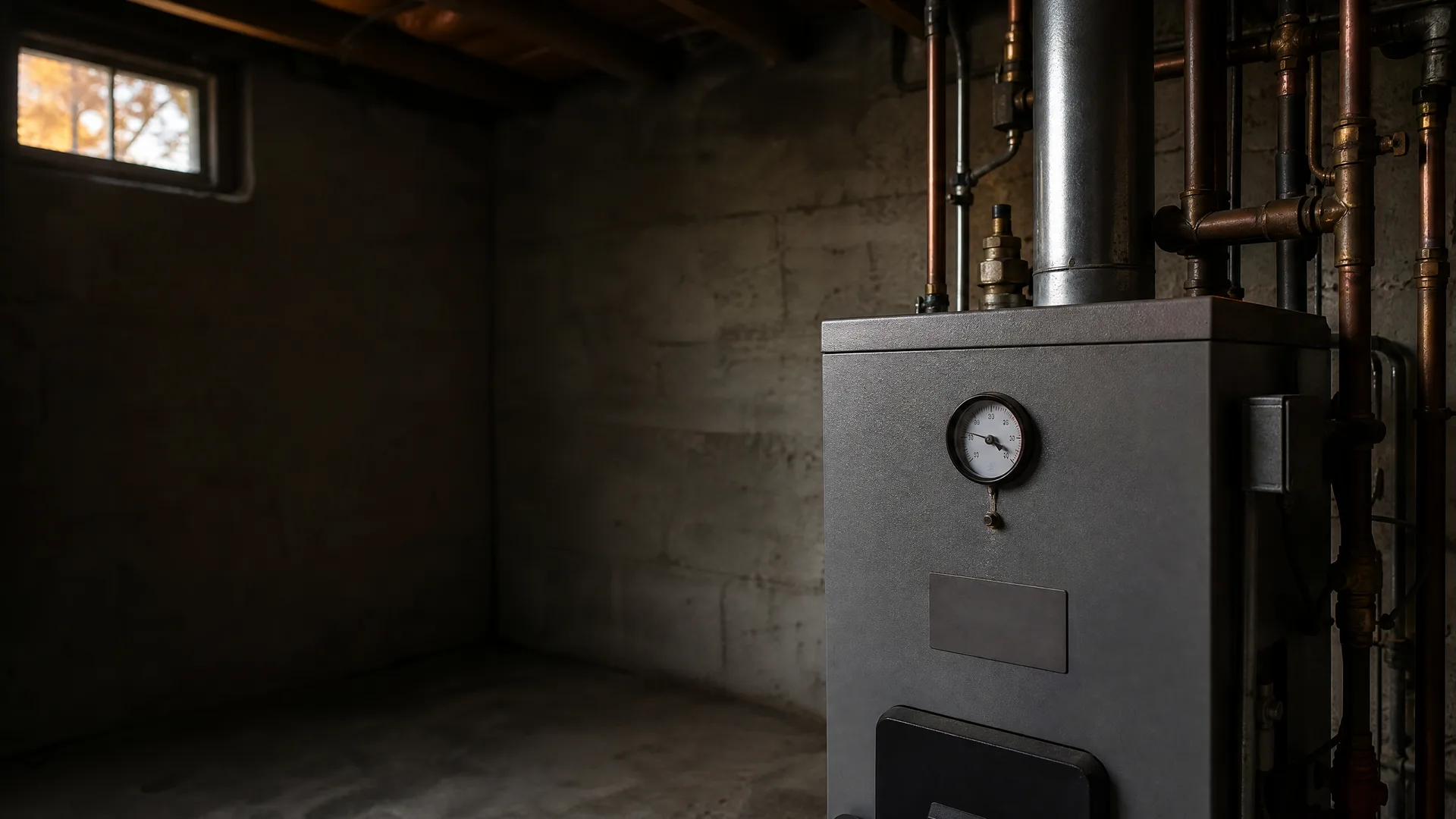
A gray boiler with a round pressure gauge and copper piping stands in a dim concrete basement lit by a small window showing yellow foliage.

You go down after dinner because the back bedroom never got warm today. The basement is cool, the kind of cool that comes with October, and the boiler ticks as it cycles off. You crouch by it and check the pressure gauge, the way you've started doing since the weather turned. The needle sits low, under where it should be. Upstairs the radiator in that room was warm at the bottom and cold the rest of the way up. You go back up with the key already in your pocket, thinking about which room to start with and whether tonight's the night you finally get all of them done before the real cold sets in.


A pro who works on boilers

You can bleed a radiator yourself with a key and a rag, and plenty of people do it every October. But if the gauge reads low after you bleed, or one radiator stays cold no matter how long you hold the valve open, that usually points to something past air in the lines, a failing valve, a pump losing its push, or a leak slowly draining the system over the summer. Those aren't jobs to guess at with a gas boiler, not with what a winter of running inefficiently would add to a power bill already higher than most of the country pays. A contractor who works on boilers in New Jersey homes can bleed every radiator, check the pressure, and catch what's behind a cold spot before the cold months settle in. Send the request and that part stops being yours to figure out.

How to bleed a radiator

  • Every radiator has a bleed valve at one end, usually a square or slotted fitting you turn with a radiator key.
  • Shut the boiler off first, since bleeding a hot system can spray hot water out of the valve.
  • Hold a rag under the valve before you turn it, since air and water both come out the same opening.
  • Turn the valve a quarter turn and you'll hear a hiss as trapped air pushes out ahead of the water.
  • Close the valve the moment the hiss stops and water starts coming out in a steady stream.
  • Work from the radiator nearest the boiler to the one farthest away, since that's the order air tends to settle in.

The valve you're looking for sits at one end of the radiator, usually the top corner opposite the pipe that feeds it. On older units it's a square fitting that takes a radiator key. On newer ones it might take a flathead screwdriver. Either way, turn the boiler off before you start. The system can still be warm from the last cycle, and water under pressure will spray further than you expect if you catch it wrong. Hold a rag or a small cup under the valve as you turn it, because the first thing out is air, not water, and you won't know the moment it switches until it happens. A quarter turn is usually enough to start the hiss. Leave it open and listen. The hiss will taper off as the air clears, and then you'll hear the pitch change just before water starts to come through. Close the valve as soon as that stream turns steady. If you let it run too long you're just wasting water and dropping system pressure for no reason. Start with the radiator closest to the boiler and move outward to the ones farthest from it, since that's the order air settles in as it rises through the pipes and gets pushed along by the water. Doing them out of order isn't wrong, just slower, since you may end up going back to recheck one.

A gray-haired bearded man in a dark coat and scarf dusted with snow stands smiling in a dimly lit entryway with a white front door, a side table with a lit lamp, an oval mirror, and a patterned rug.
An older bearded man in a dark snow-dusted coat and gray scarf stands just inside a dimly lit home entry, with a framed picture, lit table lamp, and an adjoining room with a fireplace behind him, and snow visible through the open door.
A gray-haired, bearded man in a dark snow-dusted coat stands smiling in a dimly lit entry hall with a staircase, a lit table lamp, a framed picture, and a living room visible through a doorway.
An older man with gray hair and a beard, wearing a dark jacket dusted with snow, stands smiling in a dimly lit hallway with lamps and a living room visible behind him.

1.2 bar, give or take

Most boilers want pressure between 1 and 1.5 bar when cold. Bleeding air out drops it, so check the gauge after and top it back up if it's low.

Hand off the search

Once a year, before the cold sets in

Bleeding each radiator in early fall, before the boiler is working hard, catches the air that settled in over the summer before it causes a cold night.

Hand off the search
A woman wrapped in a thick beige fleece blanket sits on a sofa with an open book on her lap, beside a lit table lamp, with a frost-covered window behind her.
An older woman with gray hair in a bun and glasses, wearing a beige knit sweater, smiles while looking to the side in a warmly lit kitchen, with a loaf of bread on the counter in the foreground and a snowy scene outside the window.

Winter nights average 26°F statewide

On a 26°F night, a radiator with air trapped at the top won't put out the heat your boiler is paying for. Bleed it before those nights settle in and the whole unit stays hot end to end, not just the bottom.

NOAA nClimDiv 1991-2020 county normals weighted by homes

A woman in a cream cardigan and jeans stands with one hand raised facing an open front door of a gray horizontal-siding house, with a black lantern wall light, a potted shrub with yellow flowers, and a stone-faced porch column.

A radiator that heats end to end is a boiler that isn't working harder than it has to

Bleeding your radiators is a half hour with a key and a rag, done before the cold settles in for good. You open the valve, you hear the hiss turn to a steady stream of water, you close it. Do that around the house and the boiler stops fighting trapped air to get heat into rooms that should already be warm.

If you bled a radiator and it's still cold at the top, or the pressure won't hold after you've topped it up, that's past what a key fixes. It's worth having someone look at the valve or the pressure before the first real cold front, not during it. Answer a few questions about your setup and a contractor who works on boilers like yours in your part of New Jersey will reach out directly, so you're not the one tracking down who's available and who isn't.

A living room corner with a beige upholstered armchair holding navy and striped cushions, a small round wooden side table with a carved bowl and a potted green plant, a framed landscape picture on a pale wall, built-in shelving, and a curtained window.
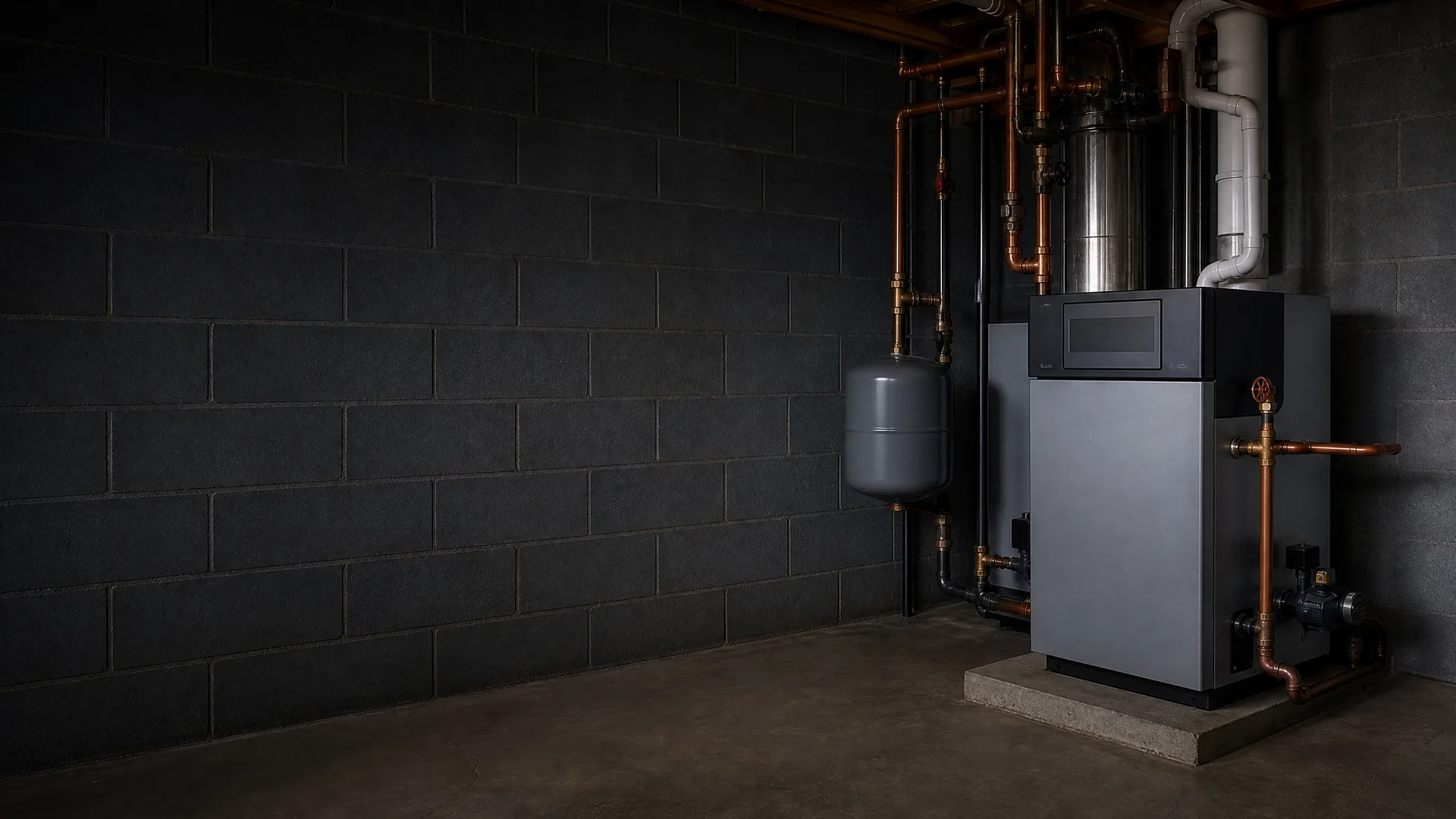
A gray boiler unit with a control panel sits on a concrete pad in a basement room with dark concrete block walls, connected to copper and metal piping, a gray expansion tank, and an insulated flue.

The right pro for this job

One request and finding someone for the tune-up is handled.

Step 1 of 3: Equipment