









Best boiler temperature for a New Jersey winter

A local pro who services boilers gets in touch about the tune-up.

Find my pro

Most homes here do fine with the thermostat set between 68 and 70 degrees during the day, and a few degrees lower overnight. That's not a comfort rule, it's how the boiler itself holds up over a New Jersey winter. A boiler that runs at a steady, moderate setting cycles less often, and fewer cycles means less wear on the igniter and the pump. Pushing it higher doesn't heat the house faster. Boilers deliver a steady output, not a burst, so cranking the temperature up just means it runs longer to get past the heat it would hit anyway. Where this matters most is the 15 to 20 degree swings New Jersey gets between a mild January thaw and a hard cold snap. Keeping the setting steady through those swings, rather than chasing the weather with the thermostat, is what actually extends the life of the system.

A woman with long gray hair wrapped in a checked blanket sits on a sofa by a window with yellow autumn foliage outside, with a lamp, framed picture and plant in the background.
An older woman in a cream knit sweater sits on a sofa by a window, looking out at sunlit trees with yellow and orange autumn leaves, with a bookshelf and lamp behind her.
A woman with gray shoulder-length hair in a dark knit sweater sits on a cushioned seat by a window, looking out at yellow autumn foliage, with a living room, armchair, houseplant and framed picture behind her.
An older woman with gray hair in a bun, wearing a cream knit sweater, sits on a sofa with a gray blanket and looks out a large window toward yellow-green autumn trees, with a lit table lamp and dark armchair behind her.

Why does the boiler sound and cost different this winter

If you've nudged the thermostat past 70 to chase a cold room, you've probably heard the boiler run longer to get there, and noticed the gas bill move with it. Some homes get banging or knocking in the pipes when the system is pushed harder than it needs to be. Others see a room near the thermostat that's warm while a room down the hall stays cold, which usually means the system is working against itself rather than being too small. None of this is random. A boiler asked to run hotter and longer than it needs to wears its parts faster, and in a New Jersey winter that runs for months, that wear shows up early as repairs or a system that doesn't last as long as it should.

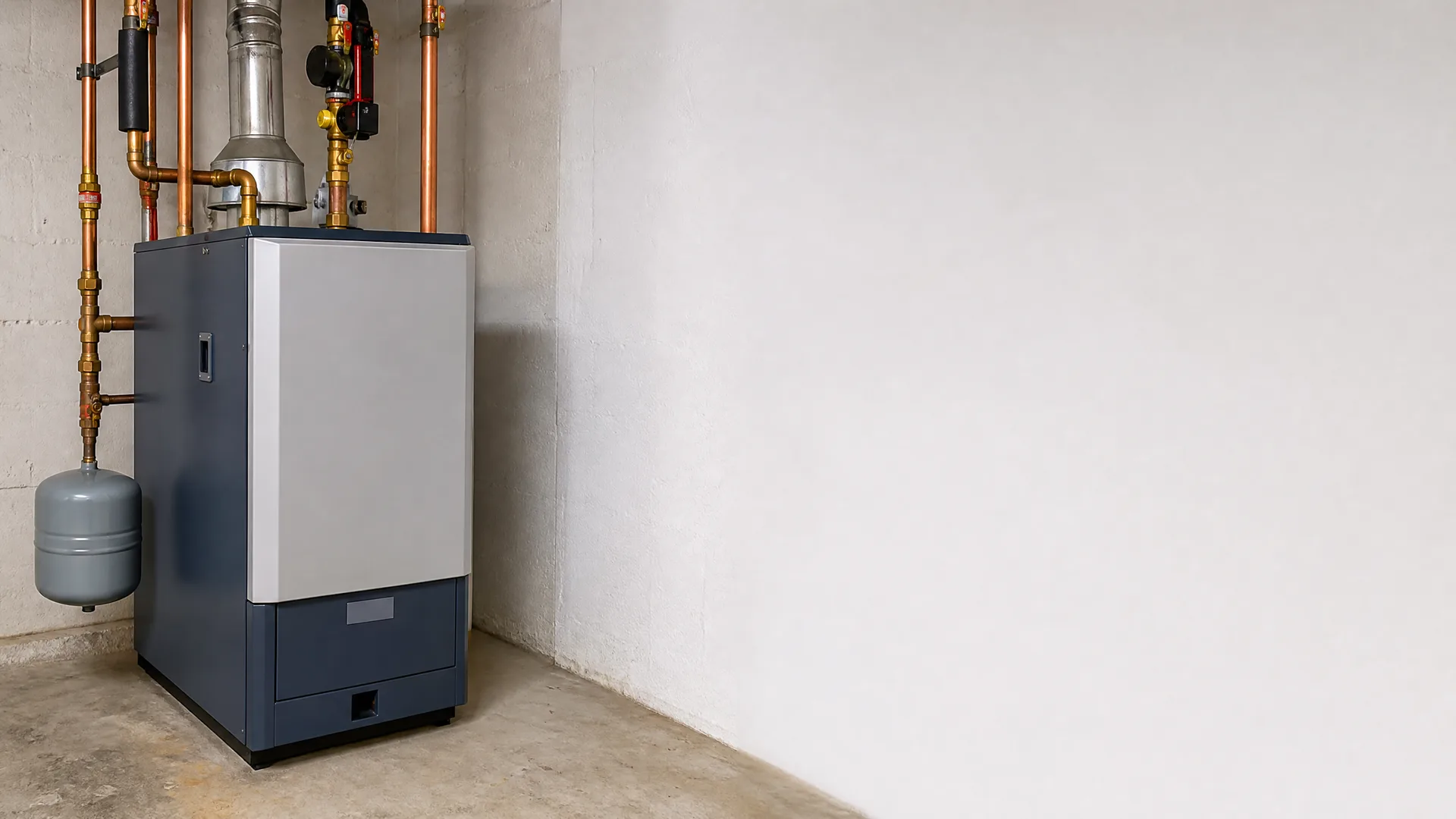
A gray and dark blue floor-standing boiler with copper pipes, a flue, and a small expansion tank stands in a basement corner with painted walls and a concrete floor.

How the water temperature factors in

The thermostat sets the room temperature you want. The boiler's water temperature, set separately on the unit or its aquastat, controls how hard it works to get there. Running the water hotter than the house actually needs makes the burner cycle longer and pushes more wear onto the heat exchanger. A setting matched to a steady 68 to 70 degree home keeps the boiler working at a pace it can sustain through January and February without the extra strain.

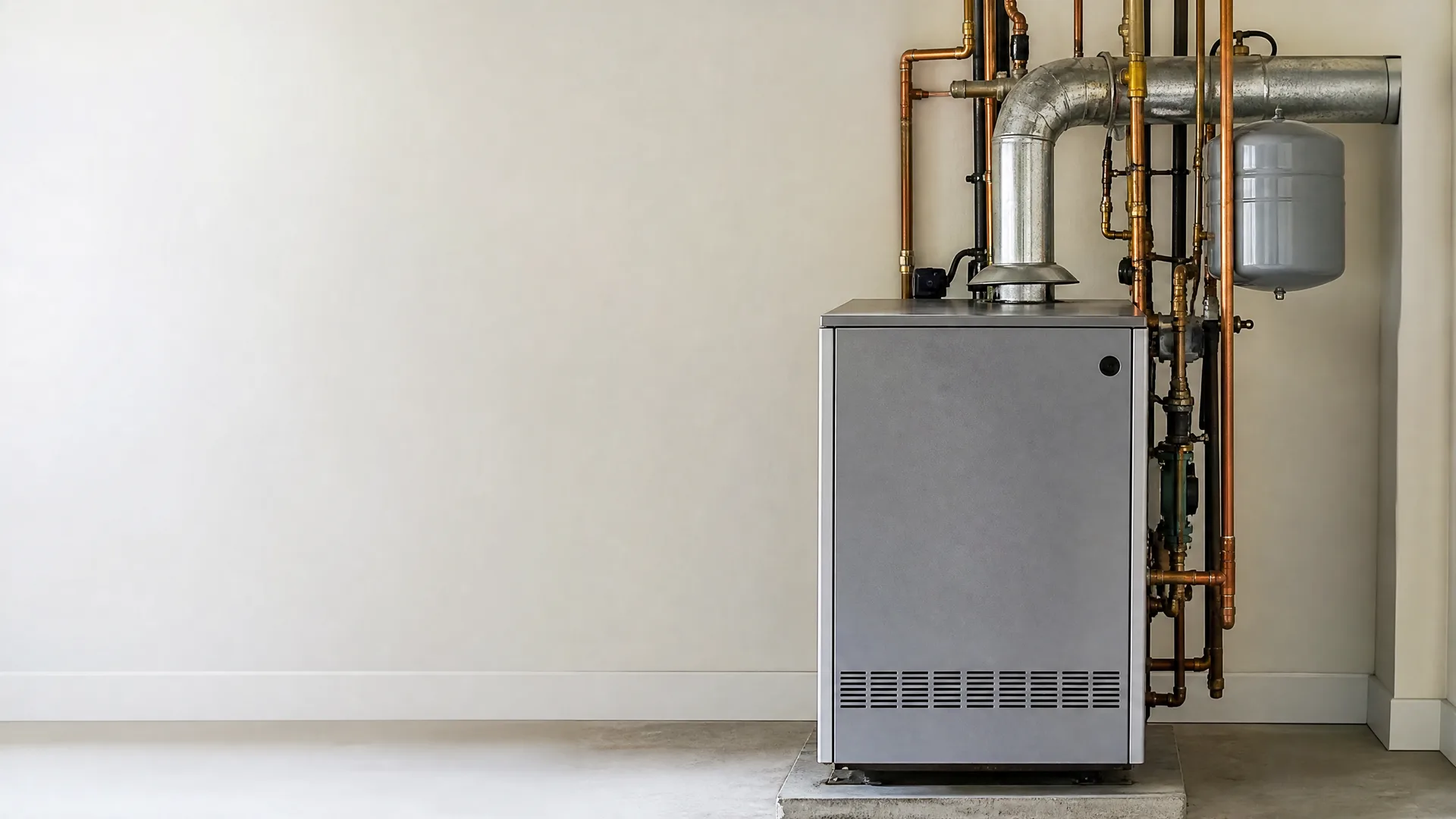
A grey floor-standing boiler with a vented front panel stands against a plain light wall, connected to copper and galvanised pipework, a metal flue, and a cylindrical expansion vessel above.

What a tune-up checks for this

A maintenance visit checks the aquastat setting, the pressure, and the burner's condition against what the house actually needs, not just whether the boiler turns on. Combustion gets tested, connections get checked for leaks, and the controls get adjusted if they're pushing harder than the home requires. Skip that check for a season or two and a boiler set too hot keeps running that way, burning more gas than a properly matched setting would, straight through a New Jersey winter.

Does turning the thermostat down overnight actually help my boiler?

You turn the thermostat down a few degrees before bed and wonder if it's doing anything besides saving a little gas. With a boiler, the question is really about the equipment, not just the bill. You want to know if a lower setting overnight actually changes how the system runs, or if it's a habit left over from other kinds of heat.

Yes, it gives the boiler shorter, less frequent runs

A boiler set back a few degrees overnight cycles less often, because the house drifts down slowly and doesn't call for heat right away. When morning comes and the thermostat climbs back to 68 or 70, the boiler runs longer to catch up, but that one longer run still adds up to less total firing than keeping the house at daytime temperature all night. Short, frequent cycles wear on the ignition system and ask more of the circulator pump than one steady run does. A drop of 4 to 6 degrees overnight is enough to matter without asking the boiler to recover from a cold house, which is its own kind of strain on a system working through a New Jersey winter.

  1. Thermostat calls for heat and signals the boiler's control board.

  2. Burner ignites and heats water inside the boiler to the aquastat's setpoint.

  3. Circulator pump pushes hot water out through the supply lines.

  4. Radiators or baseboards release heat as water passes through them.

A dark gray floor-standing boiler in a concrete-walled basement, connected to copper piping, circulator pumps, a gray expansion tank, and a cream-colored storage tank to the left.
Copper lines run clean to the pumps, and the expansion tank holds steady pressure through the coldest stretch.
A gray residential boiler with a metal flue pipe stands in a concrete-block basement corner, surrounded by copper piping, valves and a gray expansion tank.
A flue pipe rusted through like this is a sign the boiler has been working harder than it should for a while.
A woman in a cream knit sweater sits in an armchair with her eyes closed and a slight smile, beside an open window showing orange autumn foliage, with a mug, books and a lit candle on a small side table.
An older man with gray hair and a beard leans back on a beige sofa with his eyes closed, in a sunlit room with potted plants, a wicker chair and large windows behind him.

Get your boiler to the right pro

You've read what the right setpoint does for a boiler and what pushing past it costs you over a New Jersey winter. Catching it before a cold snap means checking the aquastat, bleeding air from the radiators, looking at the flue and the expansion tank, the kind of yearly maintenance that keeps the boiler from working harder than it needs to. Finding someone for that usually means searching around, calling a few places, explaining the same thing about your setup each time, then sitting on quotes trying to sort out who's worth calling back. That's the part that eats your evening, not the actual work on the boiler. Hand that off instead. A contractor who knows boilers in this area, matched to your situation, reaches out to you directly. You still have a house that gets cold fast when the heat isn't right and a bill that moves with every degree past 70. Get the maintenance scheduled before the next cold stretch asks more of the boiler than it should have to give.

Setting it once and leaving it

You pick a thermostat setting and an aquastat setting that match how the house actually holds heat, and you leave them alone through the winter. The boiler cycles the same way each time it fires, the burner and circulator see the same load call to call, and nothing in the system is working harder than the last cold snap asked of it. You still get the odd knock or hiss when the weather turns, but it's the same boiler doing the same job it did in December. Most of the wear a boiler takes over a winter comes from being pushed past what it was set to do, not from the cold itself.


Chasing the cold room

A room runs cold, so you push the thermostat up five or ten degrees to force it warm faster, and the boiler runs longer and hotter than its aquastat setting was meant to call for. It gets there, but the burner's cycled harder to do it, and the next cold snap you do the same thing again. Over a winter that adds up to a boiler that's rarely running at the setpoint it was actually tuned for. The gas bill reflects it, and so does the equipment. A boiler that's constantly being asked to outrun its own setting wears differently than one left to do the job it was set up for.

Winter nights average 26°F statewide

Averaged across the state, nights in December, January and February sit around 26°F. That's the stretch your boiler leans on hardest, firing more often and for longer to hold your setpoint till morning. A setting that holds steady through those nights is worth more than one that's just warm for an hour.

NOAA nClimDiv 1991-2020 county normals weighted by homes

A woman stands in the open doorway of a white stucco house holding the dark door, facing a man in a black cap and shirt seen from behind in the blurred foreground, with a potted flowering plant beside the entry.

The right setpoint is the one you don't have to think about

68 to 70 during the day, a few degrees lower at night, and an aquastat that matches how your house holds heat. That's the whole answer. The rest is upkeep: checking that the setting still makes sense once the cold really sets in, catching the knocking pipe or the rusting flue before it becomes a bigger repair in February.

Most people don't want to spend a Saturday calling around for someone who services boilers, explaining the same noise to three different contractors, then sitting with quotes trying to guess who's reliable. Answer a few questions about your boiler and your house, and a contractor who covers your part of New Jersey gets in touch with you directly. You'll still decide who does the work. You just won't be the one hunting for them.

A gray upholstered sofa with a beige cushion and knit blanket beside a curtained window, with a white mug and a book on a dark wooden table in the foreground and a lit lamp in the background.
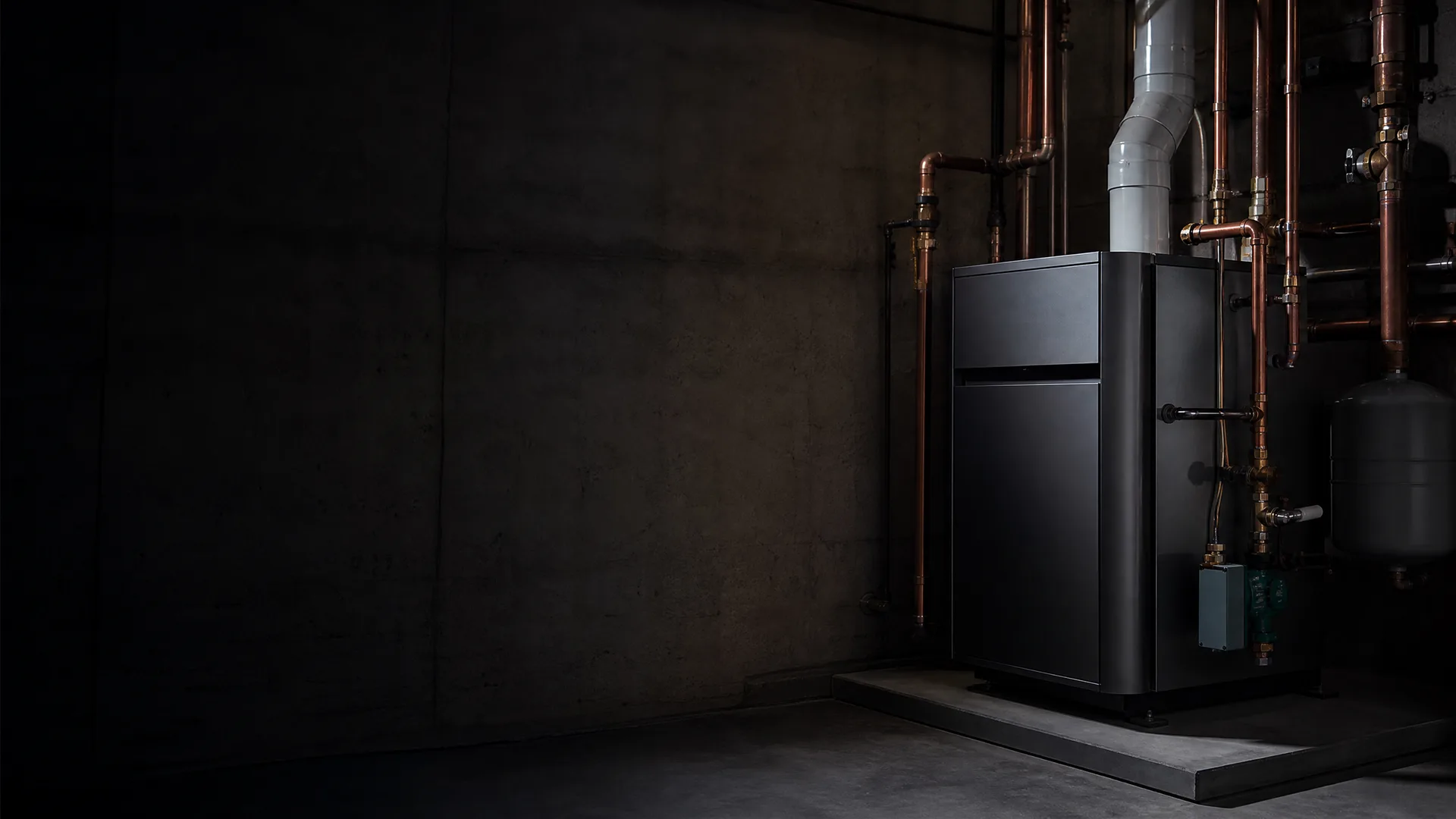
A black boiler unit on a concrete pad in a dim basement room, connected to copper pipes, a metal flue duct, and an expansion tank against a bare concrete wall.

The right pro for this job

Skip calling around to set up a boiler tune-up.

Step 1 of 3: Equipment